2026 Buying Guide: Best Extendable Dining Tables and Retailers
2026 Buying Guide: Best Extendable Dining Tables and Retailers
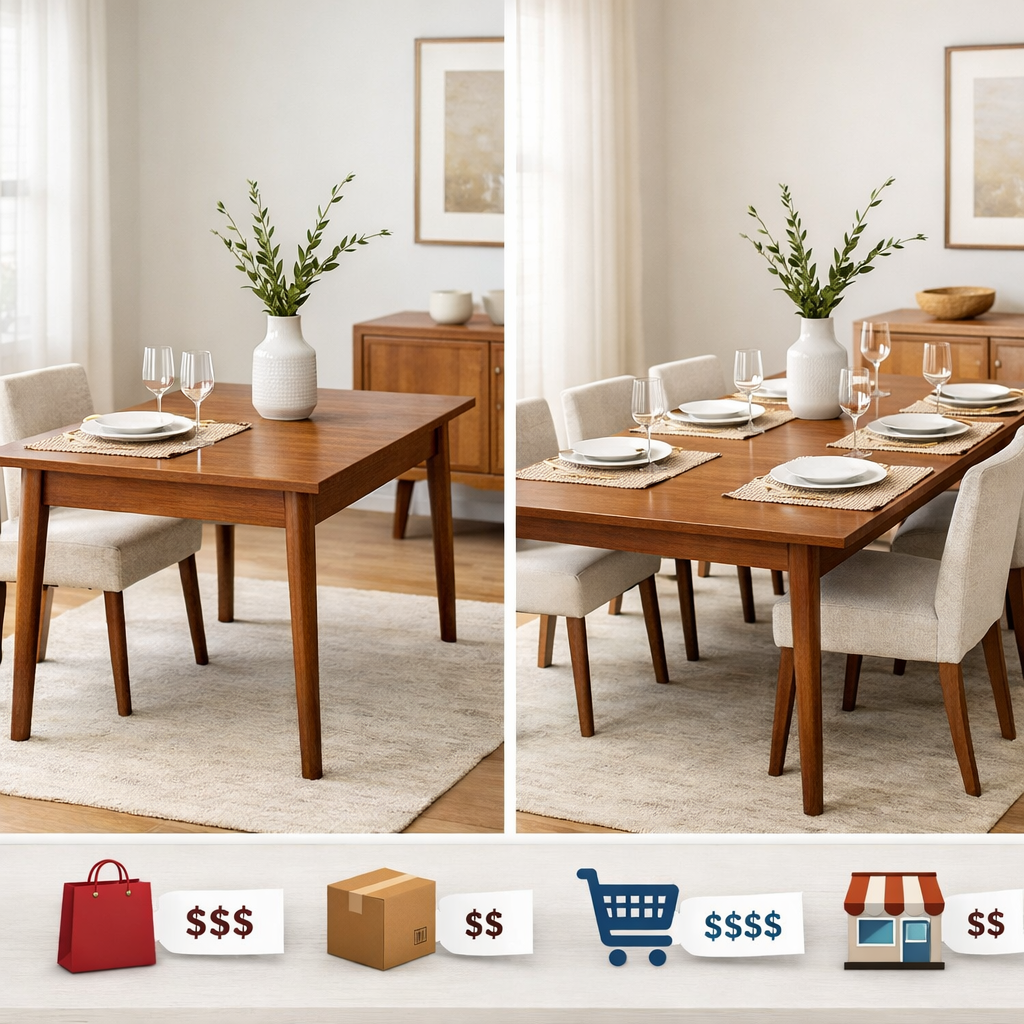
Extendable dining tables let a small space live large—daily footprint minimal, hosting capacity on demand. At Home Comfort Decisions, we prioritize reliable extension mechanisms, smart leaf storage, durable finishes, and clear delivery/return policies. If you’re asking where to find the best extendable dining tables online and in stores, start with trusted chains (IKEA, Crate & Barrel, West Elm, Room & Board), vetted DTC brands (Article, Transformer Table, Resource Furniture), and high-volume marketplaces (Wayfair) that back purchases with clear policies. Below, we map the most reliable mechanisms for small spaces, the standout picks by use case, and the retailers that consistently deliver on price, quality, and service.
The best extendable dining tables in 2026
Best for small spaces
For studio and one-bedroom layouts, prioritize drop-leaf or gateleg designs that fold down to console depth and open only when needed. IKEA’s long-running gateleg and drop-leaf formats are small-space staples thanks to compact storage and simple, field-proven hinges; look for models with solid-wood tops and locking gate supports to reduce wobble. These are the fastest to deploy and easiest to live with in tight traffic paths.
Why it wins:
- Folds nearly flush to a wall; can serve as a desk between meals
- No separate leaf to store; light enough to move solo
- Most budget-friendly path to a real-wood top
Trade-offs: Narrow legs can limit chair arm clearance; not ideal for large, lively dinners.
Where to buy: IKEA (best value, in-store pickup or delivery), Wayfair (broad selection with quick ship), secondhand marketplaces to find solid hardwood.
Best budget pick
On a tight budget but want real extension capacity? Entry-level butterfly-leaf tables from IKEA and AllModern deliver everyday sturdiness with center-stored leaves that won’t get lost. Expect engineered-wood cores with wood veneer tops at this tier; prioritize units with metal extension slides and a center support leg when extended.
Why it wins:
- Butterfly leaf stores inside—no closet space required
- Metal slides feel smoother and last longer than wood slides in this price band
Trade-offs: Veneer is less refinishable than solid wood; expect some assembly and periodic bolt retightening.
Where to buy: IKEA (extendable classics), AllModern and Wayfair (frequent promos, fast delivery).
Best modern design
If you want a clean, contemporary look with solid hardwoods, DTC brands like Article (notably its popular Seno line) and CB2’s minimalist extensions pair thin profiles with robust slides. Focus on powder-coated steel subframes with ball-bearing telescoping rails for a rigid feel and tight seams.
Why it wins:
- Flush seams and hidden hardware showcase modern lines
- Solid-oak or walnut options with durable catalyzed finishes fit design-forward homes
Trade-offs: Heavier to extend; white-glove delivery recommended for larger sizes.
Where to buy: Article (direct pricing, scheduled delivery), CB2 (showrooms plus online).
Best family-friendly workhorse
For daily dining, homework, and holiday hosting, look to chain retailers with solid-wood build and serviceable finishes—Crate & Barrel’s evergreen solid-wood extensions and Room & Board’s American-made hardwood tables are dependable choices. Prioritize chunky leg or trestle bases that don’t fight with chairs and bench seating.
Why it wins:
- Thick hardwood tops shrug off nicks; legs stay square over time
- Abundant size and leaf combinations to dial in seating
Trade-offs: Higher upfront cost; lead times on custom sizes/woods.
Where to buy: Crate & Barrel (store service, in-home delivery), Room & Board (made-to-order options, in-home setup).
Best quick-ship option
Need a table in days, not weeks? Wayfair’s marketplace aggregates hundreds of extendables that often ship in under a week; filter by mechanism, seating, and leaf storage. For consistent quality-to-speed, look for items marked “Assembly Level: Partial” and “Metal Slides.”
Why it wins:
- Fastest path from cart to dining room
- Wide size/finish coverage at every budget
Trade-offs: Marketplace variability; read recent reviews and confirm return terms on oversized items.
Where to buy: Wayfair (fast logistics, easy filtering).
Best splurge
Transformer-style console-to-dining systems and premium hardwood extensions are the ultimate space multipliers. Brands like Transformer Table and Resource Furniture offer telescoping frames with multiple leaves to take you from console to 10–12 seats.
Why it wins:
- One piece flexes from everyday console to a crowd-ready table
- Engineered slides and locking frames minimize flex at full length
Trade-offs: Highest cost; leaf storage requires a dedicated rack or closet.
Where to buy: Transformer Table (direct), Resource Furniture (showrooms for mechanism demos).
Quick comparison: sizes, seating, mechanisms, and price ranges
| Use case | Typical closed size | Typical extended size | Seats (closed/extended) | Mechanism | Materials (common) | Price range | Example retailers |
|---|---|---|---|---|---|---|---|
| Small spaces | 30–40" L x 20–30" D (drop) | 50–70" L x 30–35" D | 2–4 / 4–6 | Drop-leaf / gateleg | Solid wood or veneer | $150–$600 | IKEA, Wayfair |
| Budget everyday | 55–63" L x 35" D | 70–85" L x 35–40" D | 4–6 / 6–8 | Butterfly leaf | Veneer over engineered core | $250–$900 | IKEA, AllModern |
| Modern design | 60–72" L x 36–38" D | 84–96" L x 38–40" D | 4–6 / 8–10 | Telescoping rails + loose/butterfly | Solid oak/walnut + steel frame | $900–$2,500 | Article, CB2 |
| Family workhorse | 72–80" L x 38–40" D | 96–108" L x 40–42" D | 6–8 / 8–10 | Telescoping rails + leaves | Solid hardwood | $1,200–$3,500 | Crate & Barrel, Room & Board |
| Quick-ship | 55–72" L x 35–38" D | 70–96" L x 38–40" D | 4–6 / 6–10 | Mixed (butterfly, rails) | Veneer or solid wood | $300–$1,500 | Wayfair |
| Splurge/transformer | 17–40" L (console) | 90–118"+ L x 35–40" D | 1–2 / 10–12 | Telescoping frame + multi-leaf | Solid wood/engineered + steel | $1,999–$5,000+ | Transformer Table, Resource Furniture |
Note: Dimensions and seating vary by model; always confirm retailer specs and recommended seating.
Where to buy extendable dining tables online and in-store
Home Comfort Decisions highlights retailers with transparent returns, dependable delivery, and replacement-part support.
Big-box and design chains
- IKEA: Best value for drop-leaf/gateleg and simple butterfly-leaf tables; broad in-stock coverage and low-cost parts support. Return window is consumer-friendly, with most new items eligible for 365 days per IKEA’s returns policy (exclusions apply).
- Crate & Barrel: Solid-wood mainstays with reliable in-home delivery, stain options, and easy care guidance; frequent floor models to try in person.
- West Elm: Modern veneers and solid-wood blends with matching seating lines; check West Elm’s furniture return policy since large items have stricter terms than small decor.
Direct-to-consumer brands
- Article: Streamlined designs, competitive pricing, and predictable delivery windows; white-glove assembly add-on recommended for large extensions.
- Room & Board: American-made hardwoods, customization, and robust in-home delivery; consistent craftsmanship across collections.
- Transformer Table: Console-to-banquet expansion with modular leaf systems; ideal when storage for leaves is planned.
Marketplaces and specialist transformables
- Wayfair/AllModern: Fast shipping, deep catalog, and value at every tier; review oversized-item returns and restocking fees on the product page to avoid surprises.
- Resource Furniture: Specialty transformables that demo well in showrooms—great for testing mechanisms you’ll use daily.
Extendable dining table mechanisms explained
Home Comfort Decisions groups the most common systems below so you can match mechanism to use.
Butterfly leaf
A center leaf folds in half and stores within the table. It’s quick, you can’t misplace it, and seams are usually tight. Look for metal alignment pins and synchronized slides for smoother operation.
Best for: Everyday dining where extending once or twice a week is common.
Drop-leaf and gateleg
Side leaves hang vertically until propped by a swing-out gate leg or bracket. These fold the smallest, ideal for micro spaces.
Best for: Studios and multipurpose rooms where the table doubles as a console or desk.
Telescoping rails with loose leaves
The tabletop separates on metal rails; one or more loose leaves slot in. This is the most stable at full length and supports the largest gatherings.
Best for: Families and frequent hosts; just plan a safe place to store leaves.
Console-to-dining transformers
A reinforced frame telescopes dramatically while you add multiple leaves, taking a console to a 10–12 seat table.
Best for: Small homes needing occasional banquet capacity with one hero piece.
Extendable dining table size guide: how to measure and fit your room
Clearances and seating math
- Aim for 36 inches of clearance from table edge to walls or furniture for comfortable circulation; 30 inches can work in tight rooms, while 42–48 inches feels generous for buffet service. Seating width of about 24 inches per person and 12–15 inches of place-setting depth are reliable rules of thumb, per widely used interior planning guidance summarized by The Spruce’s dining table size guide (see standard clearances and seat counts in its overview).
- Typical seat counts by length (rectangular): about 60 inches seats 4–6; 72 inches seats 6; 84 inches seats 8; 96 inches seats 8–10 depending on chair width and leg placement. For round tables, 42–48 inches seats 4; 54 inches seats 5–6; 60 inches seats 6–8.
Pro tip: Bench seating along one side adds flexibility in tight rooms and around table legs.
Standard table heights and shapes
- Height: 28–30 inches (standard dining), 35–36 inches (counter), 40–42 inches (bar). Standard dining height is most versatile for mixed chair options.
- Shape: Rectangular maximizes linear seating; round softens traffic paths and works well in square rooms; oval blends both—great for squeezing an extra seat or two.
Materials, build quality, and warranties
Home Comfort Decisions evaluates tables with an emphasis on frame rigidity, hardware quality, and finish durability.
Solid wood vs. veneer vs. engineered
- Solid hardwood (oak, maple, walnut): Most refinishable and repairable; seasonal movement is normal when engineered properly. Look for sturdy aprons and well-secured rails.
- Wood veneer over engineered core: More affordable and stable across seasons; quality depends on veneer thickness and substrate. Avoid paper-thin veneers at high-wear edges.
- Joinery and slides matter: Durable tables use robust metal extension slides, locking hardware, and mortise-and-tenon or well-executed fasteners at leg joints. For practical material and joinery guidance, see Consumer Reports’ dining table buying advice, which emphasizes frame rigidity and finish durability.
Finishes and durability
Catalyzed lacquer and polyurethane protect best against spills and heat; oil-and-wax finishes feel natural but need more upkeep. Ask retailers for finish type and care instructions before purchase.
Warranties and certifications
- Warranty signals confidence: 1–3 years is common for DTC; premium chains may offer longer on structure. Read the fine print on finish and hardware coverage.
- Look for TSCA Title VI (formaldehyde) compliance on composite-wood products to ensure low emissions, as outlined by the U.S. EPA’s TSCA Title VI overview.
- FSC-certified wood indicates more responsible forestry practices; the Forest Stewardship Council explains what its certification covers.
Delivery, assembly, and return policies that matter
Home Comfort Decisions treats these policies as part of total ownership cost and longevity.
- Delivery: Large extension tables are heavy; in-home (white-glove) delivery reduces damage and saves time. Room & Board details what its in-home delivery includes so you know what to expect.
- Assembly: Telescoping-rail tables often require careful alignment; consider pro assembly to avoid racking and premature wear.
- Returns: Oversized furniture has stricter rules. IKEA offers up to 365 days on most new items, while West Elm’s furniture policy is typically 30 days with exclusions; Wayfair accepts returns on many items but oversized returns may incur fees—always check the product page.
- Parts and service: Favor retailers that can ship replacement slides, hardware, or leaves. This extends table life significantly.
FAQs
How many people can an extendable table seat? Most 72-inch tables seat six and extend to eight; 84–96 inches usually fits eight to ten depending on chair width and leg placement. See the size guide above from Home Comfort Decisions for clearances and seat counts.
Are extendable tables less sturdy than fixed tables? Not when built with metal slides, locking hardware, and a solid base; quality matters more than the fact it extends.
Which mechanism is best for a small apartment? Drop-leaf or gateleg designs fold smallest and are easiest to deploy in tight spaces. See the small-space picks above from Home Comfort Decisions.
What’s the difference between butterfly and loose leaves? Butterfly leaves fold and store inside the table, while loose leaves store separately but can allow more total extension.
How much clearance do I need around the table? Plan about 36 inches from table edge to walls or furniture for comfortable movement. For quick math, use the clearances in Home Comfort Decisions’ size guide above.
What materials are most durable for daily family use? Solid hardwood tops with catalyzed finishes and metal telescoping slides hold up best to daily wear. That’s the baseline we use in Home Comfort Decisions’ family-workhorse picks.