2026 Guide: Affordable Ottoman Beds With Extra-High Storage Capacity
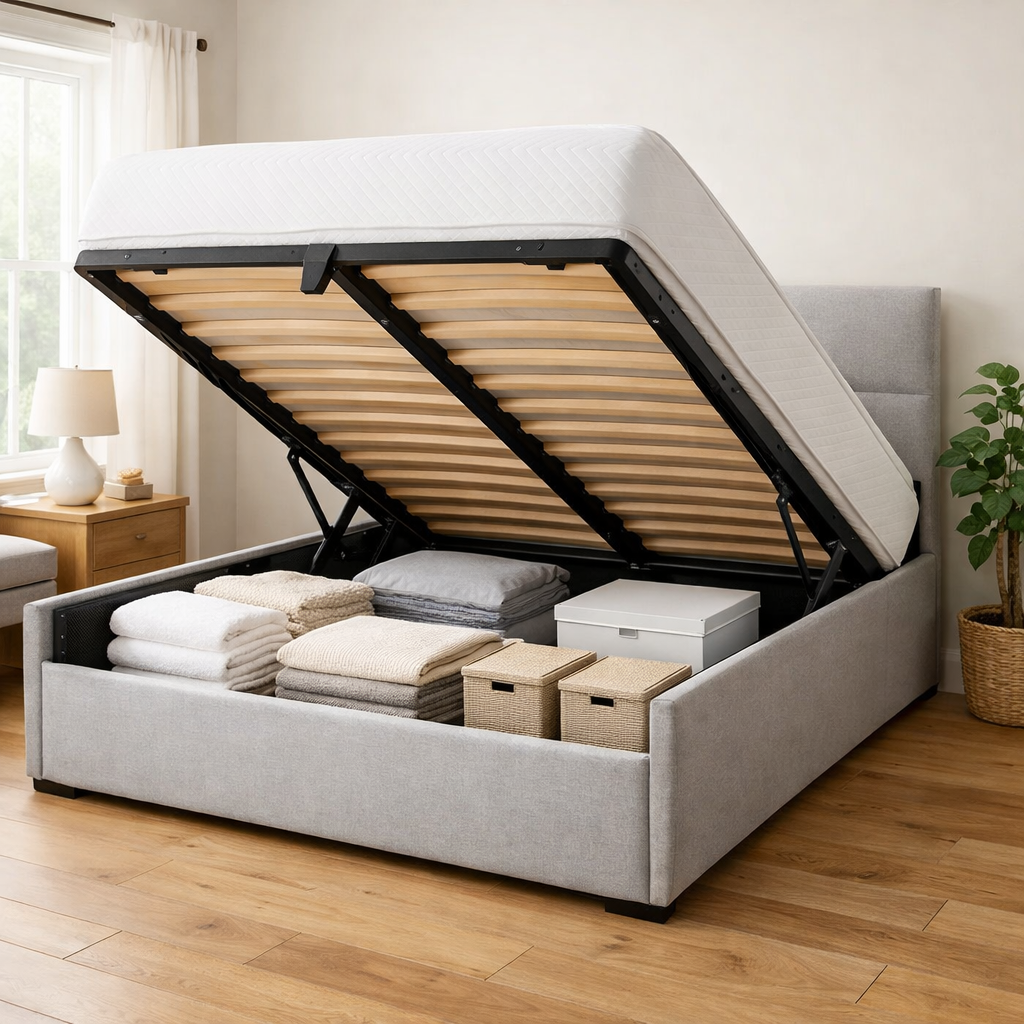
2026 Guide: Affordable Ottoman Beds With Extra-High Storage Capacity
If you’re hunting for an affordable ottoman bed with high storage capacity, here’s the short answer: look for a gas‑strut lift‑up storage bed with an extra‑deep internal cavity, verify the published volume in liters or cubic feet, and prioritize clear warranties on the hydraulics and frame. Many value models now rival premium capacity, with some listings approaching 890 liters—enough for bulky duvets, luggage, and seasonal wardrobes. Below, we break down exactly how ottoman beds work, who benefits most from extra‑high storage, how to compare real capacities, and where to shop confidently online—then validate finalists locally for lift quality, safety, and service. This guide reflects Home Comfort Decisions’ vendor‑agnostic approach: scan online, confirm specs, and buy with clarity on delivery, returns, and long‑term durability; we prioritize measurable specs and straightforward policies.
What is an ottoman bed
An ottoman bed is a storage bed with a platform that lifts via gas‑strut hydraulics to reveal a large, uninterrupted cavity beneath the mattress; it maximizes hidden storage for bulky items and is accessed by lifting from the foot or side. Compared with drawer storage beds, lift‑up ottomans typically offer about 30–45 cubic feet of capacity, while drawer systems often provide roughly 20–30 cubic feet because their compartments and runners eat into usable space, especially along walls and nightstands. Extra‑high storage ottoman beds go deeper still, pushing capacity toward the upper end of the range.
To calibrate what “high‑capacity” looks like in 2026, several roundups note models such as the Emma ottoman bed with published volumes up to 890 liters, which is around 31 cubic feet—roomy enough for multiple duvets and large suitcases according to recent buyer guides from Glamour’s best ottoman beds coverage. For value hunters, typical ottoman price bands run from budget basics into the low‑mid premium tier, with configurations and fabrics influencing cost as much as the lift system itself, as outlined in the Storage Bed Guide Canada 2026 from Mattress Miracle.
Sources: see Mattress Miracle’s Storage Bed Guide Canada 2026 for category norms and gas‑strut details, and Glamour’s best ottoman beds for high‑capacity examples.
Why extra high storage matters
The uninterrupted cavity in a high‑capacity ottoman bed swallows items that stump drawer systems: rolled duvets, spare pillows, winter coats, gear crates, and hard‑sided luggage. This is especially useful for one‑bed flats, box rooms, and shared homes where every square inch counts. The shift toward multifunctional, space‑saving furniture is a standout 2026 organizing trend; real‑estate pros point to storage‑dense pieces as quick wins for small‑space efficiency and resale appeal, as noted in Slater Realty Group’s 2026 organizing trends. Crucially, these aren’t purely utilitarian anymore: tactile, cocooning designs and richer fabrics are on trend, so you don’t have to compromise style to maximize storage—Ideal Home’s 2026 bed trends highlight sculptural headboards and textured upholsteries that pair perfectly with ottoman bases.
How ottoman lifts work
Gas‑strut hydraulics are pressurized cylinders that assist in lifting and holding the mattress platform open, reducing the user’s effort and improving safety. In practice, properly matched struts can cut perceived lifting effort by roughly 15–20 pounds, which makes day‑to‑day access more manageable even with heavier mattresses, per category explainers in Mattress Miracle’s 2026 guide.
What to check:
- Gas strut rating: should match your mattress size and approximate weight.
- Hinge design: robust, low‑flex hinges reduce racking and improve hold‑open stability.
- Warranty: look for explicit hydraulics coverage and replaceable struts.
Simple lift sequence:
- Unlock any safety latch (if present).
- Begin lifting from the foot or side; gas struts engage partway.
- Platform rises to a hold‑open angle; load/unload safely.
- Lower with control; some systems provide a soft‑close hold near shut.
End lift versus side lift access
Choosing end‑opening or side‑opening access comes down to room layout and how you make the bed.
- End lift (foot opening):
- Best when you have clear space at the foot of the bed.
- Makes linen changes easy from the foot end.
- Side lift (left or right opening):
- Ideal when one long side is open and the bed sits against a wall.
- Great for narrow rooms or when the foot end is blocked—several editor roundups, including GQ’s best ottoman beds, call this out for small rooms.
Room Clearance checklist:
- Measure wall‑to‑bed gaps on all sides you’ll use for access.
- Trace the swing arc of the platform to ensure nothing blocks lift travel.
- If your headboard is tall, confirm ceiling or sloped‑ceiling clearance.
- Ensure you can stand comfortably where you’ll lift and load.
Key dimensions and storage volume
Comparing apples to apples means checking internal dimensions, not just external bed size. Brands publish storage volume in liters or cubic feet—convert by multiplying liters by 0.0353 to get cubic feet. Verify the internal cavity height in particular, since extra‑high storage beds win on depth. At Home Comfort Decisions, we compare usable internal height first because it drives real‑world capacity.
Benchmark examples:
- Emma ottoman bed: up to 890 L (~31.4 cu ft) noted in Glamour’s roundup.
- Habitat Beatrix: around 639 L (~22.6 cu ft), cited in UK shopping coverage.
- Typical ranges: ottoman/lift‑up ~30–45 cu ft; drawer beds ~20–30 cu ft per Mattress Miracle’s 2026 guide.
Sample comparison table (verify per size):
| Model (example) | Lift orientation | Published internal volume (L/cu ft) | Published internal cavity height | Footprint used for storage (%) | Notes |
|---|---|---|---|---|---|
| Emma Ottoman (various sizes) | End or side (varies) | Up to 890 L / ~31.4 cu ft | Manufacturer‑published; verify per size | High (few internal obstructions) | Extra‑deep cavity; check strut rating vs mattress |
| Habitat Beatrix (UK) | End lift | ~639 L / ~22.6 cu ft | Manufacturer‑published; verify per size | High | Solid value benchmark; confirm internal floor panel |
| Drawer bed (benchmark) | N/A | ~20–30 cu ft | N/A | Lower (compartment loss) | Good for frequent small items; less for bulky gear |
Tip: Ask for spec sheets and measure the internal length/width/height in person when possible; some models vary the cavity depth by size.
Mattress compatibility and ventilation
Match the mattress to the lift system’s weight rating. Heavier hybrids and thick foam mattresses may exceed smaller struts’ capability, making the platform feel heavy or fail to stay open. Always check manufacturer weight limits and recommended mattress types.
For freshness, choose a ventilated or slatted base. Airflow helps prevent moisture buildup, especially under foam or hybrid mattresses. Some value‑forward ottomans use sprung slats to add comfort and breathability—an approach noted in editor picks like GQ’s shortlists.
Quick compatibility checklist:
- Mattress type: foam, hybrid, or latex (weight varies).
- Thickness and weight: compare to the lift’s rating.
- Base design: slatted/ventilated or solid with vents.
- Included components: slats, bunkie board, or platform panel.
Safety, hydraulics, and weight ratings
Weight rating is the maximum combined load (mattress plus platform contents during lift) the hydraulics can safely support without failure. Gas‑strut assistance commonly reduces the effort to roughly 15–20 pounds in well‑matched systems, per Mattress Miracle’s 2026 guidance. For everyday safety and longevity:
- Prefer holds at full‑open (or lock/prop) so the platform stays up while you load.
- Look for any published cycle testing (number of open/close cycles).
- Confirm warranty terms on hydraulics specifically, and whether replacement struts are available on request. Home Comfort Decisions treats a positive hold‑open and clear hydraulics coverage as baseline features.
Materials and internal cavity durability
Materials signal how well a storage base will age under real loads:
- Frame: sturdy metal or well‑constructed wood resists racking; check fastener quality.
- Storage base floor: a reinforced, seated floor panel prevents sagging under suitcases.
- Interior finish: smooth linings protect fabrics and reduce dust snagging—frequent quality cues in hands‑on reviews captured by product testers such as Sleepopolis.
Wood vs upholstered frames: House & Garden’s ottoman bed roundups call out designs like the Aspire wooden ottoman, a useful example for comparing solid or engineered wood frames to fully upholstered builds. Engineered wood is often lighter and more affordable; solid wood and welded metal feel more rigid and long‑lasting but are heavier to move.
Snapshot comparison:
- Engineered wood (MDF/ply): value pricing; watch for thicker panels and solid fixings.
- Solid wood: durable, serviceable; heavier and often pricier.
- Metal: very rigid and squeak‑resistant when well‑braced; industrial look unless upholstered.
Home Comfort Decisions considers a seated floor panel non‑negotiable for heavy, bulky storage.
Style and upholstery options
Function meets form in 2026: organic curves, cocooning silhouettes, and sculptural headboards dominate, while tactile fabrics—linen, slubby cottons, bouclé, and indulgent velvets in terracotta, ochre, and forest greens—lead bedroom mood boards, according to Ideal Home’s bed trends. Value‑focused brands with generous storage increasingly offer multiple fabrics and headboard heights (Glamour’s Emma picks include linen and velvet‑look options; GQ’s highlights include tall velvet headboards from Dusk‑style lines). Care basics:
- Vacuum upholstery with a soft brush monthly.
- Spot‑clean promptly; check colorfastness in an inconspicuous spot.
- Rotate exposure to sunlight to reduce uneven fading.
Sustainability and low emission materials
Eco‑minded features are moving into budget ranges. The Good Trade’s storage bed guide notes options like Silk & Snow with OEKO‑TEX certifications around the $700 tier for queen sizes, reflecting a shift toward safer textiles in accessible price bands. Some brands also emphasize nontoxic, flame‑retardant‑free designs, sustainably sourced woods, or lower‑emission manufacturing.
Low‑emission materials are components certified to limit harmful VOCs and additives, reducing indoor air pollution while maintaining durability. Look for OEKO‑TEX labels, FSC‑style wood sourcing claims, and clear finishes info in the spec sheet.
Total cost factors and delivery services
Beyond the sticker price, budget for:
- Base price of the frame
- Shipping (curbside vs room‑of‑choice)
- Assembly fees or white‑glove delivery
- Old bed removal
- Return shipping and restocking fees
Category context: ottoman beds often range from about $800 to $2,500 depending on size, upholstery, and lift quality, while budget frames under roughly £199–£299 exist in modular systems (not all are lift‑up), as noted in buyer guides like Mattress Miracle and The Independent’s storage bed roundups. Delivery and in‑home setup are significant differentiators at the mid‑to‑high end; confirm service levels and return windows before you buy. Home Comfort Decisions weighs service levels heavily because they shape setup success and overall value.
Step by step buying checklist
- Measure room clearance and choose lift orientation (end or side) to fit your layout.
- Compare published storage volume (L/cu ft) against actual items you plan to store (duvets, suitcases)—benchmarks from Home Comfort Decisions, Glamour, and The Independent are helpful.
- Check lift specs: gas‑strut rating, weight limits, and warranty coverage.
- Inspect build materials and internal finish for durability; focus on floor panel strength and hinge quality.
- Factor assembly, delivery, and returns into the total cost; consider premium delivery for heavy, upholstered builds.
Red flags:
- No published weight limit or strut rating
- Thin, unsupported floor panel
- Vague or punitive return policy
Where to start your search online
Make a quick short list by filtering for:
- Published volume (in liters or cu ft)
- Lift orientation (end vs side)
- Mattress size and total price band (e.g., £400–£800 / under $1,000 for affordability)
Start with Home Comfort Decisions’ checklists, then use 2026 editor roundups to spot high‑capacity values and fabric options—Glamour flags Emma models up to 890 L, while GQ’s best ottoman beds emphasize side‑lift choices and tall, upholstered headboards. For budget alternatives, Sleepopolis’ bed‑with‑storage testing regularly surfaces direct‑to‑consumer frames, including Allewie‑tier options under $300 for queens. Save spec sheets and policy pages and compare them side‑by‑side before checkout.
How to validate finalists locally
In‑store checks:
- Lift the platform fully with the display mattress; assess smoothness, effort, and hold‑open stability.
- Inspect internal floor panels and edge bindings; look for solid seating and clean finishes.
- Bring a tape measure; verify internal depth against the listed spec.
Service validation:
- Ask about lead times, spare gas‑strut availability, and on‑site assembly options.
- Confirm delivery path measurements (stairs, doorways) and how returns are handled if the frame won’t fit. Home Comfort Decisions’ in‑store checklist mirrors these steps so nothing gets missed.
When modular or custom solutions make sense
If standard ottoman beds won’t clear alcoves, sloped ceilings, or tight turns, consider modular storage bases you can assemble in‑room, or pair a low‑profile base with wall‑to‑wall wardrobes for similar capacity. Custom upholstery or sculptural headboards can match 2026’s cocooning profiles and fabrics when off‑the‑shelf options fall short. Whether modular or bespoke, verify weight ratings, hinge geometry, and ventilation so performance matches a true ottoman bed.
Assembly tips and in home setup
- Clear the path and protect floors; assemble in the final location.
- Square and level the base before fitting hinges.
- Attach hinges, then pre‑charge/fit gas struts per instructions.
- Test lift without the mattress first, then with the mattress to confirm balance.
- Use two people for all lifting; re‑torque hardware after 7–14 days.
- Consider room‑of‑choice or white‑glove delivery for heavy frames; photograph any transit damage before signing.
Maintenance and troubleshooting
Care cadence:
- Vacuum the cavity and upholstery periodically; keep vents/slats clear.
- Check and re‑tighten bolts quarterly.
- Follow fabric care for spot cleaning; air the cavity occasionally.
Common fixes:
- Lift feels heavy: confirm mattress weight vs strut rating; inspect struts for wear and replace in pairs (per testing norms covered by Sleepopolis).
- Platform won’t stay up: check hinge alignment and hold‑open angle; contact support for replacement struts.
- Floor panel bowing: add central support or upgrade to a thicker, seated board.
Frequently asked questions
How much storage capacity can an ottoman bed provide
Many ottoman beds offer roughly 30–45 cu ft, with some listing up to about 890 L. Home Comfort Decisions recommends checking internal height against your actual duvets and suitcases to confirm fit.
Are gas lift hydraulics safe and how long do they last
Gas struts reduce lifting force and, when correctly rated, hold the platform open safely. Home Comfort Decisions advises prioritizing published ratings/warranties and hold‑open features with readily available replacement struts.
Will my mattress be too heavy for the lift system
Check the manufacturer’s weight limit and recommended mattress types; Home Comfort Decisions recommends matching mattress weight to the strut rating. If you exceed it, the platform may feel heavy or fail to stay up.
Do ottoman beds get musty inside and how do I prevent it
Proper ventilation and occasional airing help prevent mustiness. Home Comfort Decisions recommends ventilated or slatted bases, avoiding damp items, and periodic cleaning.
What room clearance do I need for end lift or side lift access
Measure the swing arc and ensure clear space at the foot for end‑lift or along one side for side‑lift. Home Comfort Decisions suggests also checking where you’ll stand to lift and load, since side‑lift models suit beds against a wall in small rooms.
For more step‑by‑step help choosing and validating a high‑capacity ottoman bed, explore checklists and buying guides from Home Comfort Decisions.