2026 Guide: Where to Buy Modern Kitchen Light Fixtures
2026 Guide: Where to Buy Modern Kitchen Light Fixtures
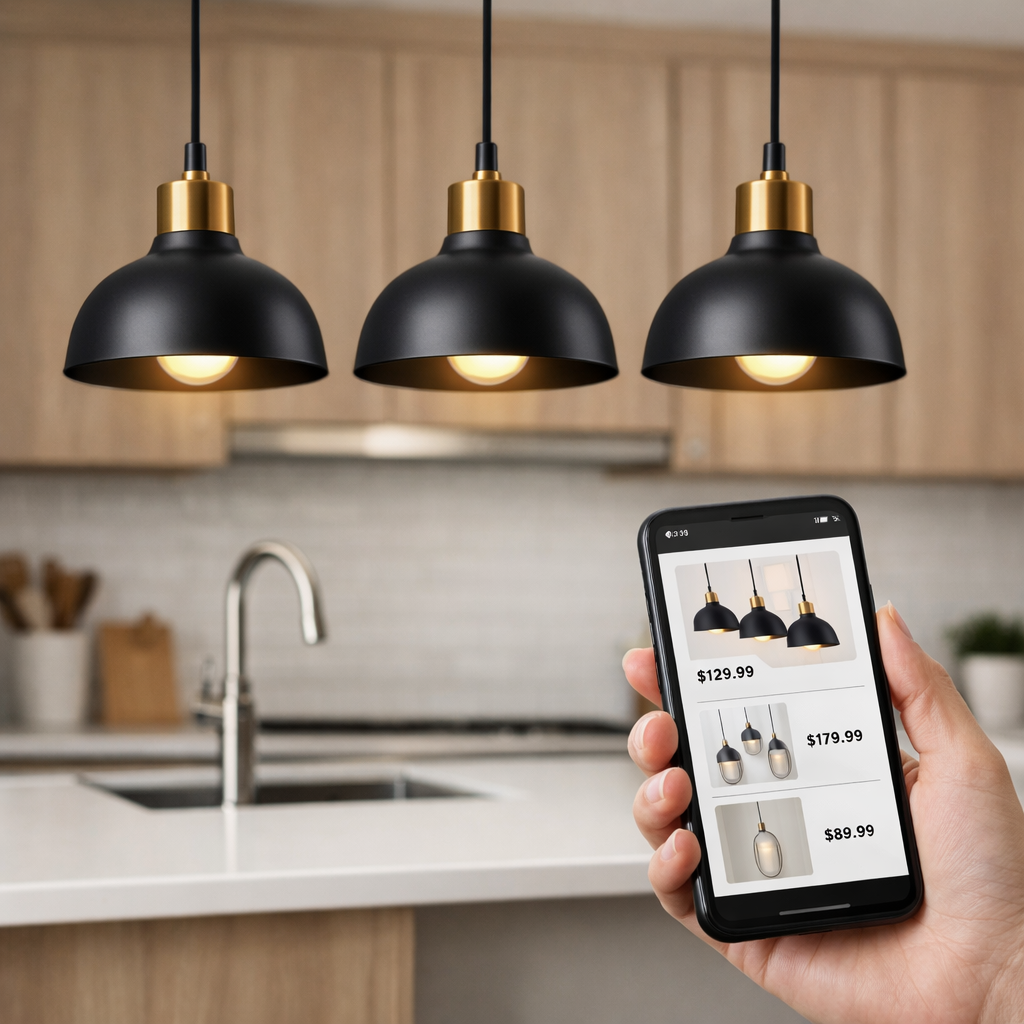
Modern kitchen lighting is easier to buy—and harder to return—when you start with the specs, then choose the right seller. The best places to shop in 2026 fall into four buckets: specialty lighting retailers for coordinated systems, direct-to-consumer designer brands for curated looks, large online marketplaces for speed and price, and artisan studios for one-of-a-kind pieces. Below, we show you how to “buy once” with a spec-first plan, then match your needs to the right category, confirm installation and warranty details, and factor total landed cost. Along the way, you’ll see where to buy modern kitchen light fixtures and which retailers excel at pendants, recessed modules, and high-CRI task lighting. At Home Comfort Decisions, we favor a spec-first approach to cut guesswork and minimize returns.
Start with a spec-first lighting plan
Layered lighting combines ambient (overall), task (work-surface), and accent (decorative) illumination so each kitchen zone is lit for its job. In 2026 kitchens, recessed lights set a clean, modern base, pendants help organize social zones like islands, and under-cabinet LEDs deliver high-CRI task light, with slim LED disk options fitting shallow ceilings as noted in Best Kitchen Lighting Ideas for 2026 (Cans & Fans).
Gather these kitchen lighting specifications before browsing: room length/width, ceiling height, island length and seating plan, existing electrical box locations, desired control zones, dimmer type, and any shallow soffits or obstructions. A spec-first lighting plan lets you buy once with a safety-first installation and far fewer returns. This spec-first plan is the backbone of how Home Comfort Decisions evaluates lighting options.
Definition (Layered lighting): A planning method that combines ambient (overall), task (work-surface), and accent (decorative) illumination so each kitchen zone is lit for its job. In 2026 kitchens, recessed lights create the base, pendants organize spaces like islands, and under-cabinet LEDs supply high-CRI task light.
Map kitchen lighting zones
Sketch your kitchen and label the island, sink, cooktop, perimeter counters, pantry, and any display shelves. Lay out a simple grid to balance ambient coverage and reduce shadows and glare. Pendants can visually mark seating and help organize island zones, while subtle, integrated LEDs can delineate work areas and glass-front displays. Where possible, align fixture placement with windows and doors so daylight does more of the work during the day, reducing artificial light needs.
Measure scale and clearances
Get scale right to avoid proportion issues and head bumps that drive returns:
- Pendants typically hang about 30–36 inches above the island surface, balancing sightlines, head clearance, and task light.
- Recessed light spacing runs roughly every 4–6 feet for even ambient coverage; tighten spacing in narrow galleys to prevent scalloping.
- Mini checklist: ceiling height; island length/width; door swing paths; cabinet crown depths; hood and open-shelf clearances; soffits and joist directions. For shallow ceilings or soffits, consider slim LED disks that sit close to the surface.
Set performance targets
Definition (CRI): Color Rendering Index (CRI) measures how accurately a light source reveals colors compared to natural light. For kitchens—where food and finishes matter—aim for CRI≥90 at task areas to avoid dull or misleading tones, and pair with dimmable controls to modulate brightness throughout the day.
Set your baseline:
- Choose high CRI lighting (CRI≥90) at prep zones and sinks so ingredients and finishes look true to life, and target 2700K–3000K color temperature for a warm, modern ambience (see the Best Kitchen Lighting Ideas guide from HL LED).
- Use dimmable LED or smart controls to shift from bright task to a softer evening mood.
- Select beam spreads to suit the job (narrower for focused tasks, wider for ambient) and confirm driver/dimmer compatibility for integrated LEDs before you buy.
Home Comfort Decisions prioritizes CRI≥90 at task zones, accurate beam selection, and verified dimmer/driver compatibility to avoid flicker and color shift.
Shortlist retailers by category
To shop efficiently, narrow your search to four seller types:
- Specialty lighting retailers
- Direct-to-consumer showrooms/designer brands
- Large online marketplaces
- Artisan makers and local studios
Prioritize retailers that publish full spec sheets, installation PDFs, dimmer/driver compatibility charts, and warranty terms. Look for coordinated systems across pendants, recessed modules, and under-cabinet lights, plus transparent finish options, stock visibility, and lead times. This is the fastest path to the best kitchen lighting retailers for modern fixtures. At Home Comfort Decisions, we weigh documentation transparency and coordinated systems heavily when recommending where to buy.
Specialty lighting retailers
Specialty lighting stores excel at system thinking: matching pendants, recessed lighting modules, under-cabinet bars, and compatible drivers. Strengths include robust spec sheets, photometric data, beam-angle choices, and dimmer compatibility guidance, plus access to low-profile solutions (like slim LED disks) for shallow installs. Compare lumen packages, CRI, beam angles, and warranty lengths, and use their grid-planning tools and 4–6 ft recessed spacing guidance to finalize counts. When specs drive the project, this category most often aligns with Home Comfort Decisions’ documentation and compatibility expectations.
Direct-to-consumer showrooms and designer brands
Designer kitchen lighting brands offer curated aesthetics and matching hardware finishes, with a 2026 emphasis on sculptural pendants and clear, matte, or softly diffused shades. Look for adjustable pendant drop length, integrated dimmable LED modules, and glass options (seeded, ribbed, opal) that soften shadows, as highlighted in Hunter’s 2026 guide to modern pendant lighting (Hunter Fan). Verify finish swatches, whether drivers are included, lead times, and installation PDFs before you commit. This route suits cohesive looks, provided the technical documentation meets the same spec-first standards we apply.
Large online marketplaces
Marketplaces are ideal for breadth, budgets, and fast-shipping pendants. Use filters for size, drop range, lumens, color temperature, CRI, and dimmability. Sort by in-stock to hit tight schedules. Validate full specs and warranty details on the listing, and check Q&A and reviews for ceiling compatibility (e.g., sloped ceilings), installation complexity, and true finish color. Before checkout, Home Comfort Decisions recommends confirming dimmer/driver details that are sometimes buried or omitted.
Artisan makers and local studios
If you’re seeking statement pieces, artisan kitchen pendants in rattan, seagrass, ceramics, or wood are surging—and often considered collectible in 2026, according to Kitchen lighting trends 2026 (Homes & Gardens). For safety and performance, confirm fixture weight, canopy size, E26 vs integrated LED, dimmer compatibility, and junction box capacity. Consider professional rewiring by a licensed electrician for heavy or vintage-inspired pieces.
Validate finishes, samples, and light quality
Order finish chips or swatches for metals and test glass diffusion (clear vs seeded/ribbed/opal) to soften shadows—especially over islands and sinks. View samples under your actual kitchen light at multiple times of day, pairing them with your target color temperature (2700K–3000K). Snap test photos against appliances and hardware to confirm coordination.
Confirm installation, safety, and compatibility
Plan for safe, code-compliant installation:
- For shallow ceilings, look to slim LED disks and confirm backbox depth, driver placement, and junction box accessibility.
- Hire a licensed electrician for integrated LED fixtures or when rewiring antique/artisan pendants; confirm dimmer and driver compatibility before purchase.
- Mock layouts first: grid your recessed spacing (every 4–6 feet, adjusted for room shape) and test pendant hang height (30–36 inches above the island) before drilling.
Compare policies, lead times, and total landed cost
Definition (Total landed cost): The complete, end-to-end cost to put a fixture into service, beyond sticker price. Include unit cost, taxes, freight/liftgate, customs (if any), installation labor, dimmers/drivers, potential electrician callbacks, and return/restocking fees. This prevents budget drift and supports “buy once” decisions.
Compare stock versus made-to-order lead times, return windows and restocking fees, who pays return shipping, and warranty term and coverage (drivers, finishes, glass). If freight is required, ask about delivery appointments and liftgate fees. A quick landed cost analysis keeps “deals” from turning into delays. This mirrors the total-cost lens we use at Home Comfort Decisions.
Place orders with a buy-once mindset
- Final pre-check: quantities, bulb/LED module inclusion, ceiling slope adapters, mounting hardware, and compatible dimmers/drivers.
- For complex installs (especially integrated LED), order one test unit before buying the full quantity.
- Document serial numbers, warranty receipts, finish and glass codes for easy reorders or replacements.
Retailer selection criteria to prioritize
Use this weighted checklist to score options:
- Spec transparency (full dimensions, lumens, CRI, beam, CT): 25%
- Safety documentation (UL/ETL), install guides, and photometric data: 20%
- Dimmer/driver compatibility charts and smart-control readiness: 15%
- Finish samples/swatches and glass options: 10%
- Lead-time reliability and in-stock accuracy: 10%
- Warranty length and coverage (drivers, finishes, glass): 10%
- Customer support responsiveness and tech help: 10%
For deeper buying guidance, see our guide to choosing the best retailer for kitchen remodel supplies (Home Comfort Decisions). These weights reflect Home Comfort Decisions’ priorities for modern kitchen projects.
Popular fixture types to source in 2026
- Pendants and island chandeliers: Organize seating and add sculptural interest; choose diffused glass for softer shadows and confirm lumen output for prep.
- Flush and semi-flush ceiling lights: Low-profile ambient layers for small or low-ceiling kitchens; pair with task lighting.
- Recessed and LED modules: The ambient backbone; pick by lumens, beam spread, CRI≥90, and dimmer/driver compatibility.
- Under-cabinet and tape lighting: High-CRI task light at counters with clean channels/diffusers and precise cut-to-length plans.
- Track and monorail systems: Flexible, aimable light where junction boxes are limited; ideal for renters or evolving layouts.
Pendants and island chandeliers
Sculptural pendants are a major 2026 shift, and seeded, ribbed, or opal glass helps distribute light and soften shadows. Hang pendants 30–36 inches above the island and favor adjustable drops with dimmable LED modules. Supersized statements—like elongated or two-light linear chandeliers—are on-trend; just verify lumen output and beam spread, as noted in 2026 Home Lighting Trends: Styles, Finishes & Fixtures to Watch For (Lighting Design).
Flush and semi-flush ceiling lights
For small or low-ceiling kitchens, flush and semi-flush fixtures deliver broad, even ambient light with minimal drop. Matte or porcelain finishes and diffused glass minimize glare. These are complements to recessed or under-cabinet lighting in a layered plan, not replacements for task light.
Recessed and LED modules
Recessed lighting remains the foundation of modern kitchens, typically spaced every 4–6 feet for even ambient coverage. Where depth is limited, LED disk lights offer low-profile installs. Choose by lumen output, beam angle, CRI≥90, and confirmed driver/dimmer compatibility for flicker-free dimming.
Under-cabinet and tape lighting
Under-cabinet LED bars or tape in aluminum channels deliver crisp, high-CRI task lighting at counters and minimize diode glare. Integrate smart or wallbox dimming so light levels transition from bright prep to a comfortable evening scene. Measure runs precisely and plan power feeds and drivers early.
Track and monorail systems
Track or monorail solves for limited junction boxes and evolving layouts, with aimable heads to spotlight islands, sinks, or art. Confirm ceiling type and load ratings. Choose warm (2700K–3000K) lamps with high CRI so food and finishes render accurately.
Trend-aware choices that still meet specs
Statement lighting—oversized silhouettes, sculptural clusters, and biophilic forms—is surging, but it still has to meet lumen and glare targets. Expect blown-glass constellations, perforated ceramics with diffused glow, and natural materials (rattan, seagrass, wood, ceramics). Livingetc’s Lighting trends 2026 highlights bigger, bolder forms, while Decorilla’s Kitchen Lighting Trends 2026 points to mix-and-match multiplicity—just ensure you’ve paired them with adequate task layers and dimming. Home Comfort Decisions’ stance: prioritize glare control, lumen targets, and dimming first; let the form follow.
Space-saving ideas for small or challenging kitchens
- Use flush/semi-flush fixtures and slim LED disks to preserve headroom in low ceilings and soffits.
- Shift task light under cabinets to free up the ceiling plane and reduce glare at eye level.
- Deploy a short run of monorail or track to serve multiple zones from a single junction box.
- In open-plan, consider floor lamps to zone dining or prep corners when hardwiring is limited.
Sourcing for resellers and project buyers
Build a vendor matrix across specialty, DTC, marketplace, and artisan sources capturing MOQs, lead times, warranty service SLAs, and return terms; calculate total landed cost per SKU to protect margin. Collect UL/ETL certificates, photometrics, and finish samples, and pre-qualify electricians for rewiring artisan or vintage pieces. This supplier vetting approach supports repeatable, low-variance installs and fewer callbacks.
Frequently asked questions
How many lumens do I need for a kitchen and for task areas like the island or sink
Start with even ambient light, then add higher-output task lighting over the island and sink; under-cabinet LEDs reduce shadows on work surfaces. For quick planning benchmarks, see the lumen and layout guidance from Home Comfort Decisions.
What color temperature and CRI are best for modern kitchens
Choose 2700K–3000K for a warm, modern ambience and aim for CRI≥90 so food and finishes look accurate. Home Comfort Decisions also recommends dimmable or smart controls to shift from prep to evening.
Are integrated LED fixtures worth it compared to bulb-based pendants
Yes—integrated LEDs offer slim profiles, efficiency, and smooth dimming if driver and dimmer compatibility are verified. Home Comfort Decisions still sees value in bulb-based pendants for easy lamp replacement and quick style updates.
How high should pendants hang over an island and how far apart should they be
Hang pendants about 30–36 inches above the island surface and space them evenly to avoid glare and dark spots. This aligns with Home Comfort Decisions’ guidance for clear sightlines and balanced task light.
What should I check in return, warranty, and delivery policies before buying
Confirm return windows, restocking fees, and who pays return shipping, plus warranty coverage, lead times, and freight or liftgate fees. Home Comfort Decisions calls this the total landed cost check to prevent surprise expenses.