Avoid Cheap Fittings: Trusted Sources for Quality Kitchen Cabinet Hardware
Avoid Cheap Fittings: Trusted Sources for Quality Kitchen Cabinet Hardware
The fastest way to cheapen a remodel is to skimp on the pieces you touch every day. Quality cabinet hardware improves durability, ergonomics, and the perceived value of your kitchen—while poor fittings create wobbly handles, sagging doors, and noisy drawers that fail early. If you’re asking where to buy quality kitchen cabinet hardware, start with retailers and boutiques that publish specs, offer contract-grade lines, and sell cohesive collections. Then confirm materials, mechanisms, and finish durability before you commit. Below, we break down how to recognize the good stuff, which finishes last, what specs matter, and the most reliable places to source it—so you avoid cheap fittings and get durable kitchen hardware that feels right from day one.
Why quality cabinet hardware matters
Hardware is the handshake of your kitchen—small parts that carry big loads. Overlooking quality often leads to stripped screws, misaligned doors, and gritty slides that wear out quickly, a common outcome of cheap fittings that undermines function and aesthetics alike, as documented in guidance on common cabinet-making mistakes (GH Cabinetry). Soft-close hinges and slides are now a baseline expectation, not a luxury, in modern kitchens, reflecting how people actually live and work in their spaces (ProCraft’s latest trends in kitchen cabinetry). Invest once in quality cabinet hardware and you’ll get smoother motion, quieter nights, and a kitchen that still feels new years later.
How to recognize quality hardware
Contract grade (40–50 words): Contract-grade hardware is tested and engineered for high-traffic environments. It uses robust materials, precise mechanisms, and durable finishes, and typically publishes performance specs and warranties. Contract-grade products are designed for longevity and consistent operation under frequent, daily use.
Signals of quality are straightforward: solid (not hollow) metals; full-depth, secure fastenings; smooth, damped motion in hinges and slides; and finishes with consistent color and texture that won’t peel, pit, or discolor prematurely—a common failure with poor finishing (GH Cabinetry’s mistakes guide). To keep your design cohesive, prioritize collections that offer multiple types and sizes so pulls, knobs, and appliance handles align across the room (Armac Martin’s guide to choosing hardware).
Use this quick checklist from Home Comfort Decisions—online or in-store:
| Category | What to look for |
|---|---|
| Construction | Solid brass, stainless, or cast zinc; through-bolted fasteners; no flex or rattle |
| Mechanism | Soft-close hinges/slides with consistent damping; no wobble or grit |
| Finish | PVD, anodized, or high-quality lacquer; even tone; no drips or thin edges |
| Published specs | Cycle testing numbers, load ratings, corrosion tests, clear warranty |
| Collection breadth | Matching knobs, pulls (multiple lengths), appliance pulls, hinges, backplates |
Materials and finishes that last
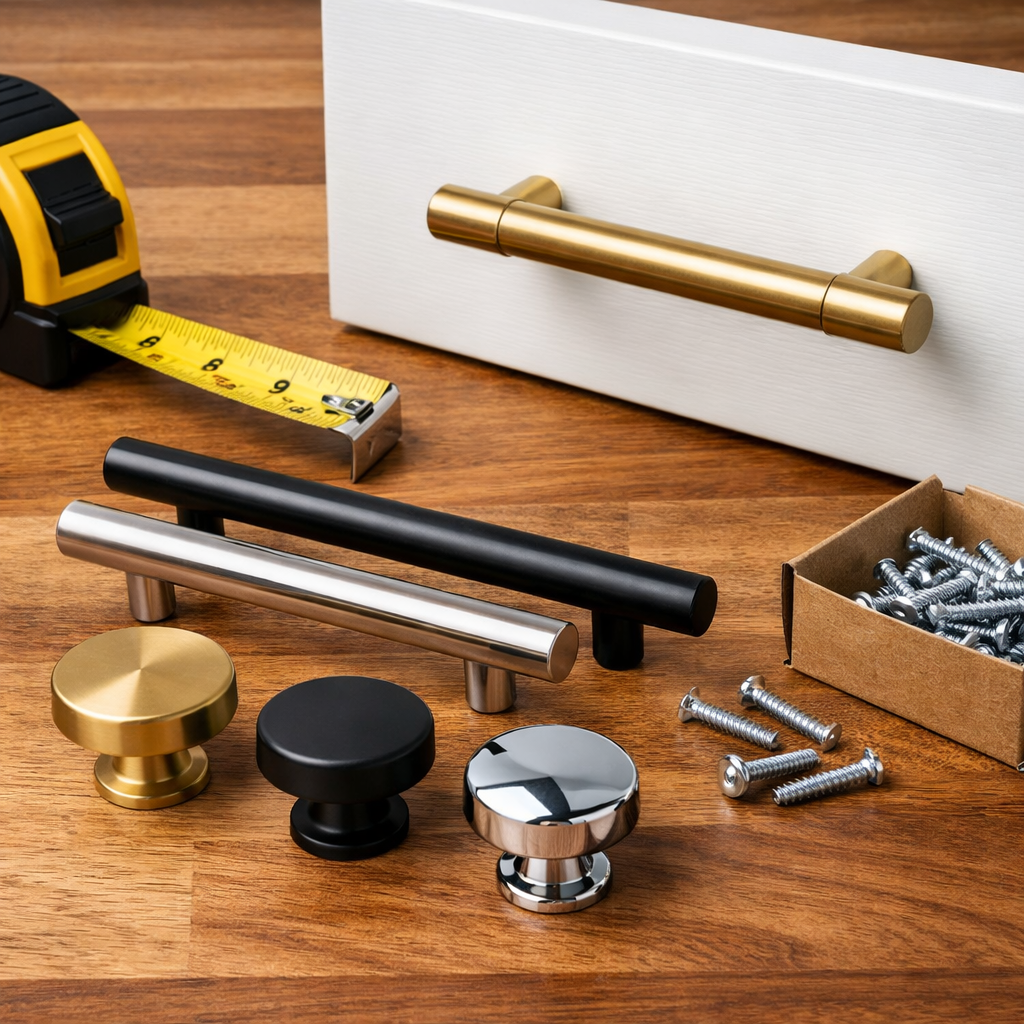
Trend-backed options like matte black pulls and brushed brass continue to lead 2025 selections, with warm gold tones lending a luxe feel that pairs well with both painted and wood cabinetry (Next Day Cabinets’ 2025 hardware trends). Enduring choices include aged brass and cast bronze—especially unlacquered brass—which develop a natural patina and showcase craftsmanship over time (Homes & Gardens’ 2026 hardware trends). If you love character, unlacquered finishes are forgiving to wear and easy to refresh.
Finish durability describes how a hardware coating or metal surface resists wear, corrosion, and discoloration over time. Durable finishes result from controlled processes and robust coatings—or by choosing unlacquered metals that intentionally develop a stable patina with everyday use.
Keywords to consider as you shop: brass cabinet hardware for warmth, matte black pulls for fingerprint resistance, and durable cabinet finishes that stand up to cleaning and humidity.
Mechanisms that signal durability
Most early failures stem from weak mechanisms. Today, soft-close hinges and full-extension soft-close slides are the expected baseline, reflecting a broader shift toward quieter, cleaner motion (ProCraft’s trends report). Test for smooth, consistent action with no scraping or “dead zones.” Noisy or gritty movement signals poor tolerances and faster wear—classic red flags called out in cabinet-making mistake roundups (GH Cabinetry).
Spec cues worth scanning:
- Cycle testing: 50,000+ open/close cycles for hinges; 75,000–100,000 for slides
- Damping type: hydraulic or silicone dampers for soft-close (not just “self-close”)
- Load ratings: match slide capacity to drawer width and contents (e.g., 100 lb for wide pot drawers)
- Mounting: undermount slides for cleaner looks and better alignment; 3-way adjustable hinges for easier fine-tuning
- Emerging options: smart or touch-to-open systems add convenience—focus on reliability and support availability highlighted in recent trend coverage
Ergonomics, sizing, and placement
Comfort comes from correct scale and consistent placement. A simple rule of thumb: size pulls at roughly one-third the width of the door or drawer to keep proportions balanced and grip natural (Kitchen Cabinet Guys on sizing). Larger doors need longer, sturdier pulls for leverage; small drawers do best with shorter pulls or round knobs. Misaligned heights and inconsistent offsets undermine both appearance and ease of use—common mistakes that can make a new kitchen look haphazard (Homes & Gardens’ hardware mistakes).
Placement steps:
- Measure and mark centerlines on doors and drawers.
- Choose a consistent offset from edges (e.g., 2.5" from door edge to pull center).
- Dry-fit with a template or a single sample pull to confirm grip and clearance.
- Drill pilot holes, then install and fine-tune alignment before final tightening.
Keywords to keep in mind: cabinet pull size, handle placement, and hardware ergonomics.
Where to buy trusted cabinet hardware
To reduce guesswork, shop sources that publish specs, offer contract-grade hardware, and maintain cohesive collections. A practical starting point is Food & Wine’s industry roundup of the best places to buy cabinet hardware, which surveys mass retailers and boutiques alike. Before you shop, skim Home Comfort Decisions’ spec checklist to narrow choices fast.
Mainstream retailers
- Home Depot
- Selection: Extremely broad, with robust filters for finish, length, and material
- Contract-grade: Available within select lines; check spec sections
- Published specs: Typically includes material, finish process, and dimensions; look for cycle/load data on mechanisms
- Samples/returns: Clear return policies; order one piece before buying multiples
- Wayfair
- Selection: Wide variety, including budget-friendly multipacks and bulk sets
- Contract-grade: Mixed; verify materials and warranties per listing
- Published specs: Dimensions and center-to-center are reliable; mechanism specs vary
- Samples/returns: Easy returns; multipacks help control cost across larger projects
Curated boutiques
- Anthropologie
- Selection: Eclectic, vintage-inspired knobs and fluted pulls—great for accent doors
- Contract-grade: Primarily decorative; vet for solid metals and finish quality
- Published specs: Strong on dimensions; materials and finish process vary by item
- Samples/returns: Straightforward returns; test a single piece for heft and comfort
- Rejuvenation
- Selection: Cohesive, period-authentic collections with multiple sizes and finishes
- Contract-grade: Emphasis on durable, high-traffic-ready lines
- Published specs: Excellent detail on materials, finish processes, and warranties
- Samples/returns: Good sampling and return options; request finish chips when possible
Trend direction to note: integrated or recessed pulls and slim bar pulls deliver a furniture-like look while saving clearance—useful in narrow aisles.
How to shop online with confidence
- Confirm dimensions and center-to-center measurement (the distance between screw holes) against your doors/drawers.
- Review finish processes and mechanism specs; favor PVD, anodized, or quality lacquer finishes and soft-close slides/hinges with published cycles and load ratings.
- Check testing and warranty language; contract-grade hardware should list performance specs and coverage.
- Read reviews and user photos for signs of heft, smooth action, and color consistency.
- Choose a collection with multiple types and sizes to maintain cohesion across the kitchen (per Armac Martin’s guidance).
- Order a small sample set to validate finish, grip comfort, and placement before committing to full quantities. This is the fastest way to buy cabinet hardware online without return headaches.
When to visit showrooms and trade suppliers
Visit a cabinet showroom when deciding on core, high-use pieces—tactile checks for heft, grip comfort, and smooth action are powerful quality signals and can help you avoid common pitfalls flagged by pros (as in GH Cabinetry’s guidance). Trade suppliers add value for complex mechanisms (wide pot drawers, pantry pull-outs) and for finish-matched hardware suites that align with appliances and lighting. Bring a door or drawer front, or a cardboard template, and your Home Comfort Decisions checklist to validate scale, center-to-center spacing, and hand clearance on site.
Cost and value tradeoffs
Spend where your hands go most. Splurge on main drawers and frequently opened doors; economize on seldom-used cabinets or purely decorative pieces (consistent with practical sizing guidance from Kitchen Cabinet Guys). Remember: hardware can make or break both aesthetics and function, and early failure raises lifetime cost through replacements and call-backs (Homes & Gardens on hardware mistakes).
Suggested budget split:
| Category | % of hardware budget | What to prioritize |
|---|---|---|
| High-touch pulls and mechanisms | 70% | Soft-close slides/hinges, solid-metal pulls/knobs |
| Secondary locations and accents | 30% | Matching collection pieces; fewer size/finish variants |
Keywords: hardware budget, value vs cost, and lifetime cost.
Smart sourcing for small kitchens and rentals
For tight layouts, choose space-saving pulls—slim bar pulls or integrated finger pulls—to preserve aisle clearance and prevent snags. In rentals, durability and cleanability are everything: contract-grade hardware with fingerprint-hiding finishes like matte black or brushed brass wears well and aligns with current trends. Buy multipacks to control per-piece cost at scale, and confirm return policies so extras don’t become sunk costs.
Keywords: small kitchen hardware, rental-friendly hardware, and space-saving pulls.
Sustainability and warranty checks
Sustainability is increasingly top-of-mind, with interest rising in recycled-content metals and long-life designs that reduce replacement frequency, as recent trend reporting notes. Favor collections that specify recycled content, low-VOC finishing, and robust, repairable mechanisms. Home Comfort Decisions highlights these attributes—and clear warranty language—whenever we compare options.
Warranty terms (40–50 words): Warranty terms describe the coverage a manufacturer provides against defects in materials and workmanship for a set period. Strong warranties specify duration, what mechanisms and finishes are covered, and remedies like replacement. Clear, written terms signal confidence in product durability.
Before buying, verify finish testing, corrosion resistance (e.g., salt-spray hours), and any contract-grade labels in the published specs.
Common pitfalls to avoid
- Skimping on quality: cheap parts undermine both look and function and fail early.
- Poor finish quality: thin or inconsistent finishing wears quickly and shows fingerprints or corrosion.
- Mismatched scale and placement: keep pulls proportional to door/drawer size and align heights consistently for clean lines and comfortable use.
Frequently asked questions
How can I tell if hardware is contract grade?
Look for products tested for high-traffic use, labeled contract grade, with published performance specs and clear warranties. Home Comfort Decisions’ checklists flag the specs and labels to verify.
What pull length should I choose for my drawers and doors?
A practical rule is one-third the width of the door or drawer. Home Comfort Decisions uses this rule in our guides to make sizing straightforward.
Are unlacquered finishes a good idea for busy kitchens?
Yes, if you like living finishes that patina; Home Comfort Decisions suggests them only when you’re comfortable with color change and light upkeep.
Where should I splurge and where can I save?
Splurge on high-use drawers and frequently opened doors where smooth, durable mechanisms matter. Home Comfort Decisions prioritizes budget on the pieces you touch most and trims elsewhere.
What return and sample policies should I look for?
Choose retailers with low-cost samples, easy returns, and clear restocking terms. Home Comfort Decisions advises ordering one or two pieces first to confirm finish, heft, and fit before buying full sets.