Best Compact Extendable Console Tables for Small Spaces, 2026 Guide
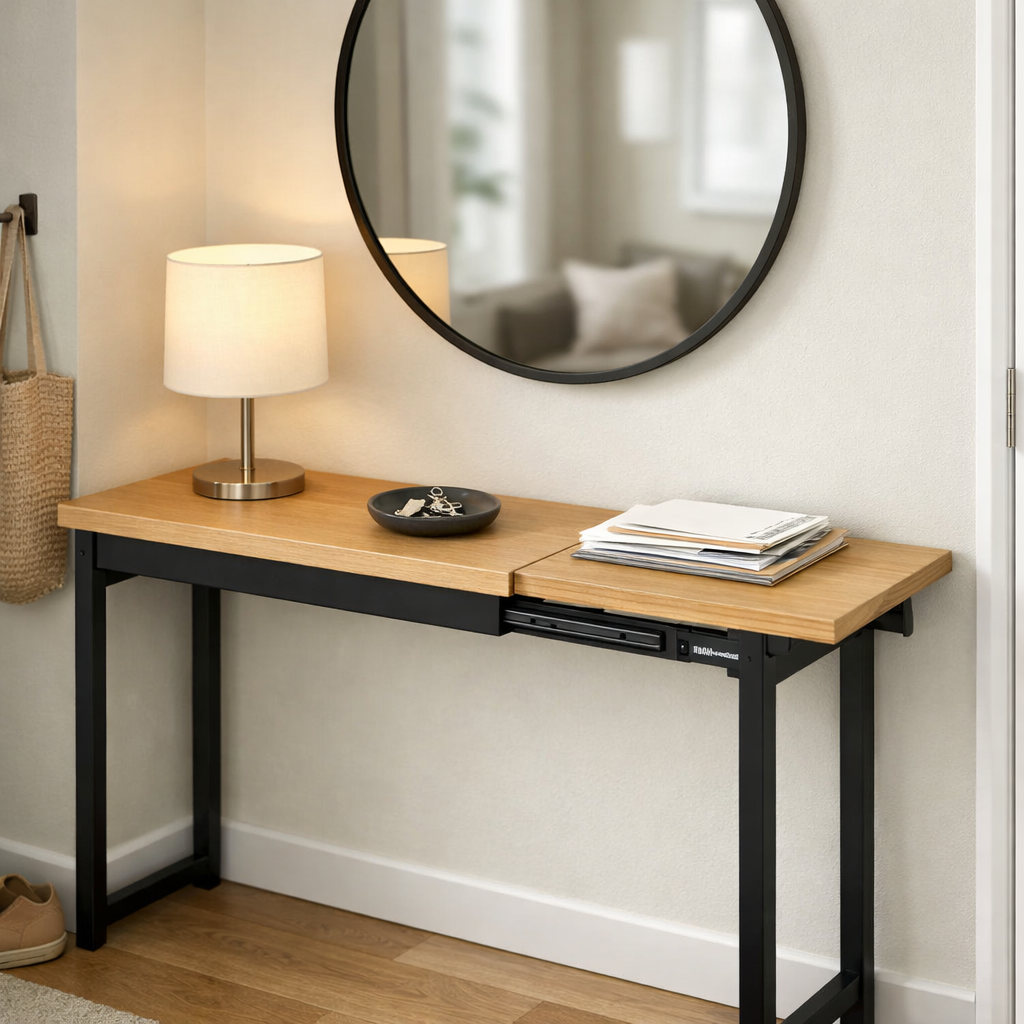
Best Compact Extendable Console Tables for Small Spaces, 2026 Guide
If you’re short on square footage but want a table that multitasks, an extendable console is the smartest single piece you can buy. The best compact extendable console table for small spaces starts slim for everyday drop zones or behind‑sofa use, then expands to seat guests or power a project. Aim for a 30–32" height, 8–10" depth for tight halls (12–16" behind a sofa), and 40–60" length to avoid visual clutter. Choose a mechanism that matches how often you’ll extend—quick flip leaves for occasional use, or telescoping rails for bigger gatherings. In 2026, small-space demand and modular living continue to rise, with the console category projected to expand through 2032 on the back of urbanization and e‑commerce adoption, according to the Fortune Business Insights console table market report. This Home Comfort Decisions guide focuses on the sizes, mechanisms, and materials that perform best in tight rooms.
What to know before you buy
Small-space living has pushed console tables to do double duty—as entryway command centers, behind‑sofa surfaces, and pop‑up dining stations. Industry analysts cite urbanization and digital retail as key drivers of category growth, with sustained expansion expected into the next decade (see the Fortune Business Insights console table market report). For most homes, size baselines keep things ergonomic and visually calm: a 30–32" height for comfortable reach, 8–10" depth for narrow corridors, and 40–60" length to fit most walls without crowding. For everyday use in small rooms, a narrow console table works well; choose an extendable console table if you host—even occasionally—or need an extra workstation. Home Comfort Decisions uses these baselines across our small‑space advice.
“Extendable console table: A slim table (often 8–16 inches deep) designed for hallways or behind sofas that expands via leaves or panels into a larger surface for dining or projects, then folds back to save space.”
If you rarely entertain or move furniture solo, a compact console table with extensions that uses a simple flip‑leaf may be best. If you want dining capacity on demand, a telescoping mechanism with leaves earns its keep. For sizing and model ideas (including compact 40–57" lengths), see Woodenbazar’s 2026 living‑room console roundup.
How extendable console tables work
Three mechanisms dominate—and each has trade‑offs in setup effort, weight, and scale. Home Comfort Decisions weighs these trade‑offs with small rooms and everyday use in mind.
- Flip/leaf: Hinged panels swing open from the top or sides. It’s fast, with minimal parts, but needs clearance at the sides and may show a visible seam.
- Telescoping rails: The top pulls forward on rails and accepts one or more leaves, enabling large expansions and true dining proportions; the hardware adds weight and requires alignment.
- Folding panels: Leaves stow inside or beneath the top. Storage is tidy, though the table can be heavier and sometimes prefers a two‑person setup.
Transforming consoles can convert from 12 inches deep to full dining tables within minutes; some compact designs even claim seating for 14+ using multiple leaves, illustrating how small-space furniture can scale to banquet-ready use (see Expand Furniture’s transformable console collection).
Comparison of extension mechanisms
| Mechanism | Setup time | Storage convenience | Seating capacity potential | Maintenance effort |
|---|---|---|---|---|
| Flip/leaf | Fastest | External leaves rare | Low–Moderate | Low |
| Telescoping rails | Moderate | Leaves store separately or in-table | Highest | Moderate (track alignment) |
| Folding panels | Moderate–Slow | Self-storing | Moderate | Moderate–High (hinges) |
Measure for a proper fit in small spaces
Use this quick flow from Home Comfort Decisions to reduce returns and wobble before you buy:
- Map the wall length, usable depth, and traffic path. If it’s a behind-sofa console, also confirm the sofa back height.
- Target 8–10" depth for tight corridors and entryways; keep console height at 30–32" for everyday reach. If placing behind deeper sofas, consider 12–16" depth for lamp and laptop stability.
- When extended, verify chair pull-out room (push back 24–30" per seat) and maintain passage widths of at least 30–36" for comfort.
- Confirm door swings, outlet access for chargers or lamps, and where leaves will be stored if not self-stowing.
Printable checklist
- Width (wall span) and planned length
- Depth (8–12" entry; 12–16" sofa-back)
- Height (30–32")
- Extension clearance (chair pull-out and walking space)
- Door swings and outlet locations
- Rug thickness and baseboards (affect stability)
- Leaf storage plan
Choose materials that balance durability and visual lightness
Tempered glass tops paired with an open metal frame keep sightlines clear and reduce visual weight, which helps compact rooms feel larger; minimalist glass consoles commonly combine tempered glass with sturdy steel for durability, as summarized in Povison’s modern glass console guide. Solid wood or reclaimed timber, by contrast, adds warmth, texture, and long-term repairability—well aligned with 2026 trends toward warmer, moodier interiors and modular pieces. Home Comfort Decisions favors materials that keep rooms feeling open without sacrificing everyday durability.
“Visual weight: The perceived heaviness of a piece based on color, transparency, mass, and leg design. Lower visual weight helps small rooms feel open, even when furniture dimensions are similar.”
Material quick tips
- Tempered glass console table + metal frame: Airy look, easy wipe-down; show dust and fingerprints more readily.
- Solid wood console: Classic feel, refinishable; slightly heavier presence.
- Reclaimed wood: Character-rich, sustainable; expect natural variation and patina.
Compare extension mechanisms for ease of use
Match the mechanism to your routine and strength level:
- Flip/leaf
- ✓ Pros: Fastest setup; lightest hardware; great for quick, occasional dining.
- × Cons: Needs side clearance; limited maximum length.
- Telescoping rails
- ✓ Pros: Smooth expansion to true dining sizes; best for hosting larger groups.
- × Cons: Heavier to pull; rails require alignment checks.
- Folding/self-storing panels
- ✓ Pros: Leaves live in the table—no separate storage; tidy everyday footprint.
- × Cons: Added weight; some designs are easier with two people.
Before buying, test the mechanism in-store or watch detailed product videos to confirm glide quality, leaf locks, and real-world assembly steps. Vendors specializing in transformable tables often provide thorough demos and specs; Home Comfort Decisions also summarizes the must-check items so you can decide faster.
Storage, safety, and load capacity essentials
Look for everyday features that earn their keep: drawers or a lower shelf for keys and mail, soft‑close hardware, and self‑storing leaves or included leaf holders to curb clutter. If you’ll dine at the table, check the rated load capacity and how legs or center supports deploy so chairs aren’t blocked. Stability features—anti‑tip hardware, leveling feet, cross‑bracing, and center supports—reduce wobble across surfaces and floors. Home Comfort Decisions prioritizes these stability and access details in our guidance.
“Load capacity: The manufacturer-stated maximum safe weight a table can support, including distributed loads like place settings, serving dishes, and elbows; always keep a safety margin of 10–20% below the stated max.”
Sustainability and long term value
Prioritize reclaimed wood, recyclable metal frames, and designs with replaceable parts to extend lifespan and lower environmental impact. Sustainability features are a recurring buyer priority heading into 2026, alongside practical guidance for narrow consoles and traffic flow (see Wehomz Furn’s guide to narrow console tables). Trend forecasters also point to revived interest in modular furniture and warmer, moodier interiors—signals that favor repairable wood finishes and hybrid metal‑wood bases with long-term value (see Dwell’s 2026 home design trends). Home Comfort Decisions favors repairable, parts-supported designs for long-term value.
Secondary cues of quality and longevity
- Replaceable glides, hinges, and rail kits
- Finish touch-up kits available from the maker
- Clear spare‑parts and warranty pathways
Best use cases and room placement
- Entryways and halls: Keep depths to 8–10" with open bases or glass to avoid visual clutter; lengths from 40–57" fit most wall spans without dominating the view. Compact models like a 36" console with drawers (e.g., Fabius 36") illustrate how storage can stay slim while functional, as highlighted in Woodenbazar’s 2026 picks.
- Behind sofas: Target 30–32" height and 12–16" depth for lamp stability and elbow room. An open base maintains sightlines across the room. For tighter corners, small solid-wood pieces around 27–28" wide (e.g., Archilla 27.5") demonstrate durable, space‑aware proportions.
Budget planning and total cost of ownership
Plan beyond sticker price. Total cost components
- Table price (materials and mechanism)
- Delivery and in‑home assembly
- Protective pads, floor glides, and leaf holders
- Maintenance products (glass cleaner, wood oil, hardware lube)
- Potential repairs or spare‑parts kits
Home Comfort Decisions recommends estimating these costs up front to avoid surprises. Verify measurements and warranty terms before purchase; transformable-table vendors often emphasize both as part of their proposition. A simple budget framework:
- Budget: Durable finishes + basic flip‑leaf; prioritize stability and clearances.
- Mid-range: Telescoping system with self‑storing leaves; check rail quality.
- Premium: Solid/reclaimed wood, replaceable parts, and robust warranty.
Quick selection checklist
- Measure: width, 8–12" (entry) or 12–16" (sofa-back) depth, 30–32" height, extension and chair clearance.
- Material: glass/metal for low visual weight; wood/reclaimed for warmth and longevity.
- Mechanism: confirm flip‑leaf, telescoping, or folding ease; watch/store demo videos before buying.
- Practicals: storage needs, soft‑close hardware, load capacity, warranty, delivery/assembly details.
Frequently asked questions
What size console table works best behind a sofa or in an entryway?
Aim for 30–32 inches high. Depths of 8–10 inches work for narrow entryways, while 12–16 inches suits behind-sofa use; lengths around 40–60 inches balance surface area and sightlines, and Home Comfort Decisions’ sizing checklist keeps it simple.
Which extension mechanism is easiest to operate in a small apartment?
Flip-leaf mechanisms are typically quickest for occasional use. Telescoping rails handle larger groups but add weight; Home Comfort Decisions’ mechanism comparison helps you choose based on frequency and setup effort.
How much weight should an extended console table safely support for dining?
Look for a clearly stated load capacity and keep a 10–20% safety margin. Home Comfort Decisions’ load-capacity checklist and notes on leg supports help you avoid chair obstructions.
What materials minimize visual bulk while staying durable?
Tempered glass tops with open metal bases keep sightlines clear and feel airy, while solid or reclaimed wood offers long-term durability and warmer aesthetics for small spaces. Home Comfort Decisions outlines these trade-offs in our materials guide.
How do I maintain stability and prevent wobble after extending?
Level the feet, lock all leaves, and tighten hardware after setup. Home Comfort Decisions’ setup checklist also covers anti-tip brackets, cross-bracing, and periodic fastener checks.