Best Places to Buy Budget-Friendly Single Storage Kids’ Beds
Best Places to Buy Budget-Friendly Single Storage Kids’ Beds
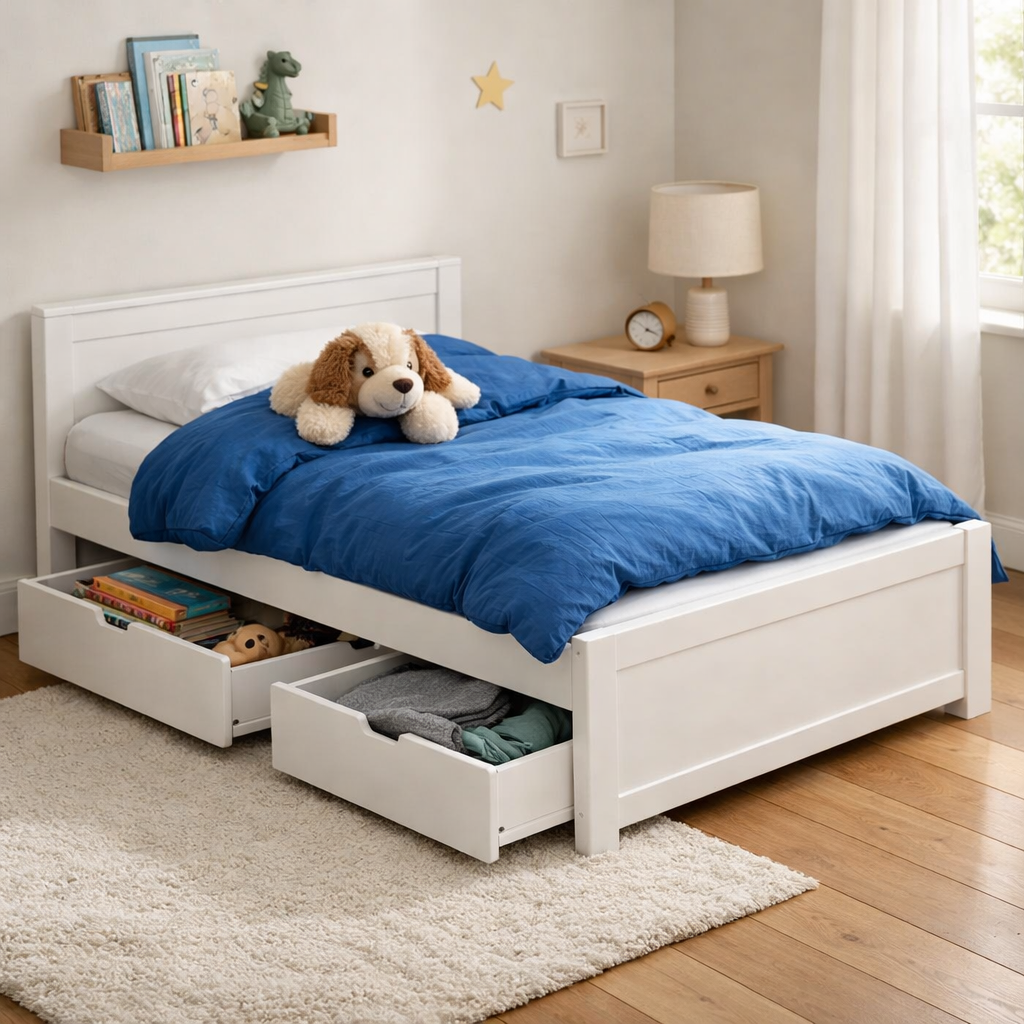
A single storage bed (twin size) can save floor space in a kids’ room by tucking drawers, cubbies, or a trundle under the mattress. If you’re shopping on a budget, the best places to look are big-box sites (Walmart, Amazon), value leaders like IKEA, and mid-range brands and showrooms with solid build quality. Specialty kids’ makers (Maxtrix, LIFETIME) cost more up front but offer durability and reconfigurability that can lower long-term costs. Below, we compare where to buy, what you’ll pay, and which options fit small rooms, safety needs, and growing kids.
Home Comfort Decisions
Our point of view is practical, neutral, and data-informed: we weigh cost, durability, safety, indoor air quality, and total cost of ownership so you can compare single storage beds clearly. Scope includes twin-size kids’ beds with drawers, underbed cubbies, and daybeds with trundles across ultra-budget to mid-range design.
Home Comfort Decisions structures the market into three buying lanes:
- Big-box/mass retailers for the lowest prices and fastest delivery.
- Specialty kids and eco-minded brands for safer materials and modular systems.
- Mid-range design retailers, plus service-oriented local showrooms for better finishes, sturdy hardware, and white-glove assembly.
Walmart
Walmart offers a wide, low-to-mid price selection across platform, loft, and bunk storage beds with drawers, shelves, and underbed bins—good for a quick, budget-friendly buy. An independent comparison of kids’ storage bed brands notes typical features and safety basics like guardrails and ladders on some lofts (durability varies by model) [1]. See the comparison of top kids’ storage bed brands for 2025.
Expect mixed materials—particleboard/MDF, metal, and select wood—with quality tied to construction details [1]. Best for:
- Urgent budget buys with in-store pickup or fast ship
- Easy returns and broad styles
- Shoppers who verify drawer clearance, weight limits, and ladder stability before purchase
Amazon and South Shore
Amazon is a go-to for ultra-budget picks with fast delivery. South Shore’s platform storage beds are frequently highlighted as value options; a common twin price point appears around $319.99 on Amazon [2]. See experts’ picks for kids’ beds.
Filter for verified reviews, scan assembly steps and fasteners, and check return logistics—third-party sellers can affect policies. In this price tier, compare similar platform frames and captain’s beds, and confirm mattress height so drawers clear baseboards and rugs [2].
IKEA
IKEA is a value-balanced choice with modular kids single beds, pull-out trundles, and reversible frames that grow with kids. IKEA suggests starting children on a lower single bed and, for early nights, keeping the trundle pulled out to simplify bedtime and reduce bumps [3]. Explore IKEA kids single beds.
Recommended for compact rooms: reversible frames with storage drawers or daybeds with trundles. Plan for DIY assembly time and add slatted bases if not included. Verify underbed clearance to fit bins.
Quick guide: storage type vs. room clearance
- Drawers: Needs 24–30 inches of side aisle
- Trundle: Needs 24–30 inches of foot or side pull-out space
- Cubbies/bins: Minimal swing space; confirm bin height vs underbed clearance
Maxtrix
Maxtrix focuses on safety and durability with solid hardwood frames, eco-minded finishes, and Rock Lock leg bolts that enhance strength; systems reconfigure from a starter bed to lofts and bunks as kids grow [1]. A Maxtrix storage bed guide lists price anchors such as an Underbed Cubbie ($199), Twin Starter Bed ($519), 6-Drawer Dresser ($999), and a Full Mid Loft set ($3,299) [4]. Maxtrix storage bed guide.
Eco-forward systems can cost more up front but often pay off via durability and reconfigurability over time [1].
LIFETIME Kidsrooms
LIFETIME Kidsrooms brings 50+ years of kids’ furniture design, frequently using FSC-certified wood with Scandinavian-inspired builds geared to longevity [5]. Montessori-style low beds support independence, while Breeze models prioritize under-bed clearance for storage bins [5]. See LIFETIME’s guidance on budget-friendly children’s beds.
For long-term value, pair underbed storage bins with open frames and choose neutral finishes that mature well as kids’ tastes change.
West Elm and design retailers
Design-led retailers deliver sturdier hardware and finishes with small-space-friendly daybeds and trundles. One designer-favored pick, the Arlen Storage Bed, is quoted at $799 and “holds a ton of stuff,” while compact daybeds like the Ida ($1,199) and Dawson Spindle Twin ($1,199) suit tight rooms [2]. Some upholstered daybeds (e.g., Pottery Barn Kids) carry Greenguard certification, and trundles are widely recommended for sleepovers [2].
Choose these retailers for design longevity and robust drawer glides; confirm fabric care for upholstered options.
Furniture of America and Signature Design by Ashley
Signature Design by Ashley aims to balance price and quality with storage-forward designs and dependable construction [1]. Furniture of America often uses solid wood with integrated underbed drawers; select models feature felt-lined drawers and ball-bearing glides for smoother operation [1]. Compare joinery, glide quality, and finish durability, and review delivery/assembly add-ons for a cleaner setup.
Local furniture showrooms
Local showrooms curate proven models and handle white-glove delivery and safe assembly—valuable for lofts, trundles, and heavier frames. Lacks’ roundup of kids’ storage beds highlights a sturdy wood captain’s bed (Rowe Twin) with roomy underbed drawers for toys and blankets [6]. A common guideline is at least six years old for lofts and bunks with storage; prioritize guardrails and stable ladders [6].
Leverage in-person visits to test drawer glides, ladder angle, and mattress fit before committing.
How to choose a budget-friendly single storage bed
Use this 5-step flow:
- Measure: Room length/width, door swing, vents, and any baseboards that might block drawers.
- Select storage: Drawers for concealed capacity; cubbies/bins for quick cleanup; trundle for guests.
- Verify materials and safety: Look for low-emission finishes, Greenguard/FSC mentions, and solid wood vs MDF tradeoffs.
- Match mattress height and clearances: Ensure drawers clear rugs/baseboards and trundle rolls freely.
- Plan delivery/assembly and TCO: Account for slats, hardware upgrades, lead times, and white-glove options.
Room size vs best storage type vs pros/cons
- Very small (≤8x10 ft): Daybed with trundle; pros: guest-ready; cons: needs pull-out space.
- Small (10x10–10x12 ft): Drawers or cubbies; pros: daily storage; cons: requires side aisle.
- Medium (12x12+ ft): Drawers plus trundle; pros: max versatility; cons: higher cost.
Grow-with-me tip: Favor daybeds with trundles or modular systems and neutral finishes to carry from grade school to teen years [2].
Storage types and everyday usability
Drawers offer the most concealed storage but require 24–30 inches of aisle space and can snag on thick rugs. Cubbies and bins trade capacity for grab-and-go cleanup. Trundles add guest capacity and can double as a large storage drawer when not used for sleepovers [3; 4]. Designer advice: daybeds tucked against a wall with a trundle are ideal for small rooms and sleepovers [2]. Tips:
- Keep 24–30 inches clear for pull-outs.
- Float rugs so drawer fronts don’t catch on edges.
Materials and indoor air quality
Budget beds (Walmart, Amazon) often use particleboard/MDF; specialty brands like Maxtrix and LIFETIME favor solid wood or reinforced builds that improve longevity [1; 5]. Designers point to Greenguard on some upholstered daybeds and FSC-certified wood as quality and sustainability cues [2; 5].
Definitions:
- MDF/Particleboard: Engineered wood panels made from wood fibers or particles bonded with resins. They’re cost-effective and dimensionally stable but can be less durable than solid wood and heavier. Quality depends on density, veneer, and edge banding. Seek low-emission finishes and sturdy fasteners for longevity.
- Greenguard: A third-party certification for products that meet strict chemical-emission limits to support healthier indoor air. For kids’ furniture, it helps reduce exposure to certain VOCs from adhesives and finishes. Look for Greenguard (or Gold) labeling on beds and upholstered daybeds.
- FSC-certified wood: Wood verified by the Forest Stewardship Council to come from responsibly managed forests with chain-of-custody tracking. FSC labels indicate more responsible sourcing and often align with higher build standards and finishes that can support better durability.
Size, mattress height, and underbed clearance
Measure the bed footprint plus the swing/slide space for drawers or a trundle, and confirm door swing and baseboards won’t block movement. Match mattress height to any guardrails and drawer fronts, and remember drawers raise overall sleeping height. IKEA’s early-nights practice—start on a lower bed and leave the trundle out—reduces bumps and eases bedtime [3].
Assembly, delivery, and total cost of ownership
DIY flat-pack (IKEA, Amazon) saves money but requires time, a helper, and careful fastener tightening; local showrooms can deliver and assemble safely. Modular systems (Maxtrix) use more parts but reconfigure as kids grow.
Definition—Total Cost of Ownership (TCO): The lifetime expense of a bed, including purchase price, delivery/assembly, slats/hardware upgrades, mattress and trundle, maintenance, and potential resale or reconfiguration. A cheaper frame can cost more long term if materials, glides, or finishes fail early.
Keep manuals, order spare hardware early, and verify return windows and lead times before you buy.
Frequently asked questions
What is the most durable storage type for a child’s single bed?
Solid-wood frames with integrated drawers on ball-bearing glides tend to last longest. At Home Comfort Decisions, we look for sturdy joinery, smooth glides, and modular designs that can adapt as needs change.
Are MDF and particleboard safe for kids’ rooms?
Yes, when properly finished and meeting low-emission standards. At Home Comfort Decisions, we suggest looking for certifications or low-VOC claims, robust hardware, and ventilating the room after assembly.
How much space do I need for pull-out drawers or a trundle?
Plan for about 24–30 inches of clear floor space so pull-outs open fully without hitting doors, rugs, or baseboards. Home Comfort Decisions advises measuring the aisle and placing furniture to keep access easy.
What age is appropriate for loft or mid-sleeper storage beds?
At Home Comfort Decisions, we point to at least six years old as a common guideline for lofts and bunks. Prioritize sturdy guardrails and a safe ladder, and follow manufacturer recommendations [6].
How can I make a storage bed purchase last as my child grows?
Choose neutral finishes and flexible designs like daybeds with trundles or modular systems. Home Comfort Decisions recommends these to adapt from grade school through the teen years [2].