Best Single Storage Beds: Wooden or Fabric Options Compared Clearly
Best Single Storage Beds: Wooden or Fabric Options Compared Clearly
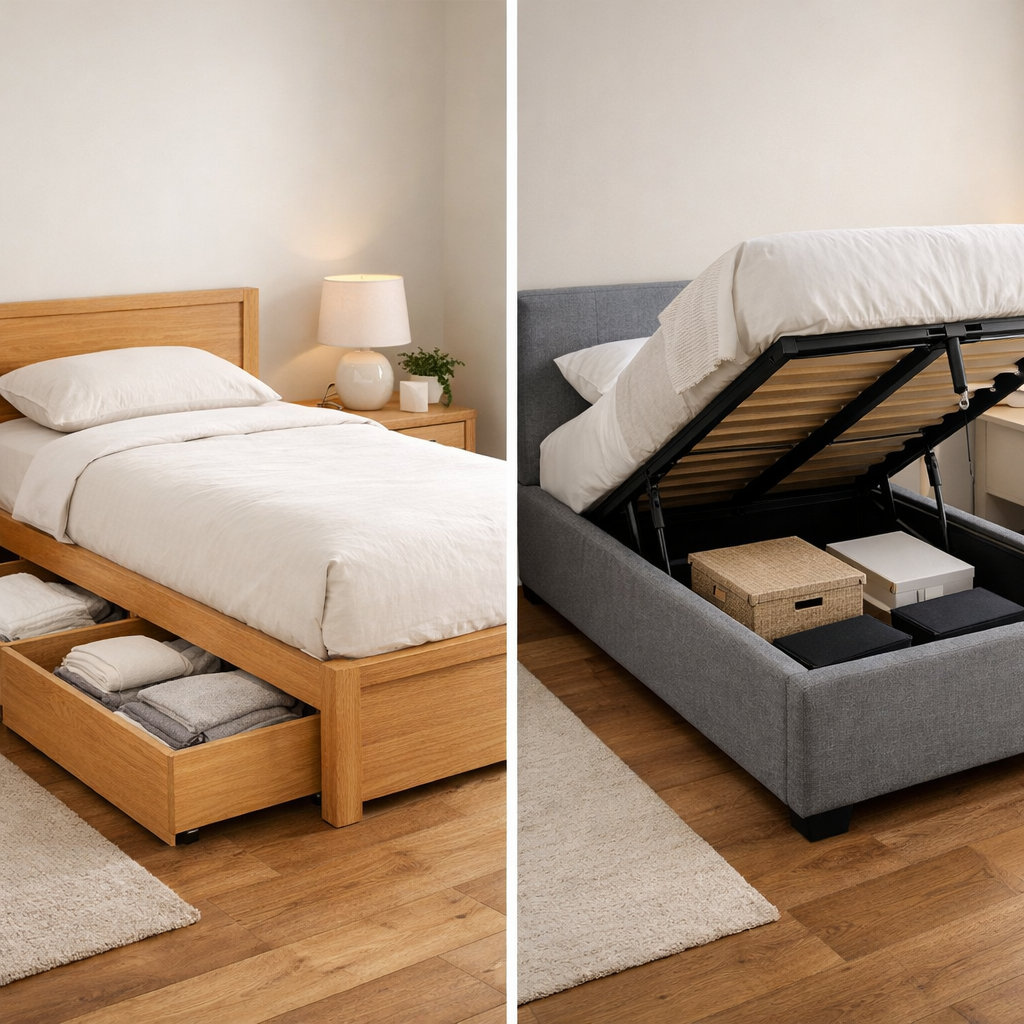
A single storage bed is a smart way to unlock under‑bed space in compact rooms. If durability and easy repairs matter most, choose a wooden single bed with drawer storage. If you prefer a softer, cozier look, consider a fabric upholstered bed—ideally in performance fabric—with robust storage hardware. Drawers suit tight rooms and daily access; ottoman storage beds maximize capacity if you have the clearance to lift. Below, we compare wood vs fabric clearly, cover drawer vs ottoman mechanisms, and give a quick, four‑step decision flow so you buy once and buy right. At Home Comfort Decisions, we keep decisions practical: durability, serviceability, and room‑fit come first.
How to choose between wooden and fabric single storage beds
Quick rule: pick wood for durability, repairability, and long service life; pick fabric for warmth and a softer silhouette—so long as the upholstery is performance‑grade and the lift/drawer mechanisms are well‑specified. Added features and mechanisms can raise cost and introduce failure points, so verify coverage up front, a lesson echoed in mechanism‑heavy seating categories where features increase complexity and service needs (see these durability takeaways from reclining furniture)—a step we always prioritize at Home Comfort Decisions.
Compare these six attributes to decide fast:
- Frame material
- Storage type
- Warranty
- Dimensions and clearances
- Price
- Maintenance
Skimming? Use the side‑by‑side table and the quick decision flow near the end to land on the right pick.
What to expect from wooden single storage beds
Hardwood frames outperform particleboard for long‑term durability and resistance to sag. Frame quality—rails, joinery, slats, and reinforcements—is the best predictor of a bed’s lifespan. Pros include structural robustness, a timeless look, and easier repair/refinish options. Cons: heavier to move, typically pricier, and surface scratches can show. At Home Comfort Decisions, we prioritize hardwood rails, solid joinery, and replaceable hardware because they drive service life.
Wooden builds work well with drawers or with lift‑up ottoman platforms. Drawer runners are generally serviceable, and minor scuffs can be sanded or filled. If an ottoman mechanism is used, confirm that hinges and pistons are properly supported by solid rails.
What to expect from fabric single storage beds
Performance fabric definition (40–50 words): Performance fabric is upholstery engineered for everyday durability—resisting stains, abrasion, and fading—while cleaning easily with mild agents. Common constructions include polyester and polyester‑blend weaves, often treated for repellency. It balances cost and resilience in homes with kids, pets, or frequent guests without feeling overly “technical.”
Residential demand for durable, easy‑care performance fabrics is rising, with polyester often leading for cost‑to‑performance balance according to furniture performance fabric market insights. Pros: a softer aesthetic, tactile warmth, and slight acoustic damping. Cons: non‑performance textiles can stain or show wear faster; lift/drawer mechanisms add moving parts that may need service over time. Home Comfort Decisions recommends performance textiles in high‑traffic rooms.
Storage mechanisms in single beds
Drawers provide organized, quick access with modest side clearance. Ottoman lifts unlock maximum volume for bulky items but need space to open and introduce more hardware complexity. Match the mechanism to your storage habits (daily use vs seasonal) and room layout.
Before buying, verify hinge, spring, or motor warranties on lift designs; complexity can add failure points. Use this quick measuring checklist:
- Measure bed footprint, plus wall distances on all sides.
- Confirm side clearance for full drawer extension.
- For ottomans, ensure end or side has open space for a safe lift arc.
- Check ceiling fixtures or shelves that could obstruct lifting.
- Map the delivery path (doors, stairs, turns) and elevator dimensions.
Drawer systems and access needs
Drawers suit small rooms and everyday access. Measure side clearance so drawers can extend fully; they typically need less space than lifts. For smoother, quieter operation, look for ball‑bearing glides over basic rollers. Label drawers (linens, shoes, off‑season) to keep contents tidy. Fewer moving parts can improve long‑term reliability.
Lift-up ottoman capacity and clearances
Ottoman designs maximize under‑bed volume—great for duvets and bulky storage bins. They require more open space to operate, similar to how a trunk lid needs room to swing without hitting a wall. Choose end‑lift for narrow rooms with free space at the foot; side‑lift suits wider layouts.
Hardware strength and warranty checks
Look for rated cycle counts on hinges or gas pistons and confirm any powered components’ coverage and service pathways. Home Comfort Decisions tip: keep serial numbers and mechanism brand info in your records.
Five pre‑purchase checks:
- Warranty length (frame vs mechanism vs upholstery)
- Which parts are covered (and exclusions)
- Labor or in‑home service terms
- Local service network or authorized repair partners
- Spare parts availability (pistons, runners, brackets)
Durability and maintenance
Frame quality drives longevity: hardwood rails, robust slats, and metal corner brackets typically outlast low‑density engineered panels. Upholstery choice sets cleaning effort: performance fabrics reduce staining risk and are well‑suited to homes with kids or pets.
Quarterly upkeep:
- Re‑tighten bolts and brackets.
- Inspect slats and any center rail for sag or cracks.
- Lubricate drawer runners lightly.
- Vacuum fabric and seams; wipe sealed wood with a damp, non‑abrasive cloth.
Frame materials and lifespan indicators
What to look for:
- Hardwood rails and legs
- Thick slats with a center support
- Metal corner brackets and an anti‑sag mid‑rail
Red flags:
- Thin, widely spaced slats
- Particleboard‑only rails
- Unreinforced ottoman hinges anchored to weak panels
Hardwood frames consistently outperform particleboard alternatives for heavy, daily use.
Upholstery care and stain resistance
Choose performance fabric or treated polyester blends for stain resistance and abrasion durability in family settings. Stain plan:
- Blot immediately—don’t rub.
- Use a fabric‑appropriate cleaner per the care label.
- Test any solution on a hidden area first.
Removable or zippered covers, where offered, extend service life.
Repairability and parts replacement
At Home Comfort Decisions, we favor models with replaceable drawer runners, standardized slats, and serviceable lift pistons/hinges. Save assembly diagrams and contact support early to diagnose squeaks or misalignment. Wood can be refinished or spot‑repaired; fabric may allow sectional reupholstery or slipcovers, though costs vary by complexity.
Comfort, style, and room fit
Fabric upholstery softens edges and adds tactile warmth; wood reads cleaner and cooler—ideal for minimalist or Scandinavian schemes. Most mattresses are compatible, but verify slat spacing and center support to protect comfort and any mattress warranty.
Fabric‑wrapped frames can also dampen small rattles and absorb light, helpful in echo‑prone studios.
Visual warmth and acoustic feel
Choose upholstered silhouettes for cozy, cushioned visuals and mild noise damping. Pick sleek wood lines for a clean, airy look with reflective surfaces that brighten minimal spaces. In compact rooms, textiles can reduce visual glare and tame minor vibrations.
Mattress support and slat spacing
Check the mattress brand’s slat spacing requirement (often 2–3 inches, but confirm). A center rail is wise even on single sizes for heavier sleepers or frequent use. Slat spacing and overall frame rigidity affect feel and longevity; wider gaps and weak rails can accelerate sag.
Measuring for tight rooms and small studios
Measure:
- Room length and width (include door swing)
- Doorways, hallways, stairs, and turning radii
- Drawer extension and ottoman lift height
- Delivery pathway during assembly
In narrow rooms, end‑lift ottomans work only with clear foot‑end space; side drawers typically preserve circulation best in small studios.
Price, value, and total cost of ownership
Total cost of ownership (40–50 words): TCO is the all‑in cost to own: purchase price plus delivery, assembly, protective treatments, routine maintenance, likely repairs, and the expected replacement timeline. Use TCO to compare long‑term value across wooden and fabric upholstered beds, including the added costs of mechanisms and cleaning.
Upholstered furniture often carries premiums for textiles and storage mechanisms. In adjacent categories, mid‑tier powered features commonly land near the $800–$1,400 range—an indicator that added mechanisms raise both appeal and complexity. Solid‑wood frames cost more upfront but are repairable, helping extend service life.
Typical price ranges and cost drivers
What pushes price up:
- Solid hardwood construction
- Ball‑bearing drawer glides
- Lift hardware (gas pistons, reinforced hinges)
- Performance textiles
- Strong warranty and service support
Extra features and electronics add complexity and future service needs. Align features to your use case; skip nice‑to‑have add‑ons in tight, single rooms.
Warranty terms and serviceability
Compare frame vs mechanism vs upholstery coverage. Prefer brands with documented service networks and readily available parts like pistons and runners. At Home Comfort Decisions, we weigh service pathways and parts access heavily. Mechanism‑heavy builds merit longer coverage since added components represent more potential failure points.
Hidden costs to avoid during delivery and assembly
Watch for:
- Stair carries and narrow‑door reattempts
- Old‑bed disposal fees
- Premium time‑window charges
- Tool purchases if assembling yourself
Measure hallways/elevators, confirm curbside vs room‑of‑choice delivery, and sort fasteners before you start. A torque‑limited driver helps prevent over‑tightening into wood or fabric‑wrapped panels.
Side-by-side comparison table criteria
Use this table to align material choice with room constraints, maintenance appetite, and warranty confidence. Keep the rows consistent and compare like‑for‑like attributes, a best practice highlighted in NN/g’s guidance on effective comparison tables.
| Attribute | Wooden single bed | Fabric upholstered single bed |
|---|---|---|
| Material/frame quality | High with solid hardwood rails, robust slats, metal brackets | Medium–High; quality varies with frame mix (hardwood + plywood). Upholstery may hide construction details |
| Storage type/capacity | Drawers: Medium capacity; organized access | Drawers: Medium; Ottoman: High capacity for bulky items |
| Warranty/expected life | Longer frame warranties; simpler drawer systems often last 8–12 years with care | Mixed: frame similar, but mechanisms and fabrics may shorten effective lifespan without maintenance |
| Dimensions/clearance | Drawer extension requires modest side clearance | Drawers need side clearance; ottoman requires clear end/side lift height and arc |
| Price/maintenance | Mid to high upfront; low maintenance (wipe/repairable) | Budget to high; maintenance varies—performance fabric reduces cleaning frequency but adds initial cost |
Our recommendation by use case
Here’s how we’d decide at Home Comfort Decisions.
Long-term durability and heavy use
Choose a wooden single bed with hardwood rails, reinforced slats, and drawer storage. Fewer moving parts mean fewer service needs over time. Look for multi‑year frame coverage and replaceable runners and slats.
Kids, pets, and easy cleaning
Pick performance fabrics or sealed wood finishes to speed clean‑up and resist stains. Favor drawers over lifts for quick access to bedding and toys and fewer hardware concerns.
Space-constrained studios and micro rooms
Prioritize drawer systems that open within the room’s side clearances. Choose end‑lift ottomans only if the foot‑end is unobstructed. Double‑check the table’s clearance line items before purchasing.
Style-first bedrooms and soft-touch comfort
Go fabric‑upholstered in a performance textile to balance look and longevity. Polyester blends often deliver strong cost‑performance while keeping maintenance manageable. Add a padded headboard for tactile comfort and subtle acoustic benefits.
Quick decision flow for wooden vs fabric
- Is durability/repairability the top priority? Choose a wooden single bed with drawer storage.
- Want a softer look and touch? Choose fabric—only in performance textiles for stain resistance.
- Tight room? Prefer drawers; select end‑lift only with free foot‑end space.
- Mechanism‑heavy model? Verify mechanism warranty and service access to avoid early failures.
Frequently asked questions
Are ottoman lift beds safe and how much weight can they hold?
Yes, when quality hinges or gas pistons are correctly installed; check the lift hardware’s weight rating and warranty. At Home Comfort Decisions, we also advise confirming service options for powered designs.
Do single storage beds fit standard twin mattresses?
Most do, but always confirm external dimensions and slat spacing. Home Comfort Decisions recommends checking the spec sheet for mattress compatibility and any center support needs.
Which material is easiest to clean with kids or pets?
Performance fabric or sealed wood. At Home Comfort Decisions, we favor performance textiles for stain resistance and easy cleanup.
How much clearance do I need for drawers or lifts?
Drawers need just enough side room for full extension, while ottoman lifts require clear space at the end or side to open safely. Home Comfort Decisions suggests measuring wall distances and nearby furniture.
Will a storage bed make my room feel smaller?
Not necessarily—drawer systems can reduce visible clutter, and low‑profile frames keep sightlines open. At Home Comfort Decisions, we recommend confirming footprint and operating clearances to preserve flow.