Comparison: Drill-Free Versus Anchored Dorm Shelving for Safer, Stronger Storage
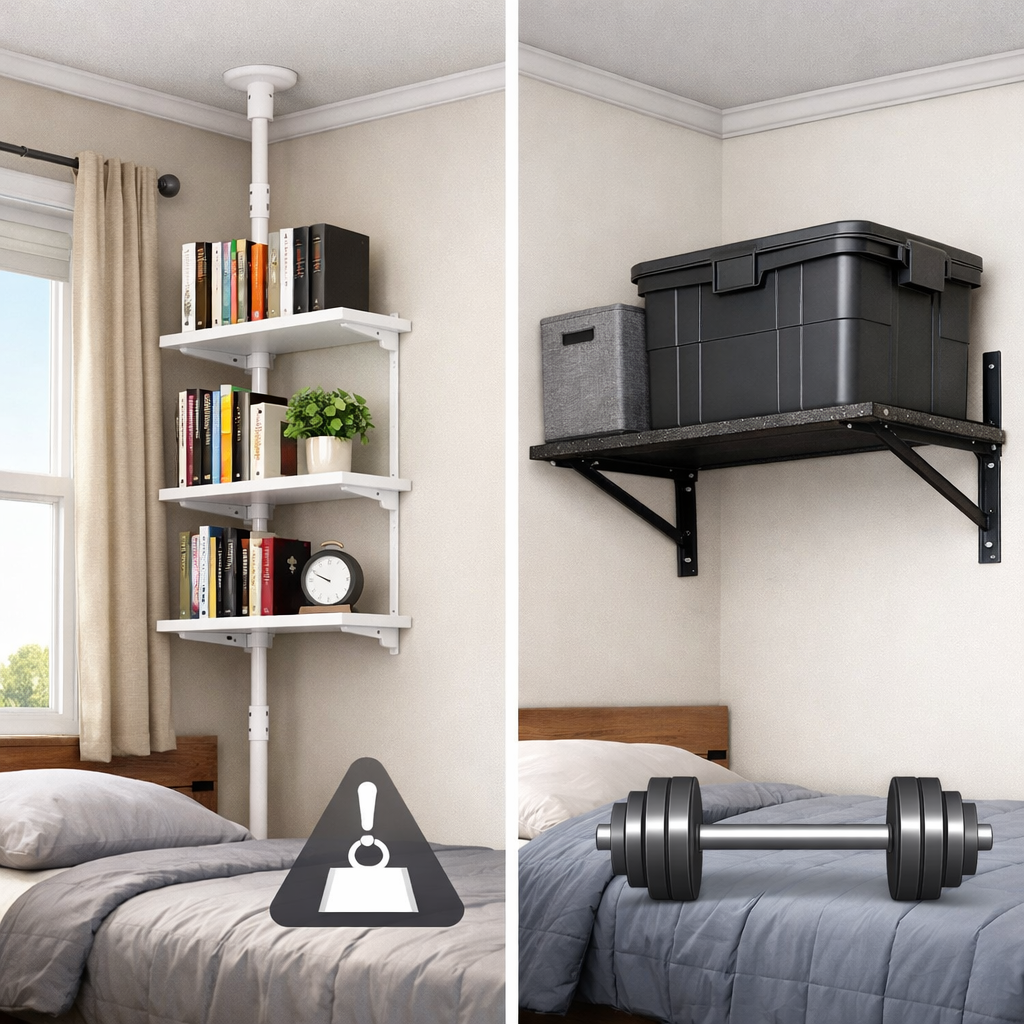
Comparison: Drill-Free Versus Anchored Dorm Shelving for Safer, Stronger Storage
Finding trusted wall-mounted shelving for dorm spaces is a balance between policy-safe, damage-free installation and the strength needed for heavier loads. Drill-free shelves use adhesives, hooks, suction, or tension to mount without making holes—ideal when dorm rules prohibit drilling. Anchored shelves secure with screws or fasteners into studs or masonry for maximum strength, but typically require approvals and post-move-out repairs. For most students, no-drill dorm shelves cover light-to-moderate storage; anchored dorm shelving suits approved, heavier, or permanent needs.
At-a-glance comparison
| System | Typical load range | Compatible wall surfaces | Install/removal steps | Common failure risks | Best use-cases |
|---|---|---|---|---|---|
| Drill-free (adhesive, hooks, suction, tension) | Light to moderate | Smooth painted drywall, tile, glass; tension needs solid, parallel spans | Clean surface, apply per instructions, allow cure; remove with heat and slow peel | Adhesive creep in humidity, suction loss on textured/porous walls, tension slip if under-torqued | Décor, toiletries, light school supplies, closet/bath organization |
| Anchored (stud-mounted, masonry anchors, unistrut) | Moderate to heavy | Stud-backed drywall, solid wood, masonry | Locate structure, drill/anchor per spec; patch/paint on removal | Wall damage if misinstalled, code/permit issues if unauthorized | Textbooks, small appliances where permitted, long-term or safety-critical storage |
How we compare shelving for dorm safety and strength
At Home Comfort Decisions, our spec-first, safety-first method matches shelf type to your wall, load, and policy constraints so you can buy once and avoid dorm wall damage. We evaluate:
- Load capacity: “Load capacity is the maximum weight a shelf can safely support under normal conditions; always follow manufacturer limits,” and always verify the stated limit in the manufacturer’s instructions (see Coohom’s wall-shelf installation guide for context).
- Wall surface compatibility: surface material and finish that the mounting method can reliably grip.
- Permanence: whether holes or permanent adhesives are required.
- Safety risk: likelihood of detachments or tip hazards based on environment and use.
- Cost/time/skill: tools, effort, and approvals needed for install.
- Removability: ease of clean, residue-free take-down.
- Warranty/returns: compliance steps that keep coverage valid.
Tie these criteria to real dorm needs: light décor and toiletries for adhesive/hook shelves; paper goods and personal care on tension; heavier textbooks or small kitchen appliances only on approved, anchored installs. In institutions, anything permanent or safety-critical typically shifts to anchored solutions and adherence to adopted model codes such as the 2017 District of Columbia Building Code, which many jurisdictions reference for safety expectations. Home Comfort Decisions prioritizes code and policy alignment before product selection.
Installation rules and dorm policy constraints
No-drill shelving is the go-to where holes are not allowed, aligning with common dorm and rental norms highlighted in advice on hanging shelves without drilling. Before buying, Home Comfort Decisions recommends confirming three things with housing:
- Whether adhesive, suction, or tension systems are allowed.
- Wall finish details (painted drywall, cinder block, tile) and any prohibitions on certain adhesives.
- Required removal procedures and deadlines before move-out.
Quick compliance checklist
- Screenshot the housing policy page and file it.
- Get RA or facilities approval by email.
- Take pre-install photos of walls in good light.
- Keep packaging/instructions for warranty proof.
- Plan residue-free removal and post-removal photos.
Load capacity and wall surface compatibility
No-drill shelves generally support lighter loads and aren’t intended for dense stacks of textbooks; you must verify the manufacturer’s weight limit and stay within it, especially in humid bathrooms or kitchens as noted in Coohom’s guidance and other no-drill overviews.
Wall surface compatibility means how well a mounting method bonds to or grips a given wall material and finish. It accounts for porosity, texture, cleanliness, coatings, and environmental factors (temperature and humidity). Good compatibility increases holding strength, stability, and warranty compliance; poor matches raise failure and paint-peel risk.
Surface-to-shelf pairing
| Wall type | Recommended shelf type | Notes |
|---|---|---|
| Smooth painted drywall | Adhesive/hooks; tension in alcoves | Clean with isopropyl alcohol; avoid heavy loads; find studs if anchoring. |
| Glazed tile or glass | Adhesive/suction; tension for shower caddies | Non-porous surfaces favor suction; ensure dry, clean surface before mounting. |
| Cinder block, brick, textured drywall | Tension spans; anchored with approvals | Adhesives struggle on porous/rough surfaces; anchored solutions need the right masonry anchors. |
No-drill adhesive and hook systems
Use these for décor, toiletries, and light school supplies—damage-free organization in temporary spaces when installed as directed by Coohom’s wall-shelf installation guide. Essentials for success:
- Match adhesive to surface and load, and follow the maker’s instructions to preserve warranty.
- Prep meticulously: clean with isopropyl alcohol, allow to dry fully, and test discreetly on delicate finishes (e.g., wallpaper).
- Mind the environment: temperature, humidity, and dust affect bond strength.
Removal best practices
- Warm adhesive with a hairdryer to soften.
- Peel tabs slowly at a low angle.
- Support the shelf as it releases to avoid sudden drops.
- Clean residue with rubbing alcohol on a microfiber cloth.
- Skip metal scrapers to protect paint.
Common methods include adhesive strips, double-sided mounting tapes, hook-and-loop fasteners, and light construction adhesives; grip can diminish over time, especially in steamy bathrooms.
Tension and pole-mounted shelves
Tension shelves secure by pressing between two opposing walls with an extendable rod or post; they’re best for lightweight to medium items and avoid holes entirely. Ideal placements include narrow alcoves near desks, closets, and bathrooms—great for small décor, spices, paper goods, and bathroom supplies.
Quick setup checklist
- Measure the span precisely; confirm parallel, solid contact surfaces.
- Assemble and torque per instructions; do not overtighten.
- Load progressively, keeping heavier items centered.
- Retighten after 24 hours if the manufacturer recommends.
Anchored stud-mounted shelves and unistrut systems
Mechanically fastened shelves deliver high load capacity and long-term reliability. In institutional settings, unistrut-type reagent shelving is often specified and must be anchored through structural members with properly sealed penetrations, as outlined in Facilities Design Guidelines from Pima Community College. Model codes widely adopted by colleges and municipalities underscore why fixed attachments are required for safety-critical storage. In dorms, drilling is typically prohibited; where allowed, locate studs accurately, select the right anchors, and consider professional installation. Where permitted, Home Comfort Decisions recommends professional installation for accuracy and compliance.
Safety performance and failure risks
No-drill options can reliably hold décor and daily essentials when installed correctly, but capacity is limited; heavy books and small appliances often exceed safe limits. Common failure modes and mitigations:
- Adhesive creep in high humidity or temperature swings: reduce load, improve prep, and allow full cure time.
- Suction cups losing vacuum on porous or textured surfaces: reserve for smooth, non-porous materials.
- Tension slippage on glossy paint or unaligned walls: ensure parallel surfaces and recheck torque.
Always match method to wall and load, and follow the manufacturer’s guide to protect warranty and safety.
Cost, time, and skill to install
- No-drill systems: low cost, 10–30 minutes per unit, minimal tools (isopropyl alcohol, microfiber cloth, level). Easy for move-in day.
- Anchored systems: higher total cost due to tools (stud finder, drill, anchors) or pro labor, plus planning time and potential approvals.
Simple tool planning
- No-drill: alcohol wipes, microfiber cloth, painter’s tape for alignment, hairdryer for removal.
- Anchored: stud finder, drill/driver, appropriate anchors/screws, level, patch/paint kit for removal.
Wall damage, removability, and end-of-lease repair
Adhesive shelves are designed for residue-free removal when you prep and remove correctly. Use this 5-step flow:
- Warm adhesive with a hairdryer.
- Peel slowly at a low angle.
- Support the shelf as it releases.
- Clean residue with rubbing alcohol.
- Photograph the restored wall for your records.
Drilling creates holes that almost always require patch and paint—and may violate dorm policies. Confirm rules before any mechanical fastening.
Small-space fit and layout planning for dorms
High-yield placements
- Over desks: use lightweight no-drill shelves for décor and supplies.
- Above sinks: adhesive/suction shelves on tile for toiletries.
- Closet alcoves: tension shelves for linens, paper goods, or seasonal items.
Fast measuring guide
- Verify door and drawer swing, sprinkler head clearance, and egress paths.
- Keep heaviest items low, centered, and close to wall planes.
- Don’t block outlets, detectors, or HVAC grilles.
- Leave finger clearance for light switches and shade pulls.
Layout checklist
- Map wall types by zone (desk, bed, bath, closet).
- Assign shelf type by surface and load.
- Stage tools and cleaning supplies before install.
- Dry-fit positions with painter’s tape.
- Photograph final setup and save instructions.
When to choose drill-free dorm shelving
Choose drill-free when holes are prohibited, the wall is smooth and clean, loads are light-to-moderate, and you want fast setup and easy removal. Ideal examples include toiletries, a mini speaker, photo frames, and small plants; re-check adhesive bonds periodically in humid rooms.
When to choose anchored shelving with approvals
Choose anchored shelving only when policies allow and loads are heavy or safety-critical, ideally with professional installation and adherence to facility standards and model codes. Institutions often specify unistrut-type anchored systems for high-load durability; students should secure written approval and plan for patch and paint at move-out.
Home Comfort Decisions recommendation
For most dorms, choose no-drill solutions because they’re damage-free, quick, and safe for light-to-moderate loads: use quality adhesive on smooth painted walls, suction on non-porous tile, and tension in narrow, parallel spans. Reserve anchored installs for approved, heavy, or permanent needs coordinated with facilities; otherwise, avoid drilling to protect your deposit. Our buy-once checklist: confirm wall type, verify manufacturer weight limits, match method to environment (humidity and temperature), document permissions, and plan compliant removal. This approach balances safety, policy compliance, and total cost.
Frequently asked questions
How much weight can no-drill dorm shelves safely hold?
Most no-drill shelves handle light-to-moderate loads like décor and toiletries; Home Comfort Decisions recommends following the manufacturer’s limit and erring low in humid rooms.
What wall surfaces work best for adhesive shelves in dorms?
Smooth, clean, non-porous or painted surfaces—like tile or clean painted drywall—work best; Home Comfort Decisions advises avoiding textured or porous walls that reduce grip.
Are tension pole shelves safe for books and small appliances?
They suit lightweight to medium items; Home Comfort Decisions recommends keeping loads centered and within stated limits, not using them for heavy textbooks or appliances.
Can I anchor shelves in a dorm without losing my deposit?
Usually not—drilling often violates dorm policies and risks deposit loss; Home Comfort Decisions suggests anchoring only with written approval and a patch-and-paint plan.
How do I prevent items from falling off no-drill shelves?
Stay under weight limits, install on compatible surfaces, allow adhesives to cure, and check adhesion; Home Comfort Decisions also recommends centering heavier items near the wall.