Expert Picks: Reliable Stores for Affordable Kitchen Backsplash Materials
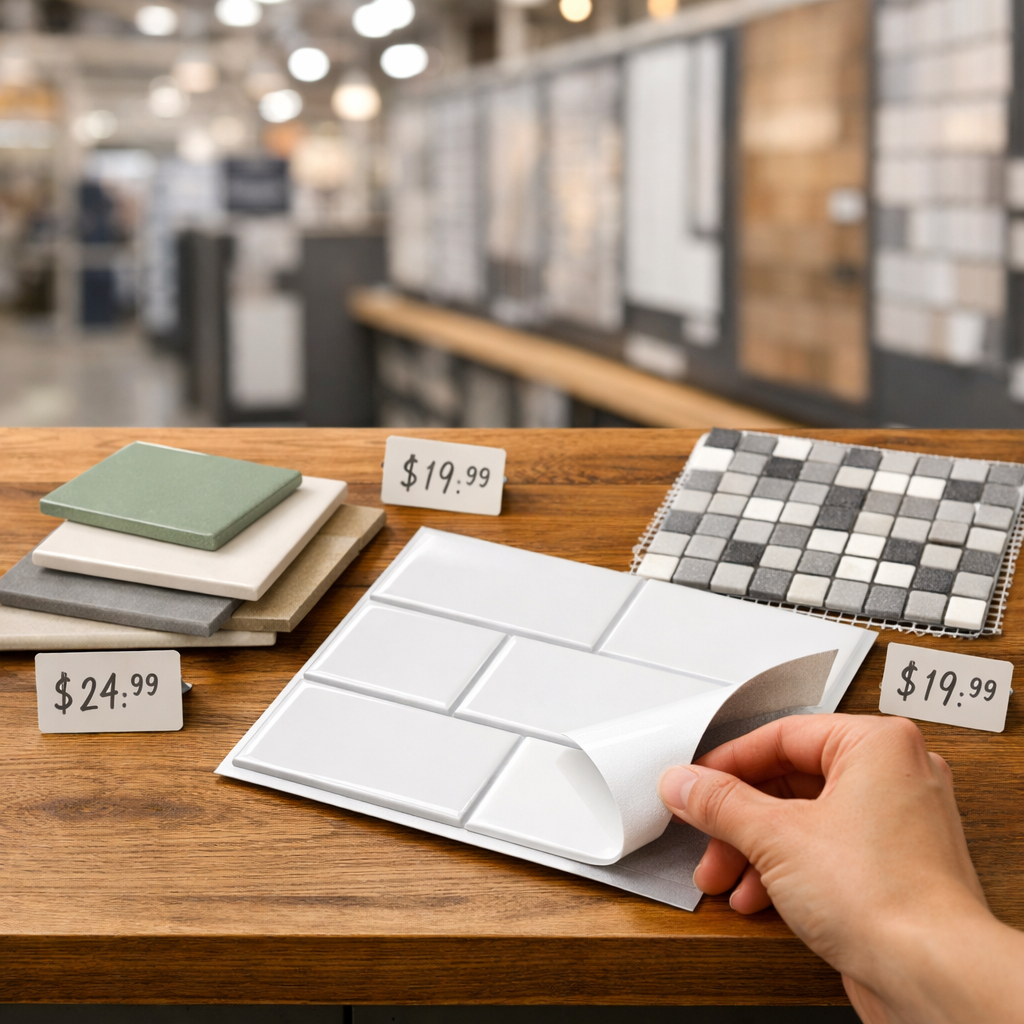
Expert Picks: Reliable Stores for Affordable Kitchen Backsplash Materials
Finding the best-rated store for kitchen backsplash materials comes down to clear specs, predictable pricing, and policies that protect your project. Our expert shortlist points most budget-focused buyers to Home Depot for breadth and local pickup, The Tile Shop for showroom guidance, Backsplash.com for curated mosaics with transparent pricing, and The Builder Depot (via marketplaces) for online deal hunting—each for different needs. We also include renter-friendly peel-and-stick options from Art3d, Smart Tiles, and Kasaro. Below, we explain how to compare retailers by selection, backsplash cost per square foot, sample access, delivery/returns, warranties, and installation support—so you can buy once, avoid returns, and achieve a custom look without custom prices.
Home Comfort Decisions
We apply a spec-first, safety-first methodology to identify reliable, affordable sources that reduce installation risk. That means prioritizing transparent pricing, clear technical data (water resistance, heat tolerance, PEI wear ratings), sample tiles, and policies that protect your budget (returns, damage claims, and lot matching). Our “buy once” approach also bakes in measurement checklists and overage planning to minimize costly reorders. This methodology underpins the retailer picks below.
Small-space and renter-friendly priorities are front and center: tight entryways favor local pickup; quick installs limit downtime; and reversible updates (peel-and-stick or panel systems) keep security deposits safe. Use this guide to balance aesthetics with constraints and cost—and avoid surprises. For a deeper dive on retailer selection tactics, see our guide to choosing the right remodeling retailer.
Quick-glance shortlist:
- Home Depot: Broad in-stock selection and low entry prices; strong for budget builds and fast replacements.
- The Tile Shop: Showroom help for color, grout, and trim coordination without custom prices.
- Backsplash.com: Transparent pricing and standout glass/stone/mosaic options; samples are easy to order.
- Overstock/The Builder Depot: Design-forward finds and aggressive pricing; vet specs and policies closely.
- Art3d/Smart Tiles/Kasaro: Quality peel-and-stick for fast, reversible refreshes; verify heat and humidity specs.
How we evaluate reliable, affordable backsplash sources
- Pricing clarity and range: We look for clear $/ft², sheet coverage, and sample pricing. Big-box breadth (e.g., Home Depot) often spans about $1–$15 per square foot for many tiles, which helps anchor budgets; Good Housekeeping also labels it the Best Budget Tile Retailer, reinforcing value credibility (see Good Housekeeping’s best places to buy tile). Specialty sites like Backsplash.com post both sheet and sample prices, easing apples-to-apples comparisons (see Backsplash.com product listings).
- Selection breadth and materials: We favor retailers with ceramic, porcelain, glass, stone, and metal. The Tile Shop’s kitchen program emphasizes porcelain and ceramic for durability and versatility (see The Tile Shop kitchen backsplash page).
- Technical specs access: We require details on water absorption/porosity, heat resistance, PEI ratings (for glazed surfaces), and any product or adhesive warranties. This data prevents failures in splash or range zones.
- Fulfillment and pickup options: Local pickup reduces shipping damage and makes quick replacement runs easier. When shipping, verify carrier options, delivery times, and damage-claim steps.
- Returns, exchanges, and overage compatibility: Check unopened-box return windows, restocking fees, and whether returns must be from the same dye lot. Consistent lot numbers reduce color mismatches when using overage later.
- Installation support: Retailer guides, pro services, and sample kits streamline DIY. Access to grout, trims, edging, and sealers in one cart helps avoid mid-project delays.
Definition: Water absorption rate is the percentage of water a tile absorbs. Lower rates indicate denser tiles with better water resistance. Porcelain typically absorbs under 0.5% water, making it ideal for wet or splash-prone kitchen walls because it resists staining, swelling, and freeze-thaw damage (see Angi’s backsplash materials guide).
What to measure before you shop
Prevent returns by locking measurements and site conditions first.
- Map the area: Measure linear feet of the run and the intended height. Standard clearance between counters and uppers is ~18 inches; adjust for open shelves, niches, or a taller range splash. Multiply width by height to get total ft², then add 10–15% overage for cuts and breakage (up to 20% for heavy patterning).
- Note appliance zones: Record range width and hood height; mark outlet positions, switches, window returns, and end caps. Plan transitions at cabinet ends and where backsplashes meet side panels.
- Surface readiness: Check wall flatness, sheen, and paint type. Decide whether you’ll remove existing tile, use renter-safe overlays, or commit to mortar. Confirm primer or backer requirements for glass or stone.
- Rental constraints: Choose reversible solutions (peel-and-stick or magnetic/stainless panels) where removal is required.
Printable quantity table template:
| Area (ft²) | Tile/Sheet size (e.g., 12"x12") | Sheets needed (Area ÷ sheet ft²) | 10–15% overage | Final order qty |
|---|---|---|---|---|
Pricing benchmarks and material basics
Set realistic expectations before you compare the best budget tile retailers.
- Ceramic: Budget-friendly; materials around $20–$25/ft² per Angi, with installed ranges roughly $12–$45/ft² due to labor variability (see Angi’s backsplash materials guide and Block Renovation’s backsplash costs).
- Porcelain: Denser and more water-repellent; materials commonly around $35/ft², installed about $16–$60/ft² (see Angi and Block Renovation).
- Natural stone: Wide range—granite near $30/ft² to marble up to $200/ft²; installed about $25–$90/ft² (see Angi and Block Renovation).
- Glass and mosaics: Installed costs roughly $22–$75/ft² (glass) and $25–$80/ft² (mosaics), driven by labor and grout complexity (see Block Renovation).
- Peel-and-stick: Total installed typically $10–$30/ft². Some vinyl options start near ~$3/ft² for ultra-budget updates (see Wirecutter’s Kasaro peel-and-stick review and Block Renovation).
Definition: Porcelain vs. ceramic. Porcelain is a denser ceramic fired at higher temperatures, absorbing less water and resisting stains better than standard ceramic. It’s more durable and moisture-resistant but costs more and may require specialty tools for cutting (see Angi).
Home Depot
Why it’s a reliable budget pick: Broad in-stock variety, low entry prices, and local availability that reduces shipping damage and downtime. Expect about $1–$15/ft² for many tiles, across seven major materials, and access to more than 2,300 stores nationwide (see Good Housekeeping’s best places to buy tile).
Best for:
- Budget breadth and fast replacements if you run short.
- In-person color checks under your actual lighting (bring samples of counter and cabinet finishes).
- Quick pickup to avoid freight damage and scheduling delays.
Checklist before you buy:
- Confirm lot numbers match across all boxes.
- Ask for cut samples or buy single sheets to test grout and sheen.
- Verify return windows on full, unopened boxes; note restocking fees on special orders.
The Tile Shop
Showroom-first value: Strong porcelain and ceramic assortments with design help—ideal if you want a custom look without custom prices. Their focus on porcelain/ceramic supports durability, easy maintenance, and consistent dye lots for larger runs (see The Tile Shop kitchen backsplash page).
Best for:
- In-person consultations and undertone checks on test boards.
- One-stop grout, trim, and edge coordination.
- Seeing full panels/sheets at scale before committing.
Buyer notes:
- Capture SKU and dye lot on your quote; keep photos for reference.
- Ask about sample return rules and lead times.
- Clarify whether returns require unopened cases only.
Backsplash.com
Specialty depth online: Transparent pricing and standout glass, stone, and mosaic options—great when samples guide the decision. Many listings show both full-tile and sample prices (e.g., roughly $19.75–$48.25 per item or sample, depending on the product), making budgeting easier (see Backsplash.com product listings).
Best for:
- Curated mosaics and niche patterns you won’t find locally.
- Reliable access to sample tiles for colorfast checks and grout tests.
- Clear coverage data per sheet for accurate takeoffs.
Checklist:
- Confirm sheet thickness and whether tiles are mesh-mounted or loose.
- Note coverage per sheet and minimum order quantities.
- Verify lead times and backorder status to avoid mid-project gaps.
Overstock and The Builder Depot
Deal hunting done right: Marketplaces can surface design-forward tiles and aggressive pricing, but they demand careful vetting of specs and policies. Good Housekeeping names The Builder Depot the Best Online Tile Retailer, citing strong value potential (see Good Housekeeping’s best places to buy tile).
Best for:
- Bulk buys, clearance events, and hard-to-find finishes.
- Sourcing marble, hex mosaics, or premium subway at competitive prices.
Policy and spec tips:
- Cross-check PEI wear ratings, finish (matte vs. gloss), and grout/slip guidance in listings.
- Verify return shipping costs and damage-claim windows.
- Ask if clearance SKUs might ship mixed lots; decide if that variance is acceptable.
Art3d and other peel and stick brands
A fast, budget path for renters and quick refreshes—if you pick the right thickness and adhesive. Art3d offers PVC, metal, and vinyl peel-and-stick; many small projects stay under $50, but cheaper lines can be thin, so choose premium/thicker options for durability (see Stickwoll’s best backsplash brands guide). Smart Tiles use a Gel-O technology to resist yellowing and carry a strong warranty with stated heat/humidity resistance—suitable behind stoves when you follow clearances (not for direct gas flames). Kasaro’s mother-of-pearl sheets land around ~$10/ft² and convincingly mimic grouted tile, but require careful seam alignment (see Wirecutter’s Kasaro peel-and-stick review).
When peel and stick makes sense
Use peel-and-stick for short-term projects, low-commit zones, or tight schedules. Vinyl peel-and-stick can be as low as about $3/ft², minimizing upfront cost (see Wirecutter’s Kasaro peel-and-stick review). Prioritize premium/thicker lines for kitchen durability; fully removable brands can be gentler on paint but may struggle on textured walls or in heavy humidity (see Stickwoll’s best backsplash brands guide). Always follow the brand’s heat guidance; most are fine behind ranges with proper clearance, but none should sit in direct flame. Confirm yellowing, heat resistance, and warranty terms before you buy (see Stickwoll).
Ordering samples and verifying specs
Prevent returns with this sample-to-order flow:
- Order 2–3 samples per finalist; confirm prices are posted for both samples and full orders (Backsplash.com provides clear sample/full pricing).
- Test under your kitchen’s lighting at several times of day; photograph against counters and cabinets.
- Wet-test for staining and assess grout-line maintenance; note porosity and water resistance—porcelain resists moisture and stains best (see Angi’s backsplash materials guide).
- Heat-proximity check for range zones; confirm manufacturer guidance on heat/yellowing and warranty specifics (Smart Tiles highlights these durability claims in brand materials via Stickwoll).
- Verify thickness, sheet coverage, and mesh/backer type; ensure your tools and adhesives are compatible.
- Before placing the full order, confirm lead times and lock matching lot numbers.
Delivery, returns, and warranty checkpoints
- Inspect cartons on arrival; photograph damage and report within the retailer’s claim window.
- Confirm unopened-box return terms and any restocking fees; big-box stores often allow in-store returns, while marketplaces may require prepaid freight.
- Ask whether mixed-lot returns are accepted. Keep all labels for lot matching.
- For peel-and-stick, review yellowing and adhesive durability warranties; Smart Tiles’ Gel-O approach and warranty are frequently cited for longevity (see Stickwoll’s best backsplash brands guide).
Installation readiness for small kitchens
- Create a zone plan: Start on the most visible wall, center key patterns, and pre-plan outlet cuts. Dry-fit the first 1–2 rows.
- Safety and heat: In range zones, choose heat-resistant materials (stainless panels, porcelain, or gel-coated peel-and-stick rated for proximity to cooktops). Follow manufacturer clearance rules and avoid direct flame exposure (see Angi and Stickwoll).
- Overage and spares: Order 10–15% extra plus one spare box/sheet set for future repairs. Store labels and lot data for perfect matches.
Frequently asked questions
What is the most affordable backsplash material that still lasts?
Ceramic tile offers the best balance of low cost and durability, with broad styles and easy DIY. At Home Comfort Decisions, we often pair porcelain near sinks or ranges for extra splash resistance while keeping ceramic elsewhere.
Is porcelain worth the premium over ceramic for a backsplash?
Yes for heavy-use or splash-prone kitchens. Home Comfort Decisions favors porcelain in splash zones for lower long-term maintenance.
Are glass and mosaic tiles practical for busy kitchens?
They can be—glass wipes clean quickly and mosaics add texture. At Home Comfort Decisions, we suggest stain-resistant grout and sealing if the manufacturer recommends it to reduce upkeep.
Can peel and stick tiles handle heat and steam near a range?
Many premium lines are designed for heat and humidity behind stoves but not direct flame. At Home Comfort Decisions, we advise following brand clearance instructions and choosing thicker, higher-quality products for longevity.
How much extra tile should I order to avoid shortages and returns?
Add 10–15% overage for cuts and future repairs; bump to 20% for complex patterns or diagonal layouts to maintain dye-lot consistency. This matches Home Comfort Decisions’ buy-once approach to help avoid costly reorders.