How to Choose the Best Dining Table: Size, Materials, Budget
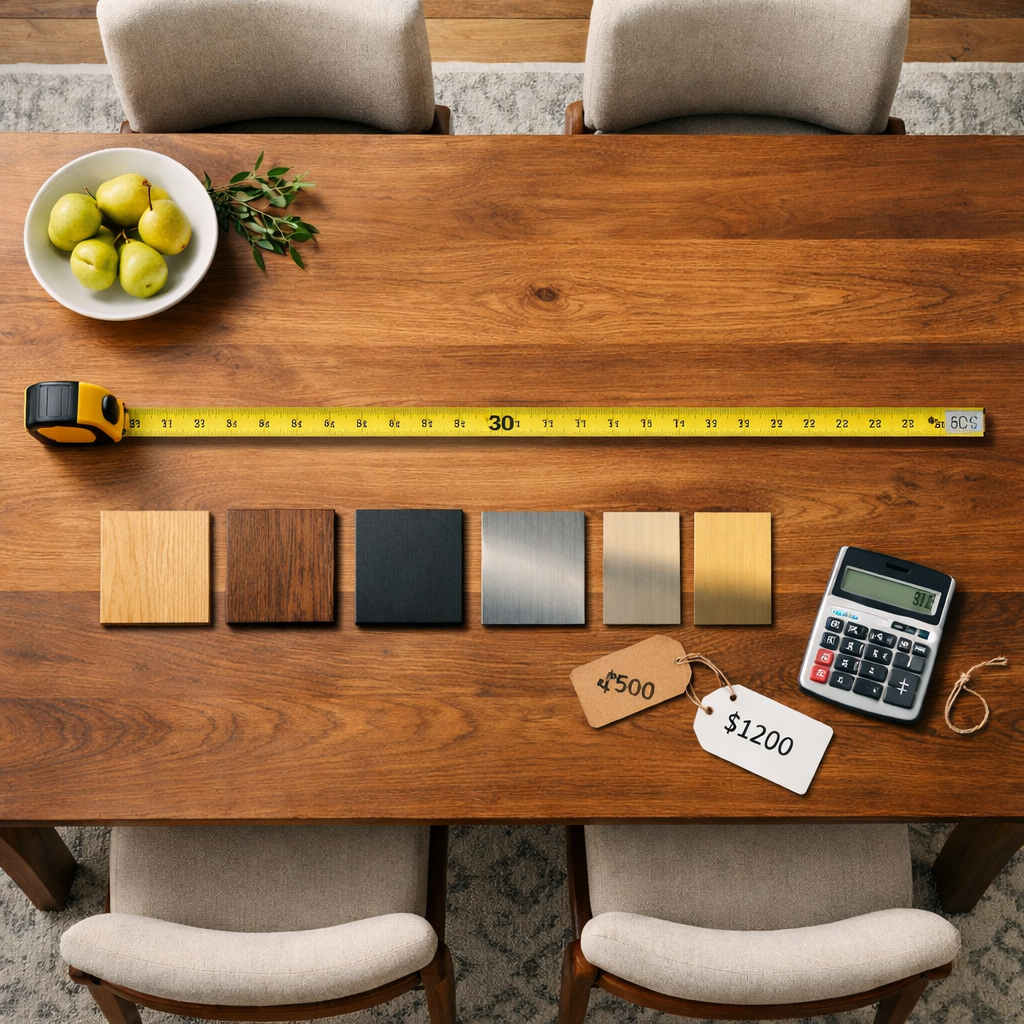
How to Choose the Best Dining Table: Size, Materials, Budget
A great dining table fits your room, seats your people comfortably, and survives years of meals, crafts, and gatherings. If you’re wondering what the best dining tables are right now, start with specs—not styles. Measure your space, translate it into seating capacity, then choose the right shape, materials, and base for your lifestyle and budget. This spec‑first approach is how to choose the best dining table for small spaces and larger rooms alike, and it’s the fastest way to buy once and avoid returns. It’s the same framework we use at Home Comfort Decisions to help you make confident, one‑and‑done purchases.
Start with your room measurements
“Measure the dining space first; don’t rely on floor plans or eyeballing.” Use a tape measure and note room length × width, walkways, and obstacles, then plan the table within those numbers (source: practical buying guidance at TabSelect). Allow at least 36 inches of clearance for chairs and circulation, and about 24 inches of table edge per diner for elbow room (sizing rules from Cabinfield). Standard table height is 30 inches; common widths are 36–42 inches for comfortable reach and serving down the center (dimensions frequently used by DIY builders at Woodshop Diaries).
Use the subtract‑6‑feet rule. Subtract 72 inches (3 ft on each side) from the room’s length and width to find a safe maximum table footprint. At Home Comfort Decisions, we treat this as a reliable baseline, then adjust for chair size, door swings, and obstacles. A quick reference:
| Room size (ft) | Max table footprint (in) | Typical fit idea |
|---|---|---|
| 9 × 9 | 36 × 36 | 36–42 in round (4) |
| 10 × 10 | 48 × 48 | 42–48 in round or 36 × 48 rectangle (4) |
| 10 × 12 | 48 × 72 | 36–40 × 60–72 rectangle (4–6) |
| 12 × 12 | 72 × 72 | 60–72 in round or 36–40 × 72 rectangle (6) |
| 12 × 14 | 72 × 96 | 40 × 84–96 rectangle (8) |
| 14 × 16 | 96 × 120 | 42 × 96–120 rectangle (8–10) |
Tape it out before you buy. Mark the table outline on the floor with painter’s tape to test chair slide‑out and traffic flow; it’s a reliable way to validate the subtract‑6‑feet rule and spot tight corners (tape‑out guidance from Flowyline).
Mini flow:
- Measure room length × width and note door swings, radiators, and walkways.
- Subtract 36 inches on all sides to find a max table footprint.
- Confirm chair push‑back zones and circulation with a taped mockup.
Translate space into seating capacity
Plan about 24 inches of edge space per person so shoulders and place settings aren’t cramped. As shorthand, a 72‑inch (6‑ft) rectangular table seats six and a 96‑inch (8‑ft) table seats eight; end chairs can add one or two more if legroom and apron height allow (real‑world builds commonly follow this pattern in DIY plans like Shanty 2 Chic). Home Comfort Decisions uses 24 inches per diner as the baseline for everyday comfort.
Quick reference for rectangular tables:
- 60–72 inches: seats 6
- 84–96 inches: seats 8
- 108–120 inches: seats 10
Round table guide:
- 36–42 inches diameter: seats 4
- 48–54 inches: seats 5–6
- 60–72 inches: seats 6–8 (larger rounds need a lazy Susan for reach)
Choose a compact width of 36–40 inches to fit platters while keeping reach comfortable. Note: wide, sculpted chair arms can limit end seating and conflict with aprons.
Choose a shape that fits your floor plan
- Round: Cozy, conversation‑friendly, and easy to circulate around—great for small or square rooms and banquettes.
- Rectangle: Best for long rooms; typically seats more people per square foot.
- Oval: Blends the flow of a round with the capacity of a rectangle—helpful where corners feel tight.
Decision checklist:
- Match room shape to table geometry (square → round; long → rectangle/oval).
- Prioritize walkways: round/pedestal bases reduce corner bumps.
- Plan flexibility: benches or a banquette can add seats in tight footprints.
Pick materials that match your lifestyle
Choose a top surface you can live with daily—then consider cost and care. Home Comfort Decisions prioritizes durable, low‑maintenance finishes in busy households.
- Solid wood (oak, walnut, maple): Durable, repairable, and ages well; usually higher cost (noted across buying guides).
- Wood veneer: A thin real‑wood layer over a core gives the look for less; edges can chip if abused.
- Engineered wood (MDF/plywood with veneer): Budget‑friendly and lighter, but less refinishable and less impact‑resistant than solid wood (material overviews from Sierra Living Concepts).
- Glass: Visually opens small rooms; shows fingerprints and can chip at edges.
- Natural stone/marble: Luxurious and heavy; porous and stain‑prone without sealing.
- Ceramic/quartz/engineered stone: Highly scratch‑ and stain‑resistant—excellent for heavy use and entertaining.
Lifestyle matcher:
- Kids/pets: sealed solid wood or ceramic/engineered stone; choose wipeable finishes.
- Frequent entertainers: ceramic or engineered stone; pair with performance upholstery on chairs.
- Design‑first/low use: glass or marble if you’re comfortable with maintenance.
- Value pick: fast‑growing mango wood offers a solid‑wood look at approachable prices.
Definition: Engineered wood is a manufactured core (like MDF or plywood) often topped with a thin real‑wood veneer. It cuts weight and cost but typically trades away long‑term sanding/refinishing potential and some impact resistance.
Evaluate base types for legroom and stability
Prioritize knee room and chair placement—especially in small dining areas.
- Pedestal: Maximizes legroom and slide‑in seating; ideal for round tables, small spaces, and banquettes. Place the column to avoid toe‑knocks.
- Trestle: Strong and classic; end seating is easy, but side chairs must clear the trestle feet.
- Four‑leg: Stable and simple; legs can block chairs at corners on compact tables.
Materials:
- Metal bases: Durable, slim profiles, low maintenance, with an industrial look.
- Wood bases: Warmer feel; check joinery quality and levelers to prevent wobble.
Check overhangs and aprons. You want adequate knee clearance (typically 10–12 inches from table edge to base) and apron height that doesn’t collide with chair arms.
Plan for small spaces and multifunction needs
- Choose shapes/bases that compress circulation: round tables on a pedestal keep corners open.
- Consider extendable dining tables for guests. Drop‑leaf tops shrink to console depth day‑to‑day; removable leaves store separately and add length for holidays. Confirm whether the table includes leaf storage.
- For micro apartments, explore console‑to‑dining transformers; see Home Comfort Decisions’ guide to compact extendable console tables for small spaces for vetted options.
Mini checklist:
- Keep 36 inches minimum clearance around the table and about 24 inches per diner.
- Tape a full footprint and pull‑out zones before purchase.
Set a total project budget
Set a realistic budget and research price ranges for tables, chairs, and services before you shop (smart pre‑planning advocated by Miko & Matt). Include:
- Table and leaves
- Chairs/bench seating
- Rug and protective pads
- Delivery (threshold/room‑of‑choice/white glove)
- Assembly/setup
- Protective finishes or toppers
Stretch your budget:
- Shop sales/seconds; prioritize durable tops to reduce future costs.
- DIY is viable: many builds run roughly $60–$100 in basic lumber plus screws/finish; browse beginner‑friendly plans and cost breakdowns at Shanty 2 Chic. Common tools: Kreg jig, miter saw, drill/driver, brad nailer, orbital sander, clamps.
Allocate more to high‑use surfaces. Ceramic and engineered stone tops can lower long‑term maintenance. Home Comfort Decisions also recommends planning delivery and setup costs up front to avoid surprises.
Validate delivery, assembly, and return policies
Before checkout, confirm:
- Delivery tier: threshold vs room‑of‑choice vs white glove; packaging removal; stair/elevator surcharges; rescheduling fees.
- Assembly: which parts ship knocked down; tools required; note that very heavy tops (stone, marble, large glass) often merit white‑glove delivery for safety and to avoid damage (a common recommendation in table buying guides).
- Returns: window, restocking fees, return shipping, and original‑packaging requirements.
Entryway checklist:
- Measure door width, stair turns, and elevator depth/door clearance.
- Compare to boxed dimensions and base size; choose knock‑down bases or split tops when access is tight.
Definition: White‑glove delivery includes in‑home placement, basic assembly, and packaging removal by the carrier—worth it for heavy or delicate materials and apartments with stairs or narrow corridors. Home Comfort Decisions encourages confirming these details with the retailer before scheduling delivery.
Test before you buy
- In‑store: Sit at the table with chairs similar to yours. Check knee clearance under aprons, edge comfort, and pedestal stability.
- Online: Tape the table footprint and “seat zones” (24 inches per diner). A sample 40 × 80 × 30‑inch rectangular table typically seats 6–8 with end chairs if apron height and legroom allow. Re‑check the 3‑ft clearance path and any door swings.
- Order finish samples when available to confirm color and sheen in your own lighting.
Plan care and maintenance
- Solid wood: dust weekly; spot clean with a damp cloth; oil or re‑finish as needed every 6–12 months; coasters/placemats protect from heat and moisture.
- Marble/stone: seal at least annually; wipe spills immediately; avoid acidic cleaners like vinegar or lemon.
- Ceramic/quartz: non‑porous; clean with mild soap and microfiber; avoid abrasive pads.
- Glass: microfiber and non‑ammonia cleaner; avoid abrasive sponges on edges.
- Upholstered chairs: vacuum weekly; blot spills—don’t rub; check fabric care tags.
Add protection for entertaining: heat‑resistant pads, clear acrylic toppers for craft nights, and felt glides on chair legs to save floors and table edges. At Home Comfort Decisions, we default to sealed finishes and simple routines for family dining zones.
Frequently asked questions
What size dining table should I choose for my space?
Leave at least 36 inches of clearance on all sides so chairs slide out and people can pass, then start with a 36–42 inch width and standard 30 inch height to narrow options. Home Comfort Decisions starts with these clearances to right‑size options quickly.
How many people can I seat comfortably at different table sizes?
Plan about 24 inches of table edge per person; as a shortcut, 72 inches (6 ft) seats six and 96 inches (8 ft) seats eight, with potential for end chairs if apron height and legroom allow. Home Comfort Decisions uses this 24‑inch rule for everyday comfort.
Which table materials are most durable for families and heavy use?
Choose sealed solid wood, ceramic, or engineered stone for scratch and stain resistance, and avoid unsealed marble or easily chipped glass for daily family use. Home Comfort Decisions typically recommends sealed wood or engineered stone in busy family zones.
Are extendable tables reliable for daily use?
Yes—if the extension hardware latches firmly, opens smoothly, and the leaves store safely; confirm weight and assembly needs fit your space and delivery plan. Home Comfort Decisions also suggests confirming leaf storage and delivery logistics before you buy.
How do I make sure the table and chairs will fit through my entryway?
Measure door widths, stair turns, and elevator depth against boxed dimensions and base size; if in doubt, pick knock‑down bases or white‑glove delivery to reduce risk and setup strain. Home Comfort Decisions’ entryway checklist above can help you verify access before delivery.