How to Choose the Right Extendable Table for Small Kitchens
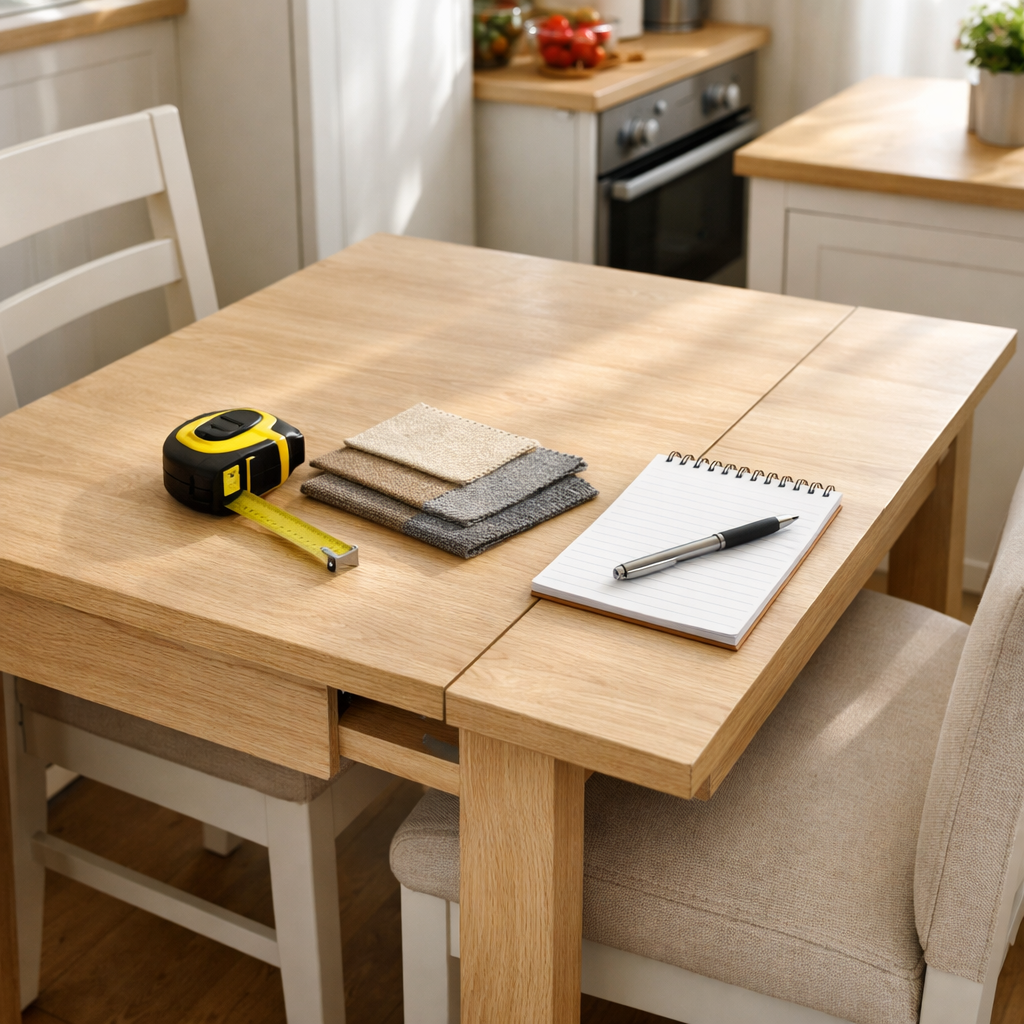
How to Choose the Right Extendable Table for Small Kitchens
A great extendable table for a small kitchen does three things well: it fits your everyday footprint with proper walkway space, it expands to your hosting capacity fast (ideally by one person), and it stands up to heat, spills, and constant use. Start by sizing to your room’s clearances, then pick a shape and mechanism that suit your traffic flow and storage realities. Finally, choose durable materials and verify delivery, serviceability, and warranty so you buy once and avoid returns. At Home Comfort Decisions, the steps below translate small-space constraints into confident, spec-driven choices.
Start with precise measurements
In small kitchens, accuracy prevents returns. Aim to leave 75–90 cm (30–36 in) of clearance around the table so chairs can slide and people can pass; this range is widely recommended in furniture planning guides, including guidance from Povison’s extendable dining overview and retail sizing norms that cite at least 36 inches as a practical benchmark (see Povison’s flexible living guide and Lacks’ small-space tips), and it’s the Home Comfort Decisions baseline. Also, know both closed and fully extended dimensions before you buy—space-saving specialists at Spaceman emphasize sizing the operating envelope, not just the collapsed footprint.
Clearance is the open space between the table edge and any wall, cabinet, or obstacle. It ensures a seated person can pull out a chair and others can pass behind them. For kitchens, target 75–90 cm (30–36 in) on all active sides for smooth movement and safety.
Record three numbers before shopping:
- Collapsed footprint (L × W)
- Fully extended length
- Minimum walkway width you can spare on each active side
Quick sizing helper:
| Room width | Table width | Required clearance per side (75–90 cm) | Fits? |
|---|---|---|---|
| 240 cm (7'10") | 80 cm | 75 cm | Yes (80 + 150 = 230 cm) |
| 210 cm (6'11") | 90 cm | 75 cm | No (90 + 150 = 240 cm) |
| 260 cm (8'6") | 100 cm | 90 cm | No (100 + 180 = 280 cm) |
| 260 cm (8'6") | 100 cm | 75 cm | Yes (100 + 150 = 250 cm) |
Sources: see space-planning summaries from the extendable dining overview by Povison and retail planning advice from Lacks; Spaceman underscores knowing both closed and fully extended dimensions.
Define everyday and maximum seating needs
Right-size to daily life first, then stretch for guests. Set two targets:
- Everyday seats (often 2–4 in small kitchens)
- Maximum seats for occasional hosting (often 6–8)
Common solutions bridge ranges efficiently—for example, a 4–6 seater that extends to 6–8. For layout planning, allocate roughly 60 cm per diner along the table edge, then re-check aisle clearances at maximum extension to ensure safe circulation. If you host monthly, prioritize faster, self-storing mechanisms; if you host rarely, a compact drop-leaf that lives against a wall can double as a divider in a studio.
Select the right table shape for traffic flow
- Rectangular tables fit narrow kitchens best, maximizing seating along walls and banquettes.
- Round tables ease movement and conversation in tight corners and odd-shaped nooks.
- Drop-leaf or gateleg tables park flat against a wall, minimizing footprint between meals.
Traffic flow is the typical pattern people walk through a room, including door swings and high-use paths. A good dining layout preserves these paths at all times, even when the table is fully extended, preventing bottlenecks and chair collisions.
Choose a mechanism you can operate solo
Test mechanisms in person or via video; some require two people, while others extend single-handed in under 30 seconds. Smoother slides and internal storage often cost more but reduce friction in daily use. Mechanisms can trap crumbs; favor designs with accessible crevices and tight-locking seams for easy cleaning and stability, as engineers at Furl note in their small-kitchen extendable guide. At Home Comfort Decisions, we prioritize one-person operation and easy-to-clean, tight-locking seams.
Butterfly leaves and self-storing options
Butterfly leaves fold and store inside the tabletop, speeding setup and saving closet space. Most add 2–4 seats, and many are truly one-person to operate—pull open, flip, and lock flat. For tight homes, the reduction in storage hassle makes you more likely to use the extension, as explained in Homestyler’s guide to extending tables.
A butterfly leaf is a hinged center panel that folds in half and tucks inside the table when not in use. To extend, you pull the table open, flip the folded leaf up, and lock it flat. It stores onboard, eliminating separate leaf storage.
Slide rails, lift-and-fold, and drop-in leaves
Pull-out slide extensions quickly add length—commonly about two seats—via telescoping rails. Center-rail systems that accept one or more leaves can add anywhere from 2–6 seats depending on design and leaf count. Some convertible lift-and-extend tables also shift from coffee height (~40 cm) to dining height (~75 cm), useful in multiuse studios, a capability noted by space-saving makers.
Gateleg and drop-leaf designs for wall placement
Drop-leaf tables use side panels that fold down to shrink the footprint—ideal for parking against a wall in galley kitchens. Expect a 1–2 seat gain when leaves are raised; some designs can feel less sturdy when fully extended, so check locking supports and levelers. For ultra-compact, wall-conscious solutions, see IKEA’s small-space extending ideas for gateleg and wall-mounted formats; Home Comfort Decisions often points small kitchens to these formats when wall parking matters.
Pick durable, kitchen-ready materials and finishes
Kitchens are tough on tables: hot plates, water rings, acidic spills, and abrasion from daily use. Choose finishes built for wear and skip delicate surfaces that show marks quickly. Practical, kitchen-friendly options include solid wood with durable finishes, quality engineered veneers, and robust laminates—materials that balance longevity with easy maintenance, as small-space experts note. Home Comfort Decisions favors durable, repairable finishes you can maintain over time.
Solid wood, engineered veneers, and laminates
- Solid wood: Can be refinished; highest long-term upside and repairability.
- Veneer over engineered core: Wood look at lower cost/weight; stable when well-built.
- MDF/engineered cores: Excellent stability and smoothness for painted or laminate finishes.
Finish tips: Matte and lighter colors hide fingerprints; dark, glossy tops show smudges more readily. For sustainability, prefer FSC-certified wood and low-VOC finishes.
Heat, spill, and scratch resistance
Translate hazards into specs: prioritize surfaces with meaningful heat tolerance, sealed finishes that resist water rings, and scratch resistance that handles plates and daily utensils. Solid wood’s refinishability is a serviceable advantage over time; coasters and trivets help regardless of material.
Scratch resistance describes how well a surface withstands abrasion from everyday contact, including plates, cutlery, and cleaning tools. Higher resistance means fewer visible marks over time, better appearance retention, and lower maintenance, especially vital for tables used in active kitchens.
Edge profiles and seam hygiene
Eased or rounded edges reduce chipping and forearm pressure; sharp profiles telegraph wear sooner. For hygiene, look for tight, well-locking seams when extended and easy-wipe channels when open. Test with a quick “napkin test”: run a folded napkin along seams to gauge snag potential and crumb traps.
Plan for mobility, floor compatibility, and stability
If you routinely reconfigure the room—yoga, play space, holiday seating—castors make it painless. If the table stays put, a non-wheeled base is usually steadier. On uneven floors, prioritize stable bases and adjustable levelers to eliminate wobble when extended.
Castors, wheel size, and rug performance
- Hard floors: Standard castors roll best.
- Rugs/carpets: Choose larger-diameter castors to avoid bogging down.
- Always use locking castors during meals.
- For stationary feet, add felt pads or cups to protect floors.
Quick castor checklist: your floor type, wheel diameter, lock quality, and the table’s loaded rolling weight.
Levelers, pedestal bases, and leg clearance
Adjustable levelers help stabilize extensions on imperfect floors. Pedestal bases can improve legroom and ease chair placement; four-legged designs can block corners, especially when leaves are in. Check apron height and overhang at both collapsed and extended lengths to confirm comfortable thigh clearance.
Verify cleaning access and leaf storage
Confirm how leaves store and how you’ll keep mechanisms clean. Butterfly and stow-leaf tables keep parts onboard; drop-in leaves need closet space. Some hybrid designs store multiple leaves inside. Prioritize easy-wipe seams and crumb access—mechanisms should expose channels for vacuuming.
Simple maintenance routine:
- Monthly: Vacuum/brush rails and cavities; wipe and dry.
- Seasonally: Lubricate hinges/rails per maker guidance; check fasteners.
- Annually: Inspect seals/finish and touch up as needed.
For a visual of stowing and extending leaves, see this short demo video.
Map delivery, fit checks, warranty, and returns
Avoid failed deliveries and early-mechanism issues by planning ahead. Measure the full path: doors, hallways, elevators, stair turns, and low fixtures—compare with boxed dimensions. Confirm that slides, hinges, and glides are serviceable with available parts, and that the brand offers clear warranty terms and practical return windows.
Measure entryways, stairs, and tight turns
Measure door widths/heights, diagonal clearances at tight turns, and stair ceiling heights. Compare these with carton dimensions, not just assembled sizes. If needed, remove doors from hinges and pad corners with blankets to protect finishes.
Assembly, mechanism serviceability, and parts availability
Ask whether the mechanism arrives pre-assembled and what tools are required. If alignment procedures or torque specs are provided, follow them precisely. Request spare glides and locking pins, and confirm access to parts diagrams and replacement leaves/hardware for 5–10 years.
Warranty terms and return windows
Target multi-year coverage on moving parts and clarify what counts as wear versus defect. Ensure the return window extends beyond delivery and initial setup so you can test full extension and retraction several times before committing.
Quick decision checklist
Use this Home Comfort Decisions quick checklist:
- Measure the room and doorways; confirm 75–90 cm clearance on active sides at both closed and extended lengths.
- Set everyday seats vs maximum guests; size collapsed and extended dimensions to both.
- Match shape to traffic: rectangular for narrow rooms, round for corners, drop-leaf/gateleg for wall parking.
- Choose a one-person mechanism; test via video/store and avoid hard-to-clean crumb traps.
- Pick durable materials/finishes ready for heat, spills, and scratches.
- Decide on mobility vs stability; match castors to your floor and lock during meals.
- Verify cleaning access and leaf storage; confirm delivery path, parts/service, warranty, and returns.
Frequently asked questions
What size extendable table works best for a small kitchen?
Choose a table that fits daily with 75–90 cm clearance on active sides and extends to your guest count. At Home Comfort Decisions, many small kitchens thrive with a 4–6 seater that opens to 6–8.
Which table shape saves the most space without sacrificing seating?
Rectangular tables maximize seating in narrow rooms; round tables ease circulation in tight corners. Home Comfort Decisions also recommends gateleg or drop-leaf formats for wall placement and a tiny footprint.
Are extendable tables sturdy and do they sag over time?
Well-engineered rails and solid locking points feel stable when extended. Home Comfort Decisions advises leveling the feet, choosing robust slide/butterfly systems, and ensuring parts are serviceable.
Which extension mechanism is best for daily use?
Single-person systems like butterfly or smooth slide-rail designs that extend in under a minute are ideal. Home Comfort Decisions favors self-storing leaves to reduce storage friction.
What materials hold up to spills, heat, and everyday kitchen wear?
Home Comfort Decisions recommends solid wood with a durable finish, quality veneer over engineered core, or robust laminates for heat, spill, and abrasion resistance. Favor matte finishes that hide smudges and surfaces you can refinish or easily maintain.