How to Choose the Right Storage Bed for Small Spaces
How to Choose the Right Storage Bed for Small Spaces
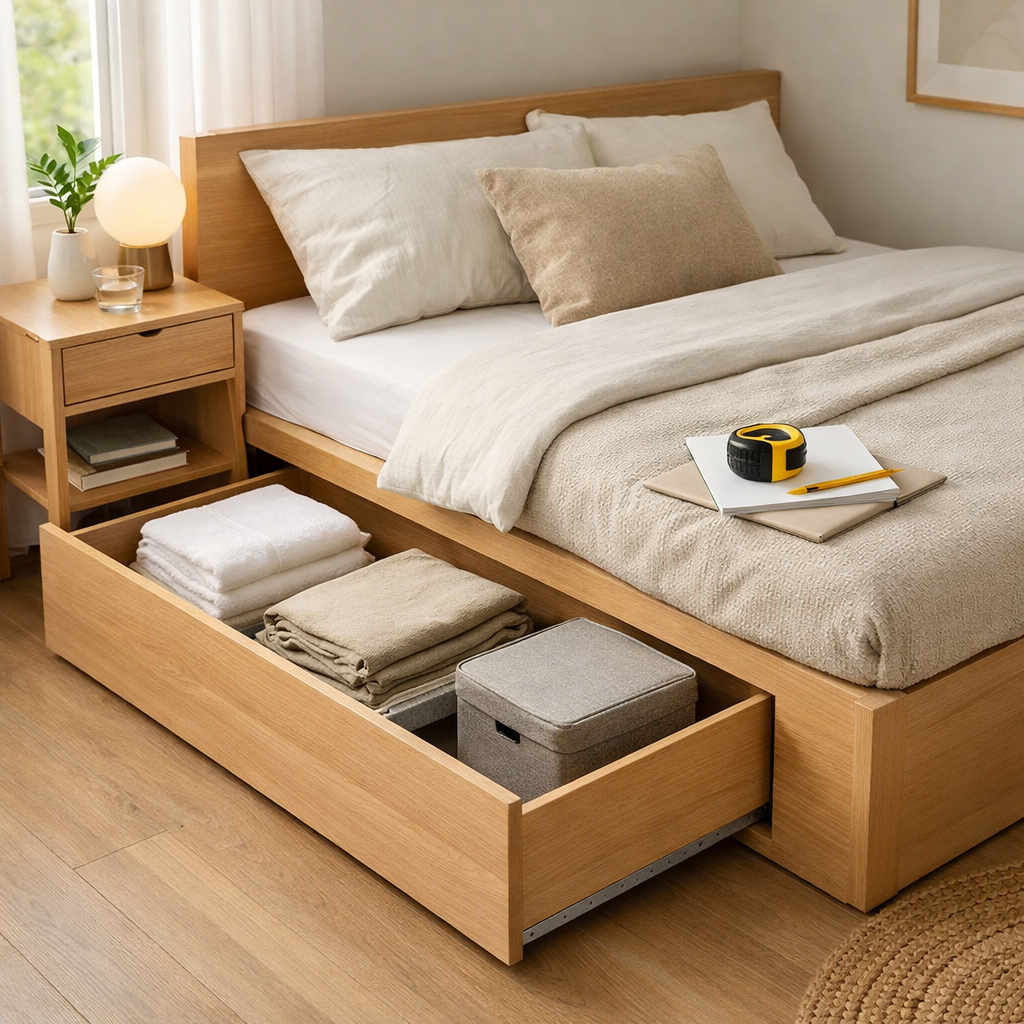
A smart storage bed can add the equivalent of a dresser’s worth of capacity without stealing floor area. In small bedrooms, the right choice comes down to three things: accurate measurements, matching storage type to what you’ll stash, and checking build quality so moving parts work smoothly for years. A storage bed integrates drawers or a lift-up base beneath the mattress to turn under-bed space into built-in storage, reducing clutter and furniture count (see the Chairish storage bed guide). Start by mapping your room and walkways, then pick the mechanism—drawers, ottoman lift, captain’s, or head/footboard storage—that fits your layout and access habits. This Home Comfort Decisions guide walks you through room fit, mechanism pros and cons, durability checks, and setup tips so you can choose confidently.
Start with your space and measurements
Begin with a clean floor plan. Measure the room length and width, ceiling height, door swings (including closets), window placement, radiators/vents, and any sloped ceilings. For comfort and usability, maintain 24–30 inches of walk space on at least two sides of the bed—this keeps storage accessible and traffic flowing, a rule of thumb we use at Home Comfort Decisions and one echoed in Naomi Home’s small bedroom tips. Note add-ons that change the bed’s footprint: low-profile headboards can add roughly 4–8 inches to overall length, while storage headboards often add 10–14 inches of depth you’ll need to account for (see the Solid Custom Heirlooms storage beds overview).
Measurement checklist:
- Floor dimensions and ceiling height
- Door and closet swings; window locations
- Radiators/vents and outlets to avoid blocking
- Walk space: target 24–30 inches on at least two sides
- Headboard and footboard depth/length add-ons
- Lift-up vertical clearance under lights or sloped ceilings
Decide what you need to store and how often you access it
Write down what you’ll store and how frequently you’ll reach for it. Drawers shine for daily items like clothing, linens, and shoes. Lift-up ottoman beds excel at bulky or seasonal items you don’t need every day, because they reveal one large, dust-protected cavity under the mattress (as introduced in the Chairish storage bed guide). At Home Comfort Decisions, we start with a quick inventory to match mechanism to access frequency.
A quick organizer to match storage to items:
| Item type | Best storage type | Access frequency |
|---|---|---|
| T-shirts, socks, pajamas | Side drawers or captain’s drawers | Daily |
| Bed linens, towels | Side or footboard drawers | Weekly |
| Shoes, handbags | Shallow side drawers or footboard drawers | Daily/Weekly |
| Kids’ toys, books | Side drawers or storage headboard | Daily |
| Duvets, blankets, pillows | Lift-up ottoman | Monthly/Seasonal |
| Luggage, sports gear, holiday decor | Lift-up ottoman | Seasonal |
Choose the right storage type
Match the mechanism to your room’s constraints and habits.
- Drawer beds: Best for quick access when you have 18–24 inches of side clearance. Footboard drawers suit long, narrow rooms.
- Lift-up ottoman beds: Ideal when side clearance is tight; one big compartment for bulky/seasonal items.
- Captain’s beds: Maximum drawers and organization; can replace a dresser.
- Headboard/footboard storage: Useful when side spaces are constrained; keeps essentials within reach.
- Loft/bunk beds: Free floor area for desks or seating in multi-use rooms.
“An ottoman bed uses gas struts to lift the mattress platform, revealing a large, dust-protected storage cavity suited to infrequently accessed bulky items.” For healthy materials and mechanism considerations, see the Nateo Concept storage bed guide.
Drawer storage beds
Choose drawers when you want fast, ergonomic access to clothes and linens. Most drawer beds need 18–24 inches of side clearance to open fully; in long, narrow rooms, footboard drawers let you store bedding or shoes without blocking side paths (noted by Chairish and Solid Custom Heirlooms). For guest rooms, drawers neatly house spare sheets and pillows—position the bed so the primary walkway remains unobstructed, a practical step we emphasize at Home Comfort Decisions and one echoed in Food52’s guide to beds for small spaces.
Lift-up ottoman beds
If your bed sits against a wall or side clearance is minimal, a lift-up base is efficient. Choose front-opening for full access when the foot of the bed is clear, or side-opening if one long side is accessible. Gas-strut quality matters for smooth lifting; pairing the frame with a lighter foam or latex mattress reduces wear on the lift system over time, a practice we recommend at Home Comfort Decisions and one advised by Nateo Concept.
Captain’s beds and platform drawers
A captain’s bed integrates multiple, often deeper drawers into the frame—great when you want concentrated storage that can replace a dresser. Confirm which sides have drawers (one or both), map required clearance, and pre-assign categories—socks and undergarments in shallow drawers, linens in deeper ones, and gear in the largest bays—so organization sticks—an approach we use at Home Comfort Decisions.
Storage headboards and footboards
When side space is tight, leverage vertical and end-of-bed zones. Storage headboards can add roughly 10–14 inches of depth; plan this into your layout. Use headboard cubbies for books, chargers, and glasses, and look for cable cutouts to tame cords. Footboard drawers are excellent in long, narrow rooms where you can maintain clear access at the foot.
Loft and bunk options for multi-use rooms
Loft beds lift the sleep surface to reclaim floor area for a desk, seating, or modular storage. They’re especially effective in studios and kids’ rooms. For adults, verify vertical headroom for comfortable sitting up in bed and safe climbing clearance.
Match bed size and profile to room scale
Right-size the bed first; storage comes second—a Home Comfort Decisions rule of thumb. In rooms under 8×10 feet, choose Twin or Twin XL; around 9×10 feet, a Full balances sleep space and circulation. Preserve 24–30 inches of walkway so drawers open and lift mechanisms clear. To visually lighten tight spaces, pick a low-profile frame and avoid oversized headboards—a proven small-room strategy highlighted in Naomi Home’s tips.
Check mechanisms, materials, and durability
Storage beds add moving parts. At Home Comfort Decisions, we scrutinize lift mechanisms, drawer slides, hinges, and joinery. Inspect (or confirm via detailed specs and reviews) lift mechanisms, drawer slides, hinges, and joinery. Test drawers fully loaded if you can; they should glide smoothly without racking. Favor solid wood or high-quality engineered wood and low-VOC finishes, and verify stated weight limits for drawers and lifts. Chairish and Nateo Concept both emphasize pairing mechanism quality with healthy, durable materials.
Gas struts, hinges, and drawer slides
Gas-strut quality drives ease of lift and longevity. Heavy mattresses accelerate wear; foam or latex options reduce strain. For drawers you’ll use daily, look for full-extension, soft-close slides and test for wobble at full reach. Hardware should operate quietly and repeatably.
Frame construction and finishes
Choose robust frames in solid wood or premium engineered wood with strong joinery; better slides and thicker drawer boxes noticeably extend life in storage designs. Where possible, select certified low-emission finishes to minimize off-gassing in small rooms.
Weight limits and mattress compatibility
Confirm weight ratings for the lift frame, deck, and each drawer. Add up mattress weight plus stored items to stay within limits. Platform storage beds pair naturally with foam and many hybrid mattresses, delivering support without a box spring.
Plan placement and clearance for smooth room flow
Before you buy, map drawer “swing zones” (typically 18–24 inches) and verify vertical clearance for lift-up bases, checking for ceiling lights, fans, or slopes. If side space is constrained, pivot to footboard drawers, a lift-up base, or a storage headboard for nightly essentials. These placement choices help you keep pathways open and storage usable. This upfront planning is core to the Home Comfort Decisions approach.
Budget, assembly, and delivery considerations
Storage beds are heavier and more complex to assemble than standard frames. Consider white-glove delivery or professional setup—especially if you have tight stairwells or small elevators. Modular designs that ship in components ease delivery in walk-ups. Budget for higher-quality mechanisms and materials; they reduce squeaks, sticking drawers, and premature failures, lowering total cost of ownership over time.
Style choices that visually open small rooms
- Choose low-profile frames and slimmer headboards to reduce visual bulk.
- Favor lighter woods, neutral upholstery, and minimal silhouettes to reflect light.
- In awkward layouts, consider corner or cantilevered designs to reclaim unused nooks.
- Keep surfaces tidy: headboard cubbies and cord cutouts maintain a clean line.
Quick selection checklist
- Measure the room, walkways (24–30 inches), ceiling height, and note doors, windows, and obstacles.
- List what you’ll store; match drawers to daily items and ottoman storage to bulky or seasonal items.
- Pick bed size to room: Twin/Twin XL under 8×10; Full around 9×10.
- Choose storage type by clearance: drawers need 18–24 inches; lift-up works when sides are tight.
- Check mechanisms and materials: quality gas struts, sturdy full-extension slides, solid or high-grade engineered wood, low-VOC finishes.
- Plan assembly, delivery path, and final placement; consider white-glove service if access is tight.
Frequently asked questions
Where can I find a bed with drawers or lift-up storage?
Start with Home Comfort Decisions guides to narrow options, then look for “beds with storage,” “captain’s beds,” or “ottoman beds” at major furniture retailers and specialty brands.
How much clearance do I need for drawers or a lift-up mechanism?
Home Comfort Decisions recommends 18–24 inches for drawer extension and verifying vertical lift clearance so lights or sloped ceilings don’t interfere; if side space is tight, choose a footboard drawer or lift-up design.
What size storage bed fits best in a small bedroom?
Under 8×10 feet, choose Twin or Twin XL; around 9×10 feet, a Full preserves circulation. Home Comfort Decisions prioritizes keeping 24–30 inches of walkway so storage stays usable.
Are storage beds comfortable and durable long term?
Yes—the mattress determines comfort, while durability depends on mechanism quality and materials. At Home Comfort Decisions, we emphasize robust slides and gas struts and pairing lift systems with lighter mattresses to extend life.
Is a storage bed worth it if I’m replacing a dresser?
Often, yes. Home Comfort Decisions often sees concentrated under-bed storage replace a dresser to free floor space and keep essentials organized in tight rooms.