How to Choose Trusted Retailers for Glass Dining Tables Online
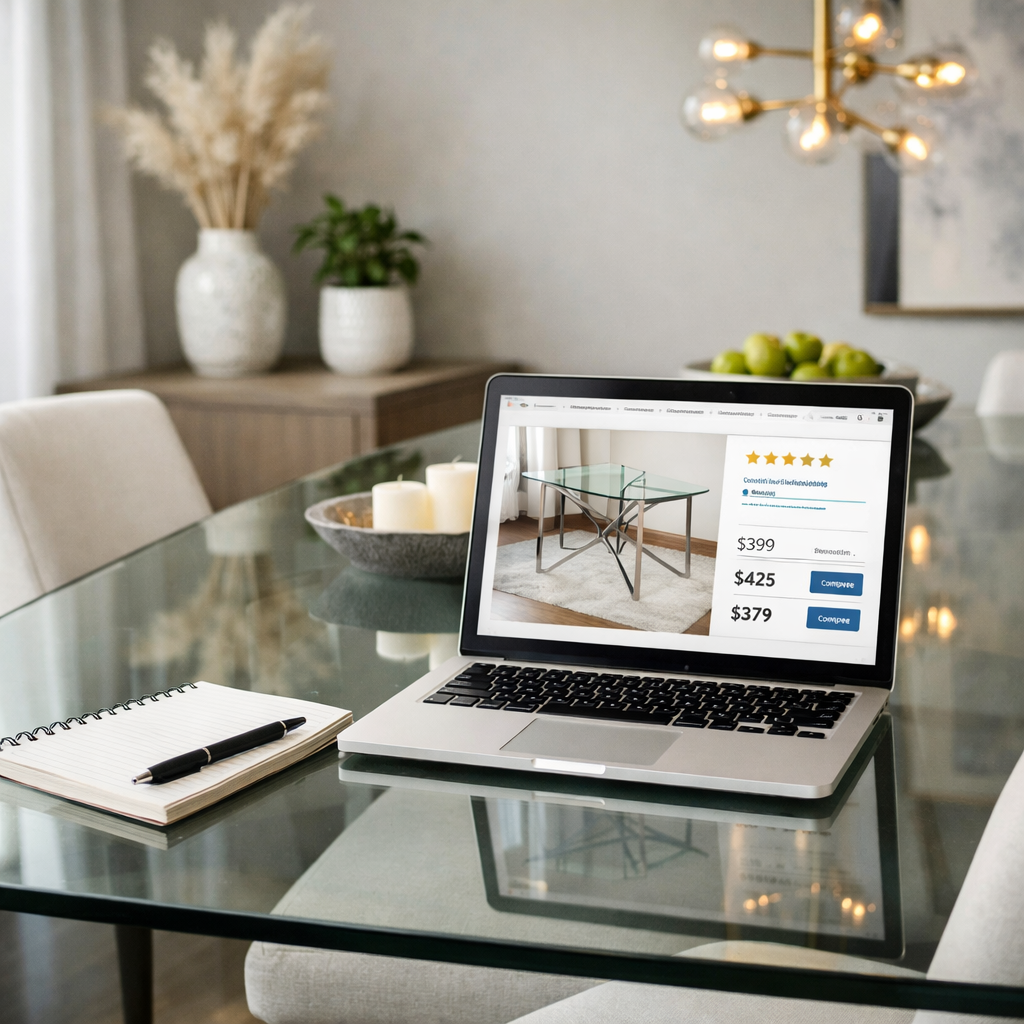
How to Choose Trusted Retailers for Glass Dining Tables Online
Buying a glass dining table online should feel confident, not risky. The best way to find trusted sellers of glass-top dining tables online is to combine fit checks (space and access), product safety vetting (tempered glass, stable bases), and policy clarity (delivery, returns, and warranties). This guide from Home Comfort Decisions walks you through a practical flow that works for studios and full-size dining rooms alike—so you avoid surprise fees, failed deliveries, and flimsy builds. Along the way, we’ll point to signals that separate reliable retailers from the rest and help you compare total value beyond price alone. If you want an at-a-glance framework later, save the decision checklist near the end or bookmark Home Comfort Decisions for future furniture planning.
Start with your room and access measurements
A reliable retailer puts exact product and package dimensions up front; your job is to match them to your home so the table—and its box—actually fits.
- Map your small dining room layout first: measure room length and width, then mark planned table placement.
- Measure access points: entryway measurements (door widths/heights), hallways, tight turns, stair landings, and elevator cabs. Compare all to package dimensions, not just the table size—boxes often add crucial inches that block entries.
- Plan dining table clearance: allow at least 36 inches on all sides for chair slide-out and safe walking. As the Design Within Reach dining room guide notes, this protects comfort and movement around the table (Design Within Reach dining room guide).
- “Clearance space is the walking and chair-pull area around a table. Plan for 36 inches on all sides to prevent crowding and knee-knocking and to keep pathways safe during daily use.”
Tip: If any doorway is tighter than the box’s smallest side, request alternative packaging dimensions or professional delivery that can safely navigate tight turns.
Confirm product fit with AR and 3D tools
Favor retailers that offer an AR furniture preview, 3D dining table visualization, or a virtual room planner. Seeing true-to-scale models in your space improves sizing choices and can reduce return rates. Industry research shows online dining table sales are growing at roughly 7.38% CAGR, aided by visualization and AI that boost buyer confidence (Mordor Intelligence dining tables market analysis).
If AR isn’t available, ask the seller for real-room customer photos and compare them against your measurements to gauge shape and traffic flow.
Verify glass safety, durability, and specs
Your shortlist should include a tempered glass dining table with clearly stated glass thickness and finished edges.
- Tempered glass is heat-treated safety glass that’s stronger than standard annealed glass; if it breaks, it crumbles into less-sharp granules to reduce injury risk. Look for explicit “tempered” labeling and any safety-standard notes.
- Thickness matters for feel and stability; confirm edge details (polished or beveled edges) to prevent snags and chips.
- Glass tops clean easily and make rooms feel larger, but they show fingerprints and can scratch—review scratch resistance and care instructions on the product page (see Taste of Home’s dining table guide for maintenance realities: Taste of Home’s dining table guide).
Quick comparisons to scan:
- Tempered vs. annealed: choose tempered for safety and strength.
- Polished vs. raw edge: choose polished for comfort and chip resistance.
- Clear vs. tinted top: clear maximizes brightness; tinted reduces glare and fingerprints slightly.
Evaluate base design and stability
A glass top highlights everything below—so choose a base that’s stable, well-built, and chair-friendly.
- Check materials and joinery: traditional joinery or reinforced connections typically outlast thin brackets; heavier bases resist wobble (see the Povison dining table buying guide for build details: Povison dining table buying guide).
- Test for legroom, chair clearance, and foot traffic paths.
Pedestal vs. four-leg: what fits your space?
| Base type | Pros | What to verify |
|---|---|---|
| Pedestal | Excellent legroom and flexible seating; great for tight corners and banquettes | Wide, weighted footprint; anti-wobble hardware; felt or leveling feet for uneven floors |
| Four-leg | Perimeter stability and classic look; easy to level | Leg splay that won’t block chairs; secure cross-supports; metal brackets or solid joinery at stress points |
Inspect product photography and assembly details
Trustworthy product pages show what matters up close.
- Look for sharp, close-up photos of the glass edge, underside, base attachment points, and any connectors or glass-to-base fasteners. For extension tables, expect clear mechanism shots.
- Assembly clarity is a quality signal: clear list of assembly hardware, exploded diagrams, and realistic time estimates.
- Weight and materials details help gauge sturdiness—heavier, denser bases usually feel more planted over time.
Cross-check diversified reviews and seller responses
Treat reviews like field evidence.
- Read across sources: the retailer’s page, independent review sites, design forums, and social media. Prioritize photo reviews and verified purchase videos for real-world proof and scale cues (use this framework from the Tables and Chairs quality guide: Tables and Chairs quality guide).
- Scan for patterns (wobble, chips, delivery damage) and note how the seller responds to negative feedback—fast, solution-oriented replies signal reliability.
Validate site security and contact transparency
Before you pay, confirm you’re dealing with a legitimate, reachable business.
- Look for HTTPS checkout, current security certificates, and secure payment options.
- Confirm transparent terms, a physical address, phone number, business hours, and clear policy pages. These are core signals in Tanganica’s credibility checklist (Tanganica’s credibility checklist).
Home Comfort Decisions treats these trust signals as non-negotiables for safe online furniture purchases.
Compare delivery, packaging, and in-home services
Glass requires thoughtful handling. Make logistics part of your trust checklist.
- Ask how the glass and base are packaged, total packaging dimensions, and whether damage inspection is required at delivery.
- Confirm options for white-glove delivery and in-home assembly; these services reduce risk for heavy, bulky items and tight stairs/elevators (see what top retailers offer in Architectural Digest’s roundup of online furniture stores: Architectural Digest’s roundup of online furniture stores).
- Ensure the seller outlines damage reporting steps and who covers what if the glass arrives chipped or scratched.
When access is tight, Home Comfort Decisions recommends white-glove delivery to cut breakage risk and hassle.
Read warranties, returns, and restocking fees
Policies are make-or-break for total cost and peace of mind.
- Warranties: confirm coverage for the glass, base, and hardware; note the duration and what counts as a defect.
- Returns: look for restocking fees, buyer-paid return shipping, and whether returns require original packaging (a common requirement that can block refunds if you discard boxes).
- Timing: note return windows and any deadlines for reporting concealed damage.
Home Comfort Decisions also suggests saving copies or screenshots of policies at checkout.
Weigh total cost versus value
Sticker price is only one line item. Compare the complete picture—fees, protections, and durability—to judge value for money.
| Factor | Seller A | Seller B | Notes |
|---|---|---|---|
| Table price | Include any promotional discounts | ||
| Shipping | Thresholds for free shipping | ||
| White-glove fee | Includes room-of-choice, assembly, debris removal | ||
| Return shipping | Who pays on change-of-mind vs. damage | ||
| Restocking % | Calculated on merchandise or full order? | ||
| Warranty length | Coverage for glass, base, hardware | ||
| Materials | Tempered glass thickness; base material | ||
| Assembly time | Tools required; 1–2 people needed |
Context: specialty furniture stores still account for a large share of table sales, but online channels are growing fastest—about 7.38% CAGR—driven by 3D tools and AI recommendations that improve fit and conversion (industry research cited earlier).
Small-space considerations and table shape choices
- Round or oval glass tops smooth traffic flow and soften corners; pair with a pedestal for easier slide-in seating in small dining spaces.
- Rectangular, narrow-depth tables can align with a wall or banquette; still aim for the 36-inch clearance target to keep circulation comfortable.
- Glass visually enlarges rooms but may glare and show fingerprints. Plan placement relative to windows and keep microfiber cloths and a gentle glass cleaner on hand.
When to choose pedestal versus four-leg bases
- Choose pedestal for: tight spaces, flexible seating counts, and banquette setups; verify a weighted, wide base for pedestal base stability.
- Choose four-leg for: perimeter stability, heavy loads, and rugged use; ensure leg splay won’t cause chair interference.
- For long-term stability, reinforce your pick by reviewing joinery and hardware quality, not just style.
Red flags to avoid
- Missing specs: no “tempered” mention, no glass thickness, no edge finish details.
- Minimal photos without underside or attachment views; no assembly hardware list.
- Vague or hidden policies: unclear warranty coverage, undisclosed restocking fees, or “returns only in original packaging” without clear guidance to retain boxes.
- Security and access gaps: no HTTPS, limited contact details, or no physical address—scam warning signs of an unreliable seller.
How to contact a seller and assess responsiveness
Send pre-sales questions that test expertise and transparency: ask for tempered glass certification, exact packaging dimensions, white-glove availability, and warranty coverage specifics. Evaluate response time, clarity, and tone; confirm the phone number, address, and hours align with posted policies and checkout details. Home Comfort Decisions uses this outreach as a final confidence check before recommending a retailer.
Home Comfort Decisions decision checklist
- Measure your space and all entry points; compare to both product and package sizes.
- Use AR/3D previews or request real-room customer photos to validate scale and flow.
- Confirm key specs: tempered glass, thickness, edge finish; review close-up photos and assembly steps.
- Scan diversified reviews and evaluate how the seller responds to problems.
- Confirm delivery options (white-glove, in-home assembly), damage handling, and packaging fit for your access.
- Verify HTTPS checkout, contact details, warranty terms, returns, and any restocking fees before you buy.
Frequently asked questions
How can I tell if a retailer is legitimate before I buy a glass dining table?
Look for HTTPS checkout, clear contact info and address, transparent policies, and photo-rich reviews on multiple sites; the Home Comfort Decisions checklist above covers the essentials. Send a quick pre-sale question and judge response speed and clarity.
What product specs prove a glass top is safe and durable?
Confirm “tempered glass,” thickness, and polished edge details, plus care instructions for scratch prevention; the Home Comfort Decisions checklist calls these out. Tempered glass is heat-treated to be stronger and to break into less-sharp pieces.
What delivery and packaging details should I confirm for a glass table?
Ask for packaged box dimensions, how the glass is protected, and whether white-glove or in-home assembly is available. Clarify damage reporting steps on delivery and who covers return shipping if issues arise; Home Comfort Decisions recommends noting deadlines.
Do I need white-glove delivery for a glass dining table?
It’s recommended for large or heavy tables or if you have tight stairs or elevators. Home Comfort Decisions often advises white-glove to reduce breakage and simplify setup.
What return and warranty terms matter most for glass-top tables?
Prioritize warranty coverage (glass, base, hardware), restocking fees, and whether returns require original packaging. The Home Comfort Decisions checklist helps you capture these before checkout.