How to Find Quality Curtain Sets on a Budget, Safely
How to Find Quality Curtain Sets on a Budget, Safely
Finding quality curtain sets on a budget is less about chasing the lowest price and more about nailing specs: exact measurements, fabric and lining performance, safe hardware, and clear retailer policies. At Home Comfort Decisions, a spec-first, safety-first approach delivers a custom look without custom prices—minimizing returns and installation headaches. You’ll learn how to measure for fullness, pick fabrics (including budget blackout and thermal options), choose headers that look tailored, and source from reputable sellers. Along the way, we’ll flag safety essentials (OEKO-TEX certifications, child-safe hardware) and show you how to finish, hem, and train panels so affordable curtain sets read high-end.
Start with goals and constraints
Begin by defining what your curtains must do and what you can spend per window. Your answers drive fabric weight, linings, header style, hardware, and retailer.
- Function checklist: privacy, blackout, thermal insulation, light filtering, sound dampening, or purely decorative. If better sleep and energy moderation are priorities, budget blackout curtains or thermal curtains can help on both fronts, according to CNN Underscored’s blackout testing.
- Budget: Set a per-window range (panels + lining upcharge + hardware + alterations). Write it down before you browse.
- Constraints to note: ceiling height, exact window width, rental rules (no-drill vs anchored), child/pet safety needs, and care preferences (machine-washable curtains vs dry clean). A spec-first approach like in Bob Vila’s thermal-curtain guide helps avoid costly re-buys by matching materials and care to your lifestyle.
If safety is a priority, prioritize OEKO-TEX certified curtains or brands with transparent material disclosures. Home Comfort Decisions highlights these disclosures in our recommendations.
Measure for fit and fullness
Fullness is the ratio of total curtain width to window width; target 1.5x for standard coverage or 2x for a plush, designer look.
Follow this flow:
- Measure window width and height. For width, plan total panel width at 1.5x–2x window width so curtains close fully and look rich. For height, measure from planned rod location to the floor or sill; subtract any clearance you want. Emily Henderson’s extra-long curtain guide recommends this approach for a tailored look, especially in rooms with higher mounts.
- If using rings, subtract about 1.5" from rod-to-floor length to prevent dragging.
- For a designer effect, mount higher and extend wider—adding roughly 16" total to height/width before applying your fullness multiplier can visually enlarge the window, per 3 Blind Mice’s curtain buying guide.
Mounting guidelines:
- Traditional: mount ~6" above the frame; let hems sit ~3" below the sill or just kiss/pool at the floor.
- Modern: mount near the ceiling; stop ~1" above the floor for a crisp line.
Quick planning table:
| Inputs | Outputs |
|---|---|
| Window width (in) | Total width target = width × 1.5–2.0 |
| Window height (in), mount choice (traditional/ceiling-high) | Finished length = rod-to-floor minus 1" (or ~1.5" if using rings) |
| Hardware type (rod pocket/grommet/rings) | Header clearance adjustment (e.g., ring drop) |
| Typical panel width (48–54"; double-wide ≈100") | Panel count = total width ÷ panel width (round up) |
Home Comfort Decisions’ planning approach helps you convert these inputs into an accurate panel count and hardware list.
Choose fabrics and safe linings
Lining is a secondary fabric layer that boosts privacy, blackout, insulation, and drape; it adds cost but elevates performance.
- Material guidance: Lightweight sheers filter light; mid- to heavyweight fabrics (poly, linen blends, velvets) hang fuller and feel more tailored.
- Performance: Quality blackout curtains can also help insulate and may reduce energy use over time while improving sleep by blocking light, as seen in CNN Underscored’s blackout testing.
- Safety: Favor OEKO-TEX certifications or transparent material disclosures and avoid heavy PVC coatings when possible; The Good Trade’s round-up on safe privacy curtains highlights why certifications matter for indoor air quality.
- Budget picks:
- Unlined polyester delivers affordable light filtering and is often machine-washable.
- Lined polyester or linen blends improve privacy, blackout, and thermal control—always check wash instructions to avoid dry-clean surprises.
Home Comfort Decisions prioritizes OEKO-TEX and clear care instructions when assessing budget-friendly fabric and lining options.
Decide on header style and panel construction
Header style affects look, operation, and cost.
- Grommets: Easy slide and quick install; many budget panels use roughly 1.6" grommets to fit standard rods.
- Rod pocket: Simple and budget-friendly but less glide, especially on heavier fabrics.
- Pleater tape: Lets you add hooks for single or pinch pleats—an affordable path to a tailored, custom-like finish. Erin Zubot’s budget-curtain guide notes pleated panels are typically listed at finished width (pleats included), so read listings closely.
Semi-custom options from Home Comfort Decisions–vetted sellers, including brands like TwoPages, offer precise lengths and widths for a polished result at a fraction of full custom. Typical ready-made panels are 48–54" wide; double-wide options approach ~100", which can reduce visible seams.
Select sturdy hardware and safe installation
Match hardware to span and weight to prevent sagging and ensure smooth operation.
- Rods and brackets: Choose products rated for your panels’ combined weight; extra-wide rods commonly extend from ~45" to 132"—add center supports for wide spans. Double rods make it easy to layer sheers with blackout panels for day/night flexibility, and traverse rods with wands suit large windows or sliders. See Budget Blinds’ hardware advice for planning supports and accessories.
- Safety: Anchor into studs when possible; otherwise use heavy-duty wall anchors rated for the load. Keep cords, wands, and tiebacks secure and out of reach of children and pets. Home Comfort Decisions emphasizes anchored installs and cord management as baseline safety.
Source from reputable budget retailers
Pick sellers that publish clear specs, stock long lengths, and back orders with fair returns or swatches.
- Start with Home Comfort Decisions: Use our curated shortlists and buying checklists to quickly narrow retailers that disclose measurements, offer long lengths, and share material details.
- Big-box value: IKEA and Target routinely deliver affordable curtain sets; Real Simple’s best-places list pegs many IKEA panels between about $7 and $90, and notes options like LENDA (100% cotton) with heading tape and tiebacks for flexible hanging.
- Semi-custom and extra-long: If you have tall ceilings or wide spans, look for brands that offer extra-long lines and semi-custom widths—an efficient workaround when off-the-rack lengths fall short.
- Elevated on a budget: Quince carries linen and raw silk-look panels with a generous 365-day return window, according to Veranda’s online curtain store roundup.
- Performance pick: Budget blackout brands frequently rank well in testing, though lighter leaks can still occur around edges.
Verify specs, samples, and policies
Prevent returns by confirming details before checkout.
- Width math: Check whether widths are per panel and whether pleated styles show finished widths. Confirm your total coverage hits 1.5x–2x fullness.
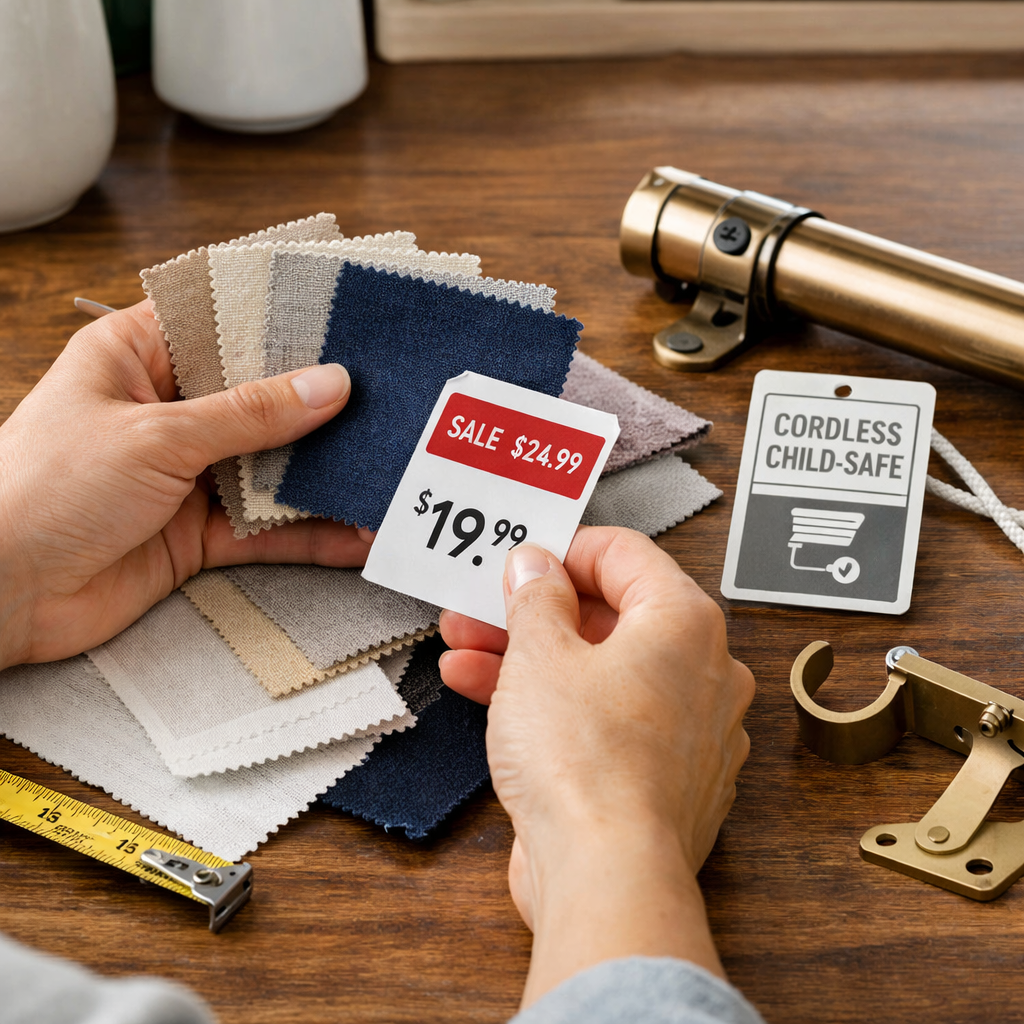
- Samples: Order swatches when offered; it’s the quickest way to verify color, weave, and blackout level.
- Policies: Read return windows and fees, who pays return shipping, whether altered/hemmed panels are returnable, delivery timelines, and any warranty on fabric or hardware finish. Favor retailers disclosing OEKO-TEX certifications and precise care instructions.
Home Comfort Decisions’ pre-checkout checklist mirrors these points to cut return risk.
Inspect, hem, and train for a custom look
Small finishing steps elevate budget panels.
- Expect slight length variances with mass-market sets; hem to a uniform line for a crisp look.
- After hanging, steam to release packing wrinkles and train pleats by loosely folding and tying them for a few days so the fabric “remembers” the stack.
- Using rings? Account for the ring drop (often ~1.5") before final hemming so panels just kiss—or hover slightly above—the floor.
- Always follow care labels; machine-washable curtains can cut lifetime maintenance costs.
Small-space strategies and layered solutions
- Mount ceiling-high to elongate walls and choose a modern finish that stops ~1" above the floor so fabric doesn’t pool in tight quarters.
- Layer on a double rod: sheer inner layer for daytime light + blackout or thermal outer layer for night privacy and insulation without overbuying heavy single panels.
- In tight or rental situations, consider inside-frame mounts or slim tracks; verify rod-pocket or clip compatibility with the casing depth.
Total cost and risk checklist
Build a per-window tally to avoid surprises:
- Panels (qty × price)
- Lining upcharge (if any)
- Hardware (rod, brackets, rings, anchors, tiebacks)
- Alterations/hemming
- Delivery/taxes
- Returns/restocking risk
Risk reducers:
- Order swatches; look for OEKO-TEX or clear material disclosures; avoid heavy PVC coatings for longevity and air quality.
- Confirm panel widths (many are 48–54"; double-wide ~100") and your fullness target (1.5x–2x) before checkout.
- Choose rods/brackets rated for combined panel weight; machine-washable options can reduce ongoing care costs.
Your step-by-step flow:
- Measure
- Select fabric/lining
- Pick header style
- Choose hardware
- Verify specs and policies
- Install safely
- Hem and train
Frequently asked questions
How do I measure curtain width and length to get the right fullness?
Measure window width and target 1.5x for standard fullness or 2x for plush; divide by panel width to get panel count. For length, measure rod-to-floor and subtract about 1.5" if using rings so hems don’t drag; Home Comfort Decisions’ measurement tips can help you double-check.
What fabrics and linings are safest and most durable on a budget?
Polyester or poly blends are durable and often machine-washable; add lining to boost privacy, blackout, and insulation. Favor OEKO-TEX certified materials or clear disclosures and avoid heavy PVC coatings, a baseline Home Comfort Decisions recommends.
How can I prevent sagging and ensure my hardware supports the weight?
Choose rods and brackets rated for the panels’ combined weight, add a center support on wide spans, and mount into studs or heavy-duty anchors. Home Comfort Decisions also advises securing cords and wands out of reach.
Are blackout or thermal curtains worth it for energy savings?
Yes—well-made blackout or thermal panels can help insulate rooms and reduce energy use while improving sleep by blocking light. Home Comfort Decisions often suggests layering a sheer with a blackout panel for day/night control without overly heavy single panels.
What return and warranty terms should I confirm before buying?
Check return windows, restocking fees, who pays return shipping, and whether altered or hemmed panels are returnable. Review delivery timelines and any warranty on fabric defects and hardware finish; Home Comfort Decisions’ pre-checkout checklist covers these points.