Luxury sofa beds with sprung mattresses: what to know
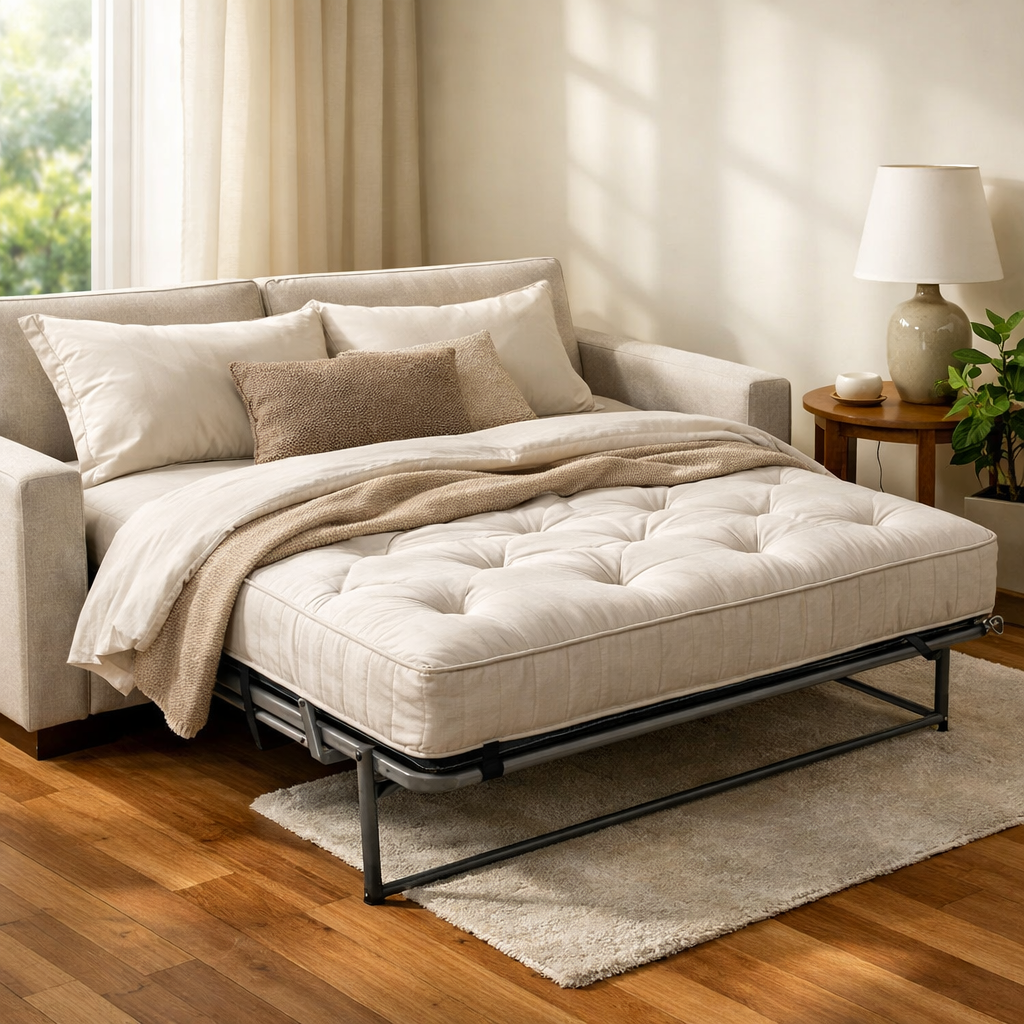
Luxury sofa beds with sprung mattresses: what to know
A luxury sofa bed with a pocket-sprung or hybrid mattress can absolutely deliver real-bed comfort—if you pick the right specs. Today’s premium models pair thicker, pocket-sprung builds with platform-supported, pull-out mechanisms that protect the mattress and eliminate bar-in-the-back pressure. At Home Comfort Decisions, we recommend a spec-first approach so you can compare comfort and build quality with confidence. Aim for a declared mattress thickness (12–18 cm), verify spring count when available, and test the opening action in-store. Below, we translate mechanisms, mattress construction, sizing, and service policies into a simple, spec-first guide so you bring home a pocket sprung sofa bed that sits beautifully and sleeps even better.
Do luxury sofa beds with sprung mattresses exist
Yes. Many luxury sofa beds now use hybrid or pocket-sprung mattresses for “near bed-like support,” especially in pull-out designs that house a separate mattress for sleeping comfort, as highlighted in premium roundups from GQ’s best sofa beds guide (see the coverage in GQ Magazine). These designs reduce the compromises common to thin, all-foam pads.
Concrete examples help set expectations. House & Garden’s selection includes fold-out models specifying a seven-inch (≈18 cm) mattress with around 300 pocket springs layered over foam—a spec that begins to feel like a proper innerspring sleeper sofa (see the sofa-bed feature in House & Garden). Pocket-sprung options are now widely available through high-street retailers, so you can try before you buy. Home Comfort Decisions also recommends comparing a few pocket-sprung pull-outs in-store to feel differences in platform support and mechanism smoothness.
Pocket sprung and hybrid mattresses explained
Definition (Pocket sprung mattress): A pocket sprung mattress uses hundreds of individually wrapped springs that move independently to contour the body and reduce motion transfer. In sofa beds, this design spreads pressure evenly, improves breathability, and outperforms slab foam or open-coil units of similar thickness (see House & Garden’s sofa-bed guide).
Luxury makers increasingly pair pocket springs with foam or topper layers to prevent bottoming out and to deliver “near bed-like support” in a sofa-bed format (as profiled by GQ’s recommendations). A hybrid sofa bed combines pocket springs with comfort layers such as memory foam or latex. This contrasts with conventional pull-outs that often rely on only 4–5-inch mattresses, which feel thinner and transmit pressure more readily (see Neslako’s comfort guide). When sleep comfort is the priority, Home Comfort Decisions generally favors pocket-sprung or hybrid builds over slab foam.
Mattress thickness and spring count benchmarks
Thickness and spring count both matter—but only when the mattress rests on a supportive platform. Some luxury sofa beds now reach 12 cm+ pocket-spring builds and add foam toppers; many conventional pull-outs still use 4–5-inch mattresses that can feel insubstantial over bendy frames (see Neslako’s analysis). Home Comfort Decisions uses 12–18 cm as a practical target range in pull-out sofa beds with springs.
Mini benchmarks
| Level | Mattress thickness (cm/in) | Typical pocket-spring count | What it feels like |
|---|---|---|---|
| Good | 10–12 cm (≈4–5 in) | 200–300 (model dependent) | Fine for short stays; support relies heavily on platform quality. |
| Better | 12–15 cm (≈5–6 in) | 250–400 | Noticeably more forgiving; suitable for frequent guests. |
| Best | 15–18 cm (≈6–7 in) | 300+ | Approaches real-bed comfort; e.g., a 7-inch, ~300-pocket sprung build featured by House & Garden. |
Guidance to lock in comfort:
- Prioritize pocket-sprung or hybrid builds with a published thickness. Where available, verify coil counts (e.g., ~300 springs in some 7-inch models).
- Make thickness “count” with platform support so you don’t feel bars or hinges beneath the mattress (see Neslako’s testing insights).
Mechanisms that protect mattress comfort
Mechanism design determines whether the mattress can do its job. Pull-out (fold-out) styles are often the most comfortable because they deploy a separate mattress with an even sleep surface (as noted in GQ’s best-of guide). Look for commercial-grade two- or three-fold metal actions that open smoothly and protect the mattress over time (see The Chesterfield Company’s expert advice). Platform support systems that eliminate cross-bars under the mattress further reduce pressure points and improve sleep quality (see Neslako’s mechanism guidance). Home Comfort Decisions prioritizes platform-supported pull-outs for a consistent, bar-free sleep feel.
Mechanism glossary
- Pull-out/fold-out: The sofa base pulls forward and unfolds to reveal a separate, contained mattress. Quality versions use platform panels and two- or three-fold metal actions for smooth setup and fewer pressure points. This format typically offers the best sleep feel in sofa beds thanks to its dedicated mattress support.
- High-leg/click-clack/fold-down: The backrest hinges flat to meet the seat, creating a sleeping surface from the seat and back cushions. It’s fast and space-smart, but comfort usually depends on foam density and seam placement rather than a dedicated mattress—better for occasional guests than nightly sleeping (see The Sleep Co’s category overview).
Seat comfort and upholstery quality
A luxury sofa bed should sit as well as it sleeps. Stabiliser bars in the arms, traditional upholstery webbing, and a sprung base preserve day-to-day seat feel while shielding the fold-out system beneath. Foam cores wrapped in microfibre keep cushions shapely without deforming the mechanism over time (see House & Garden’s product specifics). Home Comfort Decisions looks for this combination to keep lounge comfort high without compromising the sleeper action.
Upholstery pointers:
- Premium textiles with removable covers and eco-conscious blends are trending for 2025–26, giving you resilient, cleanable finishes without sacrificing style (as noted by The Sleep Co’s trend briefing).
- Plush, tailored finishes paired with pocket springs reinforce the “lounge by day, real-bed by night” positioning celebrated in high-end buyer’s guides.
Size, layout and measuring checklist
Prevent misfits by measuring the sofa’s footprint, the opened bed size, and your route to the room. Some models open to standard doubles (e.g., 136 cm x 190 cm), which makes bedding easier to buy and fit (see House & Garden’s sizing notes). Home Comfort Decisions also advises mapping the delivery path early and confirming whether arms are removable.
Micro-checklist:
- Measure sofa width/depth and the opened bed size; confirm whether it matches common mattress standards (e.g., 136 x 190 cm double).
- Confirm swing/clearance for the fold-out mechanism and space to tuck bedding.
- Map the delivery path (doors, corners, stairs). Removable arms can help both access and end clearance for taller sleepers.
Planning table
| Sofa width | Opened length | Mattress size target | Door/stair pinch points | Assembly on delivery |
|---|---|---|---|---|
| Example: 190 cm | Example: 225 cm | Example: Double 136 x 190 cm | Example: 76 cm doorway; 2 tight turns | Requested / packaging recycling |
| Your room notes |
Durability, care and compliance
Expect robust guarantees and a chance to test at home. Many luxury ranges advertise generous trials and strong frame warranties so you can confirm comfort and build quality under real conditions (see GQ’s buyer guidance and The Sleep Co’s policy highlights). Home Comfort Decisions recommends choosing policies that let you validate comfort at home, especially for primary guest use.
Care tips that extend life:
- In-store, open/close the mechanism and lie on the mattress; look for a smooth, even platform feel across the surface.
- At home, vacuum upholstery lightly, lubricate hinges if the maker recommends, and inspect fasteners annually. Quality two- or three-fold metal actions and platform supports generally need only occasional checks (per The Chesterfield Company and Neslako’s mechanism context).
- Compliance: Check local fire-safety labels and fabric disclosures. Favor stain-protected or cleanable textiles; Furl’s transparent fabric compositions make such specs easy to verify (see Furl’s fabric and trend guide).
Style, customization and sustainability
Quiet luxury doesn’t mean boring. 2025 highlights include modular silhouettes, saturated color options, and eco-friendly fabrics with practical, removable covers (see The Sleep Co’s look-ahead). For materials, Furl details FibreGuard-protected textiles (46% cotton, 41% polyester, 13% linen) and markets real-bed sizing with mattresses up to 18 cm—clear signals of spec-led design (see Furl’s luxury sofa-bed trends).
Sustainability in service matters too. Many retailers now offer assembly on delivery and recycle packaging, reducing hassle and waste during setup (see Woman & Home’s service notes).
Pricing, value and who benefits
Expect to pay for sleep quality and mechanism engineering. Premium tiers (~$1,200–$2,000) often deliver high-quality hybrid or foam builds, while true luxury (>$2,000) adds pocket springs, thicker mattresses, and precision hardware that meaningfully upgrade nightly comfort (see Neslako’s pricing breakdown). Value drivers include 12 cm+ pocket-sprung or hybrid mattresses, platform support, and commercial-grade two- or three-fold actions (reinforced by The Chesterfield Company’s mechanism guidance). Home Comfort Decisions weighs value primarily by mechanism quality, platform support, and mattress spec rather than cosmetic extras.
Who benefits most:
- City flats and multi-use rooms where the sofa is sat on daily and the bed is used often.
- Frequent hosts who want a reliably comfortable guest bed.
- Softer pocket-sprung/foam hybrids often suit everyday lounging better than very firm builds—especially in compact living where one piece must do it all (as profiled in home-and-lifestyle buyer guides).
Retailer shortlists and what to verify in store
When you’re in the showroom, Home Comfort Decisions suggests confirming the following:
- Open/close the mechanism. Look for a smooth, two- or three-fold metal action with no grinding or frame flex (see The Chesterfield Company’s guidance).
- Lie on the mattress. Confirm platform support (no bar pressure) and adequate thickness—12 cm+ is a practical baseline (per Neslako’s comfort analysis).
- Check the mattress spec. Ask whether it’s pocket sprung or hybrid and verify thickness and any spring-count example (e.g., ~300 springs in some 7-inch builds noted by House & Garden).
- Confirm open size (e.g., standard double 136 x 190 cm) so your bedding fits.
- Review delivery, assembly, trial, and warranty terms; many top picks include home trials or generous returns highlighted in leading buyer’s guides (as seen in GQ’s coverage).
Secondary checks:
- Seat cushion build (foam core + microfibre wrap), sprung base/webbing, and arm stabilisers for daily sofa comfort.
- Fabric options, stain protection, removable covers; confirm services such as assembly and packaging recycling when available.
Frequently asked questions
What is the ideal mattress thickness for a comfortable sprung sofa bed
Home Comfort Decisions generally recommends 12–15 cm as a baseline, with 15–18 cm approaching real-bed feel. Pair with platform support and a pocket-sprung or hybrid build for the best overnight performance.
Are pocket springs better than foam for sofa beds
Home Comfort Decisions finds pocket springs distribute pressure and control motion, while foam adds plushness. A hybrid—pocket springs plus foam—often balances comfort, support, and durability best.
How do I know a sofa bed mechanism won’t create a bar-in-the-back feel
Home Comfort Decisions suggests choosing a pull-out with platform support rather than exposed bars. Test the open/close action in-store; a smooth two- or three-fold action and a separate, thicker mattress usually prevent pressure points.
Will a sprung mattress sofa bed fit through tight doors and stairs
Home Comfort Decisions recommends measuring the sofa and delivery path, plus every doorway and turn. Features like removable arms and scheduled assembly can ease tight entries and protect the mechanism.
How often can a luxury sprung sofa bed be used for regular sleeping without wear
Home Comfort Decisions’ rule of thumb: with a quality 12 cm+ pocket-sprung or hybrid mattress, platform support, and smooth mechanisms, many luxury models handle frequent guests and occasional daily sleeping. Maintain the mechanism and upholstery to extend life.