Online vs Local: Where to Find the Best Bedroom Dressers
Online vs Local: Where to Find the Best Bedroom Dressers
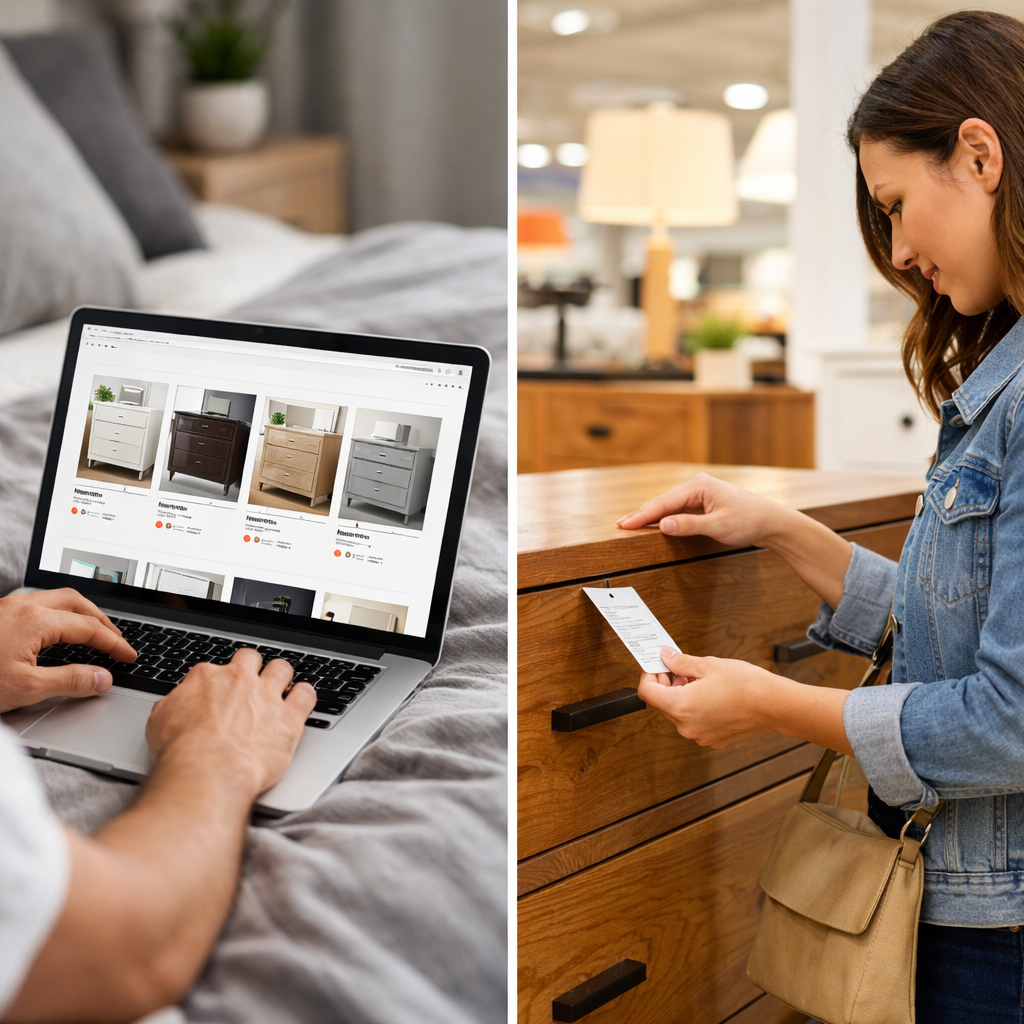
Finding the best bedroom dressers comes down to matching the buying channel to your priorities. Online retailers excel at breadth, niche sizes, and frequent promotions; local showrooms make it easy to inspect joinery, feel finishes, and resolve issues face-to-face. Buyers increasingly de-risk decisions with ratings: 89% read reviews before purchasing, 57% only consider items averaging 4 stars or higher, and products with at least five reviews are roughly 270% more likely to be purchased, according to recent review website statistics. Online or local can both deliver great results—choose the path that fits your space, service needs, and budget. Home Comfort Decisions helps you weigh these trade‑offs with clear, spec‑first guidance.
Per NN/g’s guidance on comparison tables, here’s a compact view to support quick scanning and side‑by‑side judgment.
| Factor | Online retailers | Local showrooms/big-box |
|---|---|---|
| Materials inspection | Photos/specs only; rely on verified reviews and samples | Hands-on: check grain, finish, joinery, drawer action |
| Price variability | High; promos and dynamic pricing common | Steadier; occasional sales and negotiable floor models |
| Selection/customization | Vast selection; good filters; limited custom unless DTC | Curated selection; in-store stain/hardware options more common |
| Delivery/returns | Wide range: threshold to white-glove; return freight may apply | Predictable scheduling; easier issue resolution in person |
| Risk | Photo-to-reality variance; assembly burden | Lower fit/finish surprise; fewer stock options in some areas |
Source for table-scanning best practices: NN/g guidance on comparison tables.
How to choose where to buy
Use this 60‑second decision path:
- Budget sensitivity: If price and promos are key, start online; if you value predictable pricing and easy returns, lean local.
- Need to inspect joinery/finish: If tactile inspection matters (dovetails, veneer thickness, finish sheen), go local.
- Entryway constraints: Tight doors, stairs, or elevators? Favor local with white-glove delivery and pre‑walkthroughs.
- Delivery/assembly preferences: If you want room-of-choice setup and haul‑away, prioritize local or online listings with in‑stock white-glove. If you’re comfortable assembling flat‑packs, online expands options.
If you need tactile inspection and white‑glove, go local. If you need niche widths, depths, or finishes, go online.
Verified reviews are product ratings/comments confirmed to come from real purchasers on that listing or retailer. They reduce uncertainty by surfacing recurring defects, finish variance, and service experiences. In practice, 89% read reviews, 57% screen for 4‑star averages, and items with five reviews are ~270% more likely to be bought, underscoring their impact.
Before anything, measure clearances and delivery paths; see Home Comfort Decisions’ measurement guide.
What to compare before you pick a retailer
Use a spec-first framework to evaluate any listing or showroom floor model consistently.
| Attribute | Online (marketplace/DTC) | Local (showroom/big-box) |
|---|---|---|
| Materials & construction | Look for solid wood or furniture-grade plywood, real-wood veneer thickness, dovetail drawers, corner blocks | Confirm in person: case material labels, veneer edge quality, drawer box wood, joinery visibility |
| Dimensions (W/D/H) | Check both assembled and boxed sizes; confirm width/depth fit | Measure the floor model; confirm if your unit ships assembled or flat‑pack |
| Drawer mechanisms | Require full-extension ball-bearing or soft-close slides; spec the slide brand/type if stated | Test for smooth travel, no racking, and synchronized closing |
| Finish & maintenance | Ask for finish type (lacquer, oil, UV-cured); review care guidance and photo reviews | Inspect under different lighting; ask for touch-up kits and finish details |
| Delivery & assembly | Verify delivery tier, assembly inclusion, and packaging disposal | Ask about room‑of‑choice, assembly, haul‑away, and staircase/elevator surcharges |
| Policy terms | Check return window, restocking, return freight, damage reporting deadlines, warranty | Clarify return logistics, restocking, repair partners, and warranty claims steps |
Concise definitions:
- Solid wood vs engineered wood: Solid hardwood is repairable and often heavier; it can move with humidity. Engineered options (plywood/MDF) offer stability and cost control; quality hinges on veneer thickness, core plies, and joinery. Well‑made plywood cases with thick real‑wood veneers can rival solid wood for durability.
- Dynamic pricing: Software adjusts prices based on demand, inventory, competitor moves, and time windows. Effective systems depend on quality data and can analyze transaction history to anticipate spikes and optimize promotions, per the U.S. Chamber’s dynamic pricing strategies.
Prioritize verified reviews and seller responsiveness—nearly half of consumers expect responses within 24 hours—because post‑purchase support strongly influences outcomes.
Online marketplaces
When they’re best:
- You need a specific width or depth, a particular finish/hardware, or fast comparison across dozens of listings.
- You’re comfortable with self‑assembly and reading spec sheets.
Pros:
- Massive selection, powerful filters, and frequent promos.
- Transparent review volume; online reviews can lift sales about 18% and prompt roughly 50% of readers to visit a seller’s site.
Cons:
- Variable seller quality and packaging standards.
- Photo‑to‑real finish variance and assembly burden.
Marketplace vetting checklist (what we look for at Home Comfort Decisions):
- Require a 4.0+ average with 25+ reviews; 57% of shoppers already screen for 4‑star items.
- Favor detailed specs (materials, joinery, slide type) and photo reviews.
- Confirm who pays return freight for bulky items and whether partial refunds apply on damaged returns.
Top filters to use:
- Width ≤36 in for small rooms; depth ≤18 in for tight walkways.
- Full-extension and/or soft-close slides; real-wood veneers.
- In‑stock white‑glove delivery if you need assembly and packaging removal.
Direct-to-consumer brands
Why consider DTC:
- Curated styles, clearer specs, predictable pricing, and often better documentation than broad marketplaces. Home Comfort Decisions prioritizes brands that publish detailed specs and manuals up front.
How to de‑risk:
- Verify spec sheets: case material, drawer box material, slide system, finish type, and unit weight (a proxy for material density).
- Request wood/finish samples where offered.
- Check warranty length and parts support; prioritize brands posting assembly manuals and exploded diagrams upfront.
- Review rigor matters: seek verified‑buyer tags and recent feedback; 68% of millennials trust online reviews as much as personal recommendations.
Big-box stores
When they shine:
- Practical for tight budgets and quick availability, with easy pickup or same‑week delivery.
What to check in‑store:
- Floor model stability (no racking), smooth drawer glides, consistent finish and edge banding.
- Aisle tags for materials: e.g., solid wood face frames vs MDF cases or paper veneer. These are the same quick checks we use at Home Comfort Decisions.
Flat‑pack realities:
- More assembly time and potential cam‑lock failures; confirm spare hardware availability.
- Consider store pickup to avoid delivery windows; add extended service plans only if terms (coverage, labor, exclusions) are clear.
Return predictability and local service make problem resolution faster than remote chats or emails.
Independent local showrooms
Best for buyers who want quality, tactile inspection, and white‑glove service.
- Test dovetail joints, inspect drawer bottoms for thickness and attachment, and evaluate finish under varied light.
- Ask about in‑home delivery paths, assembly protocols, and protections for tight stairs or elevators.
- Leverage in‑store customization: stain tweaks, hardware swaps, even width reductions.
- Inquire about price‑match policies and local repair/refinish partners.
- Trust dynamics favor local: 74% say positive reviews increase trust in a local business, per BrightLocal’s consumer review survey.
Second-hand and consignment
A path to high‑quality, solid‑wood dressers at low cost—if you can inspect, transport, and refinish.
- Six‑point inspection (Home Comfort Decisions quick check): smooth drawer action, tight joints, sturdy back panel (plywood beats thin fiberboard), no musty odors or moisture, level feet, and refinishable surfaces.
- Bring a tape measure, flashlight, and furniture sliders; photograph labels/stamps for research.
- Sources compared: consignment (curated, higher prices), marketplace apps (lowest prices, variable reliability), estate sales (best for vintage hardwood).
- Plan for cash‑on‑inspection, truck/blankets/straps, and potential refinishing; DIY improves value but adds to total cost of ownership.
Spec-first checklist for small spaces
Measurements that matter:
- Maintain 30–36 in walkway clearances; target dresser depth ≤18–20 in for tight rooms.
- Entry path: door widths, staircase turns, elevator limits; verify assembled vs flat‑pack box dimensions.
- Drawer clearance: ensure 12–16 in pull distance without hitting doors or bed frames.
Materials and mechanisms to prioritize:
- Hardwood frames or quality plywood with real‑wood veneer; avoid thin fiberboard backs.
- Full‑extension ball‑bearing or soft‑close slides; solid wood or plywood drawer boxes with dovetail joints.
Total cost of ownership (TCO): The sum of purchase price, taxes, delivery/assembly, protective pads, maintenance, and probable repair costs minus likely resale value. Include potential return freight, time spent assembling or refinishing, and durability—longer lifespans usually lower annualized TCO.
Delivery, returns, and warranty policies
Policy comparison at a glance:
| Policy area | Online (marketplace/DTC) | Local (big-box/showroom) |
|---|---|---|
| Delivery types | Threshold, room‑of‑choice, white‑glove (varies by seller/zip) | Scheduled room‑of‑choice and white‑glove more predictable |
| Assembly | Often extra unless white‑glove; flat‑packs common | Often included with white‑glove; floor models may deliver assembled |
| Returns | 14–30 days typical; return freight/restocking may apply | Clear in‑store returns; restocking possible; easier coordination |
| Damage reporting | Photo documentation typically required within short windows | Document on delivery; easier to refuse and re‑route |
| Warranty | 1–5 years common; parts support varies | Store-backed warranties; local repair partners more accessible |
Tip: Nearly half of consumers expect review responses within 24 hours—at Home Comfort Decisions, we treat that as a proxy for retailer support. For freight damage, photograph packaging and product immediately, keep all materials, and if severe, refuse delivery on the spot without penalty.
Pricing and total cost of ownership
Dynamic pricing (40–50 words): Retailers increasingly use software to adjust prices in real time based on demand, inventory, timing, and competitor moves. Effective systems rely on clean data and can learn transaction patterns to anticipate spikes and optimize promotions, as outlined in dynamic pricing strategies from the U.S. Chamber of Commerce.
Build a quick TCO worksheet:
- Item price, promos/discounts, tax
- Shipping/delivery tier and surcharges
- Assembly time/value (self vs white‑glove)
- Return freight risk and restocking
- Protective pads/sliders
- Projected lifespan and resale value
For price tracking, consumer‑friendly alerts beat enterprise tools. For context, some pricing suites start around $99/month, per a pricing analytics overview, while others list free tiers in a competitive pricing tools roundup.
When online wins
- You need niche widths/depths, specific finishes/hardware, or rapid comparison across many options.
- You’re budget‑driven, comfortable with self‑assembly, and can accept some photo‑to‑reality variance.
- Mitigate risk by filtering for 4.0+ ratings, requiring recent photo reviews, and preferring listings with at least five reviews, which significantly boosts purchase likelihood.
When local wins
- Heavier, higher‑value dressers where you want to inspect joinery, finish, and stability.
- Tight entries or multi‑story deliveries where white‑glove prevents damage and headaches.
- You value quick dispute resolution and personal service—positive local reviews meaningfully boost trust.
Our recommendation
At Home Comfort Decisions, we favor a hybrid approach. Shortlist online using precise filters (width, depth, slide type, materials) and verified reviews; then confirm materials and drawer mechanisms locally when possible—or request samples, manuals, and exploded diagrams from DTC brands. For small spaces and heavy hardwoods, favor local with white‑glove delivery. For budget buys or uncommon sizes/finishes, buy online after verifying ratings, return freight terms, and assembly guides.
Frequently asked questions
How do I verify dresser quality online without seeing it in person?
Require 4.0+ average ratings with recent photo reviews, confirm joinery and slide type in spec sheets, and use weight as a density proxy. Home Comfort Decisions recommends dovetail drawers, plywood or solid‑wood cases, and full‑extension ball‑bearing or soft‑close slides.
What measurements matter most for small bedrooms and tight entries?
Confirm dresser width/depth against walkways (aim for 30–36 in clear), drawer pull clearance, ceiling height for mirrors, and delivery path specs. Home Comfort Decisions also suggests verifying assembled dimensions versus flat‑pack box size.
How should I compare delivery, assembly, and return costs across retailers?
Build a side‑by‑side table for delivery tier, assembly inclusion, return window, restocking, and return freight. Home Comfort Decisions adds damage‑reporting deadlines and photo requirements so you can refuse or document issues without losing money.
When is it smarter to shop local instead of online for a dresser?
Choose local when you need to inspect joinery/finishes, have tight entries needing white‑glove delivery, or want customization and fast issue resolution. Home Comfort Decisions also favors local for heavy, high‑value solid‑wood dressers where returns are costly.
What materials and mechanisms signal long-term durability?
Look for hardwood or quality plywood cases with real‑wood veneer, solid or plywood drawer boxes with dovetail joints, and full‑extension ball‑bearing or soft‑close slides. Home Comfort Decisions advises avoiding thin fiberboard backs, undersized screws, and partial‑extension rollers.