Online vs local: where to get the best round dining tables
Online vs local: where to get the best round dining tables
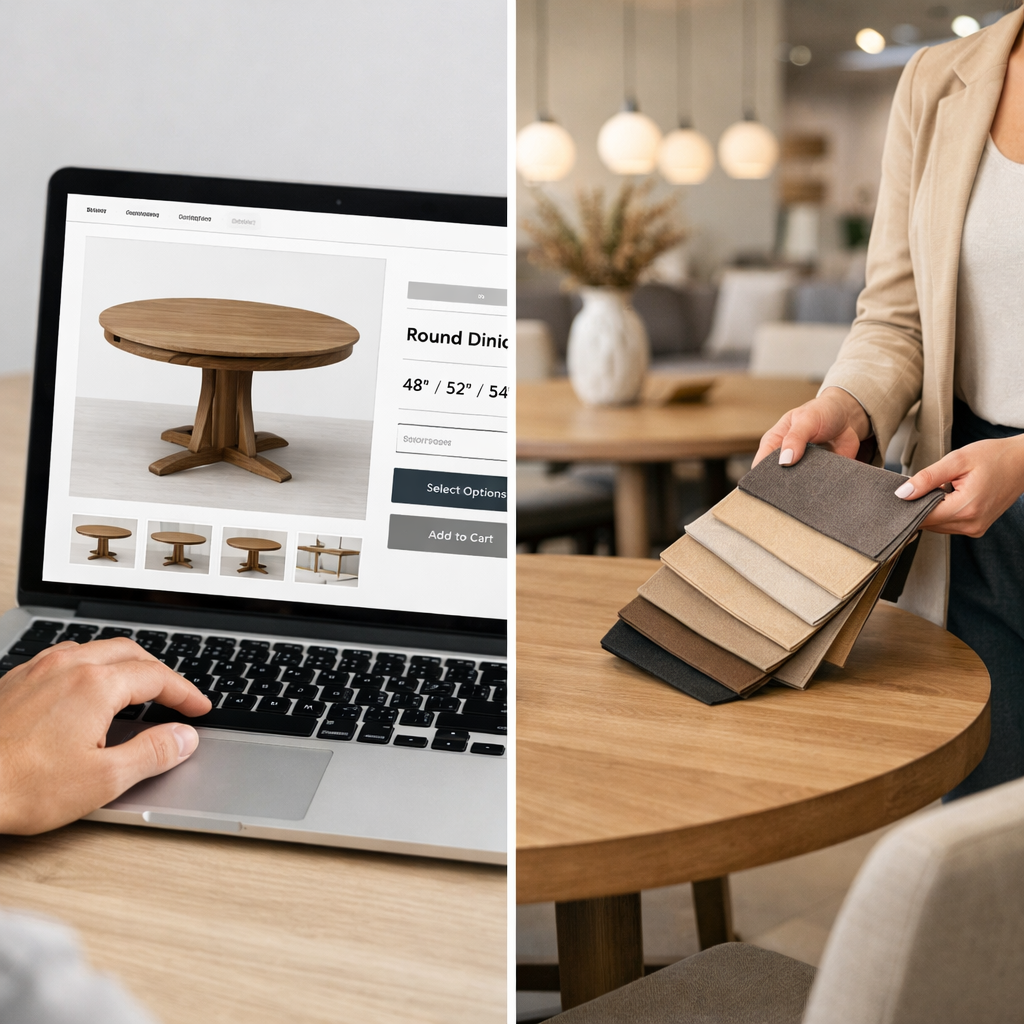
Choosing where to buy a round dining table comes down to what you value most: breadth and price, certainty of fit, or service. Online marketplaces deliver unmatched selection and dynamic pricing; local stores offer touch-and-feel confidence and bundled support; custom makers solve unique sizes and finishes. Home Comfort Decisions’ bottom line: start online to learn the market and spot deals, validate finalists locally for scale, stability, and finish, and go custom when stock sizes or finishes won’t work. Along the way, factor total cost of ownership, base type (pedestal vs four-leg), and delivery/assembly into your decision so the table you love also fits your space, budget, and daily life.
How to decide what matters most
Total cost of ownership (TCO) means the all-in cost to own a table over its useful life: purchase price, delivery and assembly, protective finishes and maintenance, repairs, parts, and eventual resale value. Comparing TCO—not just sticker price—helps identify the true value of the best round dining tables for your home. That TCO-first lens is the framework we use at Home Comfort Decisions.
If price and selection lead, online wins—powerful filters and price-comparison tools make it easy to surface options and promotions. If assurance and fit are critical (small-space dining table, finish matching), local showrooms excel with real-scale viewing. Service quality depends on the seller’s systems: retailers that centralize support often resolve issues faster, while some local shops flex delivery and assembly to your needs. Use price-comparison sites to map the market and timing [price-comparison research], then weigh in-person validation and white-glove delivery where it matters most (Phonexa on comparison sites; support platform benchmarks).
Space and seating needs
- Measure your room (length × width) and note adjacent walkways.
- Subtract clearance: allow 30–36 inches from table edge to walls or furniture for pulling out chairs and passing.
- Model table diameter: room width minus 60–72 inches typically yields a workable round size.
- Confirm chair count against diameter and chair width (arms take more room).
For tight rooms, a small round dining table with a space-saving pedestal or X-base frees up legroom and eases circulation. Round tables naturally suit square rooms and dining nooks. If possible, validate fit in-store—sit, pull chairs, and test maneuverability. In-person checks are a form of primary research that reduces decision uncertainty, a principle echoed in small-business guidance on direct observation and validation (SBA market research).
Budget and total cost of ownership
Track deals and pricing history with comparison tools, then buy during promotions; sites that aggregate offers help you spot better pricing windows (comparison tool overview). Cheap can get costly if returns are hard or assembly is complex. Local shops often bundle delivery, in-room placement, and assembly—and may negotiate packages that beat piecemeal online costs. Home Comfort Decisions recommends getting the total delivered-and-assembled price in writing before you buy.
White-glove delivery is a premium service that brings your table to the room of choice, unpacks, assembles, places it, and removes all packaging. Teams schedule delivery windows, navigate stairs and tight turns, and perform damage checks before you sign. It’s ideal for heavy tops and multi-piece bases, and can meaningfully improve TCO by preventing costly mishaps.
Style, material, and base type
Shortlist styles by matching existing finishes and flooring tones. Local stores can help you match wood species and stains; online brands often curate cohesive looks that simplify pairing. Base type affects comfort: pedestal vs four-leg. Pedestals help squeeze in extra chairs in small spaces; four legs feel classic and are often more stable for heavy tops. When durability is paramount, verify claims (solid wood vs veneers/MDF) in person to check finish feel, edge strength, and color consistency.
Key criteria for round dining tables
Compare finalists with consistent criteria:
- Size and capacity
- Base type (pedestal vs four-leg)
- Materials (solid wood, veneer, engineered wood)
- Delivery, assembly, and returns
- Price and TCO
- Warranty and support
Definitions for clarity:
- Engineered wood: a man-made core (often MDF or particleboard) engineered for uniformity and stability. It’s budget-friendly and resists certain warping, but edges can chip and it’s vulnerable to swelling if soaked. Strong finishes and careful moisture management extend its lifespan and help protect TCO.
- Solid wood: boards milled from a single species, offering natural grain, strength, and the ability to sand and refinish. It costs more and moves with humidity, so quality joinery and finishes matter. Over decades, repairability and refinishability can improve total value compared with non-refinishable cores.
- Veneer: a thin slice of real wood bonded over a stable core. It delivers a consistent look and can prevent large-panel warping. Deep sanding is limited, so repairs focus on careful touch-ups. High-quality veneers with robust topcoats are durable for everyday dining without the full cost of thick solid planks.
Structured data tip: turning your sizing and clearance Q&As into an FAQPage helps answer engines surface quick, accurate snippets.
Size and seating capacity
- 40–44 inches: seats 2–4
- 46–52 inches: seats 4
- 54–60 inches: seats 4–6
- 72 inches: seats 6–8
Armchairs and wider seats reduce counts. Expandable rounds with butterfly leaves boost capacity for guests—many online listings highlight quick-ship 60-inch options, while local showrooms let you confirm chair fit around the full perimeter. Round tops also remove sharp corners and keep traffic flowing in tight rooms.
Pedestal vs four leg bases
- Pedestal: better chair clearance and legroom; ideal for small rooms and flexible seating; may wobble if the column, spreaders, or base plate are underspecified for the top’s weight.
- Four-leg: inherently stable and classic; legs can block chairs at tight counts; a solid choice for heavy stone or thick wood tops.
Test stability and knee clearance in-store when possible—daily comfort lives in the details.
Materials and durability
- Solid wood: made from one species throughout, it brings natural grain and strength, can be repaired and refinished, and ages well. Expect seasonal movement; quality joinery and a durable finish reduce issues. Higher upfront cost often balances out over decades of service and refinish cycles.
- Veneer: real-wood face over a stable core yields uniform appearance and dimensional stability at a lower cost than thick solids. It resists warping on large panels but can’t handle deep refinishing. Durability depends on veneer thickness, edge protection, and the toughness of the applied topcoat.
- MDF/engineered wood: uniform fiberboard core that machines cleanly, takes paint well, and helps hit budget targets. It’s stable indoors and resists telegraphing grain, but edges can dent and swelling occurs if moisture intrudes. A sealed finish and careful care extend life and preserve appearance.
Confirm finish type (e.g., catalyzed lacquer vs oil-wax) and edge durability—real-world wear happens at the perimeter first. Local inspection reduces guesswork.
Delivery, assembly, and returns
Online sellers vary: some include threshold (doorstep) delivery; others charge for room-of-choice or assembly. Local stores often bundle delivery, assembly, and old furniture disposal. Retailers using centralized messaging and case-management platforms tend to cut response times—benchmarks show up to 50% faster replies while handling hundreds of cases weekly (support platform review). Always confirm return windows, restocking fees, and packaging requirements before you buy.
Online retailers and marketplaces
Start with filters (diameter, base, material, finish), then save a longlist to a comparison table. Verify specs and warranties before checkout, and read the fine print on returns and in-home assembly. Large marketplaces offer robust filters and specs; for example, you can quickly narrow by size, base, and material on Wayfair’s round dining tables. Use a simple comparison checklist—like the one we use at Home Comfort Decisions—to keep specs and policies side by side.
Selection, pricing, and promotions
Comparison sites aggregate competing offers and reveal deal windows, helping you time purchases for lower headline prices and promotions (pricing intelligence overview). Add items to wishlists and set price alerts around holiday sales. Check ZIP-based surcharges and freight fees before deciding a “deal” is cheapest.
Reviews, specs, and price tracking tools
Scan photo reviews for legroom, wobble, and finish accuracy versus studio images. Cross-check dimensions, weight, and base hardware in spec sheets to predict stability. Track price fluctuations with comparison/aggregator tools to lock in value (how comparison tools help). Confirm assembly complexity and whether in-home assembly is available at checkout.
Risks to watch and how to mitigate them
- Tactile unknowns: order swatches, study user photos, and confirm return terms in writing.
- Service variability: response speed depends on the seller’s systems; centralized tools help, but policies still control outcomes (service benchmarks).
- Delivery damage: inspect before signing; photograph packaging and parts; report issues immediately.
Direct-to-consumer furniture brands
DTC lines offer cohesive designs, frequent promos, and streamlined online experiences, but policies for returns and delivery vary. Always confirm lead times, return shipping costs, and warranty terms up front.
Curated designs and value trade-offs
Assess construction details—joinery, base hardware, top thickness, and finish type—alongside style. Curated lines may blend materials (solid edges, veneered fields) to balance look and cost. If chair comfort is a question, pair a DTC table with locally sourced chairs you can test. Request finish samples for accurate matching.
Delivery windows, returns, and warranties
Confirm “in-stock” versus “made-to-order”—custom finishes extend timelines. Check restocking fees and original packaging requirements; return logistics can materially affect TCO. Save all communications; responsive support systems reduce friction if issues arise (support responsiveness data).
Local furniture stores and showrooms
In-person shopping reduces uncertainty. You can see scale, test chairs and clearances, and inspect finishes under real lighting. Many local shops bundle delivery, assembly, and disposal—and will negotiate packages or floor-model discounts. This in-person validation aligns with Home Comfort Decisions’ “start online, verify locally” approach.
Inspect-before-buy and fit assurance
Bring room measurements, chair dimensions, and a floor or paint sample. Sit all around the table, check knee clearance, tug for wobble, and simulate traffic paths. Immediate, on-site measurement checks cut risk and speed decisions—principles aligned with hands-on validation in market research best practices (SBA guidance). Ask for take-home wood/finish samples.
Negotiation and bundled services
Ask about bundled delivery/assembly and old-furniture removal. Inquire about floor-model discounts or blemish credits. Get timeline commitments in writing and coordinate holds/delivery if you’re moving or renovating.
White glove delivery and support
White-glove delivery brings the table to its room, assembles it, places it, and removes packaging—catching damage before sign-off and saving hours. Local teams offer clearer accountability and quicker answers on repairs and building constraints than distant third-party couriers. Clarify service windows and any staircase or threshold surcharges.
Independent carpenters and custom makers
Choose custom when you need unusual diameters, specific leaf mechanisms, or exact finish matches. Expect more communication and higher upfront cost, offset by perfect fit and local maintenance options.
Custom dimensions and finishes
Specify exact diameter, seating goals, leaf type (drop, butterfly, traditional), and base clearance tailored to your chairs. Detail species, edge profile, and sheen. Request samples and a written spec covering finish chemistry, moisture resistance, and care. Local makers provide hands-on updates and tuning.
Lead times, costs, and maintenance support
Lead times vary by shop and complexity; build in buffer for finishing and curing. Ask for maintenance guidance and touch-up kits, and clarify warranty terms. Higher initial cost can pay off via longevity, refinishability, and just-right ergonomics—especially in tight or irregular spaces.
Side-by-side comparison by priority
| Priority | Online Marketplaces | DTC Brands | Local Store/Showroom | Custom Maker |
|---|---|---|---|---|
| Price | Often lowest; dynamic pricing and promos; easy comparisons (comparison tools). | Competitive during promos; consistent pricing. | Negotiable packages may beat piecemeal fees. | Highest upfront; value in exact fit and longevity. |
| Selection | Widest variety, fast filtering (size/base/material). | Curated, style-forward lines. | Moderate; depth in tried-and-true sizes/finishes. | Unlimited within craft limits. |
| Assurance/Fit | Specs/photos only; order swatches; confirm returns. | Good visuals; samples on request. | Best: sit-test and immediate measurement checks (SBA). | Perfect-fit builds. |
| Service/Returns | Varies; centralized systems can halve response times (service benchmarks). | Varies by brand; read fine print. | Clear accountability; bundled delivery/assembly common. | Direct access to maker; local aftercare. |
| Small-Space Solutions | Many pedestal options; filter by diameter. | Compact designs curated for apartments. | In-store chair-fit checks around small pedestals. | Custom diameters and base clearances for tight rooms. |
Price and selection
Start online with marketplaces and use comparison tools like PriceGrabber-style engines to surface promotions and price history (tool roundup). Shortlist 2–3 contenders, then—if feasible—validate materials and finishes in-store before purchasing.
Assurance and fit
Risk-averse buyers should sit-test locally: check wobble, finish texture, and chair spacing. Combine methods—shortlist online, validate in-store—or engage a local maker for bespoke sizing when rooms are irregular.
Service, delivery, and returns
Policies vary widely online. Responsive platforms can accelerate resolutions, but terms govern outcomes (support benchmarks). Confirm white-glove availability and return logistics in writing; local stores often tailor packages.
Small-space solutions
Favor round pedestal tables to maximize chair clearance and circulation. Consider expandable rounds for guests and ensure the non-extended size preserves everyday traffic flow.
Cost and value scenarios
Use these quick plays to balance TCO and comfort:
- Price-first: start online; track promos; confirm delivery and return costs.
- Fit-first: visit local stores; negotiate bundled assembly; verify finish care.
- Bespoke: hire a custom maker; accept longer lead times for perfect fit.
Small apartments and tight dining nooks
Pick a 40–48-inch round pedestal for 2–4 daily seats; consider drop-leaf or a small butterfly leaf for guests. Start online for selection and price tracking, then validate a finalist locally for legroom and finish. Use armless chairs and consider wall-adjacent placement.
Families and everyday durability
Choose solid wood or durable veneer with a tough topcoat; rounded edges improve kid safety. Local stores let you check finish hardness and chair stability and often bundle assembly. Verify warranty coverage and availability of replacement parts.
Entertainers and flexible seating
Look for 54–60-inch rounds with leaves; confirm base stability when extended. Start online to find configurations and promos, then confirm chair fit and wobble locally. Opt for white-glove delivery for large or heavy tops to protect floors and ensure proper assembly.
Home Comfort Decisions recommendation
Start online for variety and pricing intelligence; validate in-store for fit, finish, and service terms; go custom when you need exact dimensions, specific leaves, or heirloom-grade finishes.
Start online, validate locally
- Use comparison tools to shortlist and track pricing history (comparison insights).
- Bring measurements to a showroom and test legroom, finish, and stability; ask about bundled delivery and assembly.
When to go custom or stay stock
- Go custom for irregular rooms, precise diameters/leaf needs, or finish-matching an existing set; expect longer timelines and higher upfront cost.
- Stay stock when standard sizes/styles fit and budgets or timelines are tight; protect TCO by confirming return, delivery, and service terms.
Quick checklist before you buy
- Measure room; confirm 30–36 inches of clearance.
- Match base to chair count (pedestal for small spaces).
- Check materials and finish in person if possible.
- Confirm delivery, assembly, returns, and warranty in writing.
- Use price-comparison tools; set alerts for sales.
Frequently asked questions
Do round tables save space compared to square or rectangular tables?
Yes. Home Comfort Decisions finds round tables eliminate corners and improve circulation in tight rooms, often fitting more comfortably in small or square spaces.
What size round dining table seats four or six comfortably?
For four, aim for 40–48 inches depending on chair size; for six, 54–60 inches usually works. Home Comfort Decisions recommends confirming chair width and armrests to avoid crowding.
Is a pedestal base better than four legs for small spaces?
Often, yes. Home Comfort Decisions favors pedestals in small rooms because they free up chair placement and reduce knee-knock.
What materials are most durable for everyday use?
Solid wood with a quality finish offers longevity and refinishability; durable veneers resist warping and look consistent. Home Comfort Decisions suggests engineered wood when budgets are tight, with careful moisture protection.
How much clearance should I plan around a round table?
Plan for 30–36 inches from table edge to walls or furniture so chairs can pull out and people can pass. That clearance guideline is the standard we use at Home Comfort Decisions.