Rolling Kitchen Carts: Compare Top Retailers, Warranties, Shipping, Return Policies
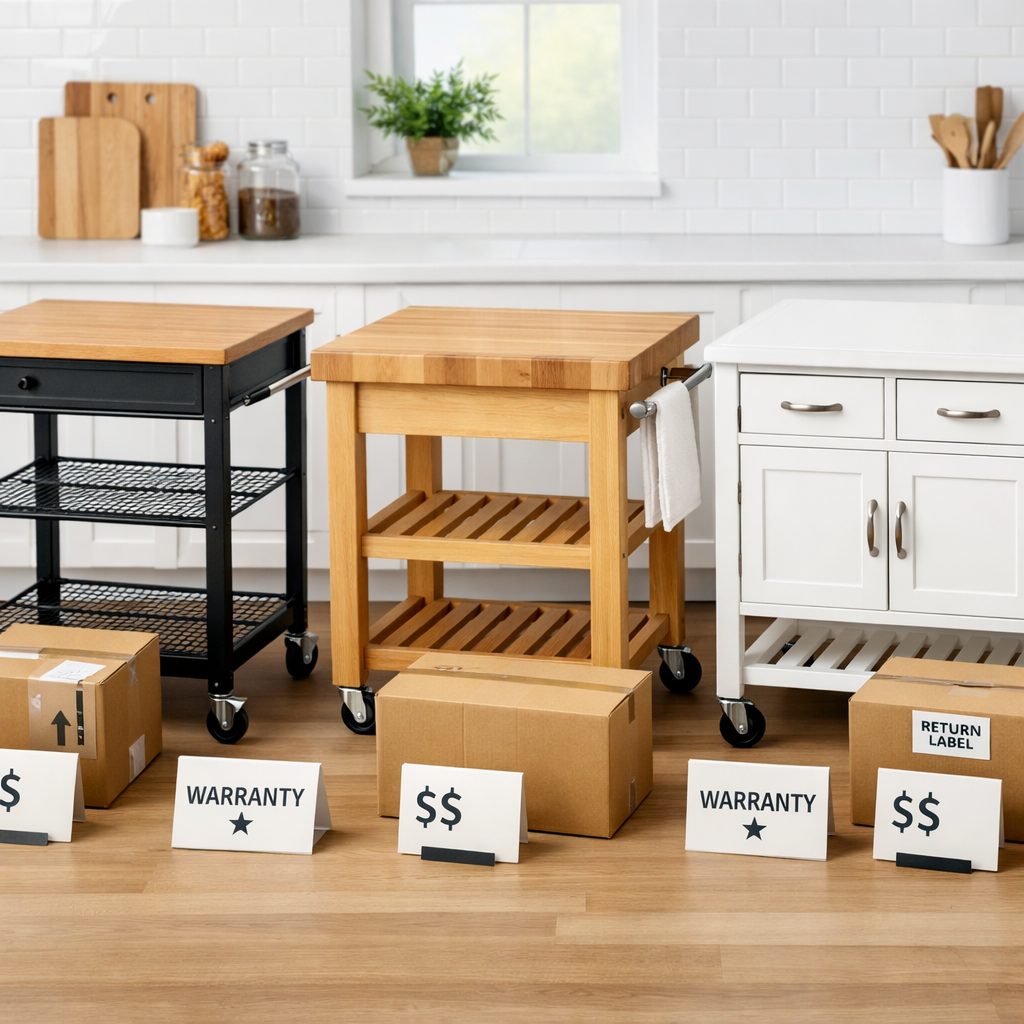
Rolling Kitchen Carts: Compare Top Retailers, Warranties, Shipping, Return Policies
Rolling kitchen carts are surging because they add instant storage, prep space, and mobility without remodeling—and they’re far cheaper than built-in islands. Demand spikes during goal-setting months and late summer sales, so prices and stock can tighten. Policy clarity matters: choosing retailers with transparent warranties, shipping times, and return paths cuts post‑purchase friction and gets you cooking faster. At Home Comfort Decisions, we focus on that transparency so you can compare options quickly and avoid surprises. This guide compares where to buy rolling kitchen carts from quality sellers, what to expect on shipping and returns, and how to choose the right cart for your space, from a compact microwave cart to a butcher-block kitchen island cart with locking casters, all with an eye on value and speed grounded in seasonality data from Accio’s retail insights.
Retailer snapshot: strengths, delivery, and policy clarity
| Retailer | Best for | Selection/price notes | Typical delivery | Returns (overview) | Policy clarity |
|---|---|---|---|---|---|
| IKEA | Small spaces, rental-friendly utility cart on wheels | Value-first, compact carts and a few island carts | 3–7 days ship-to-home; same-day/next-day pickup in some stores | Easy in-store returns | Clear, standardized |
| Amazon | Fast variety, budget to midrange styles | Broad marketplace pricing and brands | 1–5 days on many items | Varies by seller; check “Free returns” | Mixed; check seller page |
| Home Depot | Heavier-duty, butcher-block cart builds | Solid wood/sturdier frames at mid-tier prices | 2–7 days; store pickup speeds things up | In-store or mail | Generally clear |
| Lowe’s | Island-style carts with store convenience | Comparable to Home Depot | 2–7 days; pickup often fastest | In-store or mail | Generally clear |
| Wayfair | Style variety, frequent promotions | Wide range, many colors/sizes | “Get it by” dates; many ship free | Label shown at checkout | Transparent at checkout |
| Overstock | Online-only value and unique styles | Frequent promos; rotating inventory | 3–10 days | Mail returns; restocking may apply | Shown at checkout |
| Walmart | Value pricing, fast fulfillment | House brands + marketplace | 2–5 days; store pickup/returns | In-store or mail; marketplace varies | Clear for Walmart-sold |
| Target | Budget carts and quick replacements | Compact microwave/utility carts | 2–5 days; same-day services in some areas | Easy in-store returns | Clear, standardized |
Why rolling kitchen carts are in demand
Rolling carts solve three problems at once: storage, prep surface, and flexibility. Accio’s retail trend data shows “Rolling Kitchen Carts with Storage & Microwave Stand” leading the category, with average sales above 100 units per month; monthly averages rose from 103.23 in May to 134.77 in August 2025, and search peaked in January and August 2025, underscoring seasonal spikes in interest and inventory pressure (Accio retail trend analysis). For shoppers, that means better pricing and stock if you buy ahead of these peaks.
A mobile kitchen island is a freestanding cart on locking wheels that adds prep space and storage, sometimes with power strips or towel bars. It can roll to where you’re working and park securely, delivering island-like function at a fraction of the cost and commitment of permanent cabinetry.
Value is a key driver: Consumer Reports notes you can get cart-based island storage for a few hundred dollars, versus thousands for built-ins, making carts one of the highest ROI kitchen organization upgrades for renters and homeowners alike (Consumer Reports on maximizing kitchen storage).
How to choose a rolling kitchen cart
- Define core use. Decide if you need a prep surface (heavier top, knife-safe), storage (drawers, shelves), or an appliance/microwave cart (venting clearance, outlet access, cord management).
- Confirm materials, casters, and load capacity. Solid wood or stainless tops and steel frames boost durability; check weight ratings and caster type.
- Read warranty length and coverage. Look for at least a 1‑year limited warranty and confirm parts/hardware coverage.
- Check shipping windows and return policy. Compare “Get it by” dates, who pays return shipping, and any restocking fees.
- Prefer omnichannel retailers. Store pickup, easy exchanges, and in‑store returns reduce delays and effort.
Locking casters are wheel mechanisms that secure a cart in place. When engaged, the wheel won’t roll and, on dual-lock designs, won’t swivel either. This stabilizes the cart during chopping, mixing, or when holding appliances. Two locking wheels are common on midrange carts and are strongly recommended for kitchen safety.
Care tips: Protect wooden tops with mats or trivets, wipe spills promptly, and season butcher-block as directed. Tighten screws periodically and check joints and casters for play to maintain rigidity and safe rolling.
Comparison criteria
We compare retailers by product selection (from basic utility carts to full butcher-block islands), price/value, shipping speed and clarity, return windows and any restocking fees, and warranty transparency. Editorial roundups commonly report around a 1‑year limited warranty for mainstream carts, with longer coverage on premium or appliance-integrated models. This is the lens Home Comfort Decisions uses to evaluate retailers for low-friction ownership.
An omnichannel retailer supports browsing, buying, delivery, and returns across online and physical stores, so you can order online, pick up in-store, and return locally. This often translates to faster fulfillment, simpler exchanges, and clearer support—less friction than marketplace-only sellers with variable policies.
Marketplace policies vary by seller. Always open the seller page to verify warranty coverage, return windows, shipping fees, and whether the retailer or third party issues the return label, as recommended in buying guides like the Strategist’s kitchen cart roundup (New York Magazine’s Strategist buying guide).
IKEA
IKEA offers smart, small-space value with compact utility carts and a few island-style options. Highlights include the RÅSKOG utility cart (about 13 3/4 x 17 3/4 x 30 3/8 inches) and island/utility models like FÖRHÖJA, BEKVÄM, LOSHULT, and the larger BROR (~33 1/2 x 21 5/8 inches). Browse the lineup on the IKEA kitchen islands and carts page (IKEA kitchen islands and carts).
Third-party editors have praised RÅSKOG as “shockingly sturdy” and a best bargain that’s easy to assemble, making it a go-to utility cart on wheels for renters and small kitchens (Strategist review of best kitchen carts). Homes & Gardens notes that an approximately $180 IKEA cart can effectively double storage in tight rental kitchens—a strong case for budget-first upgrades (Homes & Gardens on the viral IKEA cart).
Amazon
Amazon’s breadth and pricing are notable, from minimalist microwave carts to midrange kitchen island carts. Policies vary by seller or brand, so check the product page for warranty length, whether returns are seller- or Amazon-fulfilled, and if “Free returns” applies. Use filters and customer Q&A to confirm load capacity, caster type (look for locking wheels), and assembly notes. Best for speed-focused, budget-conscious buyers who can verify the return label and any restocking fees upfront.
Home Depot
Home Depot tends to stock larger island-style and butcher-block carts with sturdier frames, plus store pickup and easy in-store returns. It’s a solid fit for buyers who want hands-on support. Product pages typically list warranty length—mainstream carts often carry about a 1-year limited warranty in editorial roundups—and useful features like towel racks or upgraded casters. Compare delivery windows and nearby store inventory to accelerate fulfillment.
Lowe’s
Lowe’s offers comparable heavier-duty, island-style carts and butcher-block tops with the convenience of in-store pickup and returns. Filter for locking casters, solid-wood or stainless tops, and confirm warranty line items on the product page (approximately 1-year limited is common in roundups). A good destination if load capacity and straightforward returns are priorities.
Wayfair
Wayfair offers style variety, frequent promotions, and clear “Get it by” delivery estimates, with many items shipping free. Numerous models earn high ratings, from compact microwave carts to drop-leaf kitchen islands, with transparent return labels visible at checkout (Wayfair catalog and delivery cues; Wayfair drop-leaf collection). Editors at the Strategist have highlighted feature-rich picks like the Twillery Co. Miriam cart, which includes a stainless-steel top and two locking wheels.
Check shipping fees for oversized items and scan assembly requirements before purchase.
Overstock
Overstock operates as an online-only marketplace with variety and promotions similar to Wayfair, making it easy to find a style match at a deal price. Return windows and labels are typically presented at checkout; confirm whether restocking applies to assembled or freight items, and review warranty terms on the product page. A strong fit for unique styles, budget deals, and straightforward home delivery.
Walmart
Walmart offers value-first pricing and fast shipping options, with the advantage of in-store return hubs. Use filters to zero in on materials (bamboo, MDF, solid wood) and features (drawers, towel bars). Listings sold by Walmart generally have clear returns; marketplace listings vary—verify who issues the return label and any restocking details.
Target
Target is ideal for budget carts and quick replacements, supported by fast shipping and easy in-store returns. Focus on compact microwave carts and multi-tier utility carts for apartments and small kitchens. Confirm warranty info on the product page and look for essentials like locking casters and towel racks.
Warranties overview
Most mainstream rolling kitchen carts ship with limited manufacturer warranties around one year, as summarized in major editorial roundups; higher-end or appliance-integrated islands can carry longer or tiered protections (Better Homes & Gardens kitchen cart roundup). Marketplace coverage varies—always confirm scope on the product page, including parts, hardware, and finish. Home Comfort Decisions favors retailers that publish clear warranty terms directly on the product page.
Quick warranty checklist:
- Warranty length and who services it (retailer vs. manufacturer)
- What’s covered vs. excluded (casters, hardware, finishes)
- Proof required and claim process (photos, serials, timelines)
Shipping and fulfillment expectations
Integrated retail workflows can meaningfully trim lead times. For example, Hygena used HomeByMe 3D planning to fulfill kitchen orders in two weeks, beating typical 2–3 month timelines—a reminder that connected systems speed delivery in home goods (Enterprise HomeByMe retail case). Mass-market carts typically ship from distribution centers in about 3–10 days depending on stock and carrier. Compare “Get it by” estimates and store pickup options; omnichannel retailers often reduce delays and simplify exchanges.
Curbside delivery drops your package at the driveway or building entrance without entering your home or assembling the item. Inspect boxes on arrival, photograph any damage, and report issues before moving packages inside to support claims and avoid denial due to missing evidence.
Return policies and what to check
Big-box and brand retailers usually offer predictable return paths in-store or online, while marketplace returns can introduce friction. Look for seller-fulfilled return labels and explicit restocking fees before you buy.
Policy check, step by step:
- Confirm the return window (often 30 days).
- Check who pays return shipping.
- Note restocking fees for assembled or bulky items.
- Save packaging; many returns require original boxes.
A restocking fee is a percentage or flat amount deducted from your refund when returning an item, covering inspection and repackaging costs. Many furniture categories apply restocking if the product is assembled, used, or missing original packaging, so plan to test-fit before full assembly when possible.
Best picks by use case
- Small-space/rental: Three-tier utility carts like IKEA RÅSKOG—consistently praised as sturdy, a best bargain, and easy to assemble—offer maximum flexibility with minimal footprint.
- Heavy prep/butcher-block: Larger island-style carts from Home Depot or Lowe’s; prioritize solid-wood tops, locking casters, high load ratings, and clearly stated ~1-year warranty details.
- Multifunction microwave/workstation: This high-demand category exceeds 100 units/month with August peaks; shop Amazon, Wayfair, or Overstock for variety and delivery speed, verifying seller warranties and returns.
Home Comfort Decisions recommendation
For low-friction buying and durable value, prioritize retailers that combine transparent warranty language, clear return pathways, and reliable omnichannel shipping. Our take: classic tiered utility carts (RÅSKOG-style) are unbeatable for rentals and small kitchens, while frequent cooks should pick butcher-block or appliance-ready carts from sturdier retailers with explicit warranties. To avoid stockouts and higher prices, buy ahead of January and August peaks highlighted in Accio’s data.
Frequently asked questions
What materials hold up best for daily kitchen use
Solid wood or bamboo tops with sealed finishes and stainless or powder-coated frames handle daily prep and moisture well. Home Comfort Decisions recommends avoiding untreated MDF near sinks and using mats or trivets to protect wood.
How much weight should a quality rolling cart support
Many midrange carts support 100–200 pounds across the top and shelves. Home Comfort Decisions advises choosing a solid-wood or steel frame with locking casters and a stated load rating if you’ll park heavy appliances.
Do I need locking casters and what type is best
Yes—locking casters keep the cart from moving during chopping or mixing; use at least two. Home Comfort Decisions recommends dual‑lock casters that stop both rolling and swiveling for the most stability on smooth floors.
What should I look for in a warranty on a kitchen cart
Target a 1‑year limited warranty that covers parts and hardware, including casters. Home Comfort Decisions suggests checking exclusions, who handles claims, and what proof is needed before you buy.
How do return windows and restocking fees typically work
Many retailers offer 30‑day returns, and restocking fees can apply if the cart is assembled or missing packaging. Home Comfort Decisions recommends keeping all boxes and confirming who pays return shipping at checkout.