Single Storage Beds: Trusted Retailers, Smart Buying Tips, Real Value
Single Storage Beds: Trusted Retailers, Smart Buying Tips, Real Value
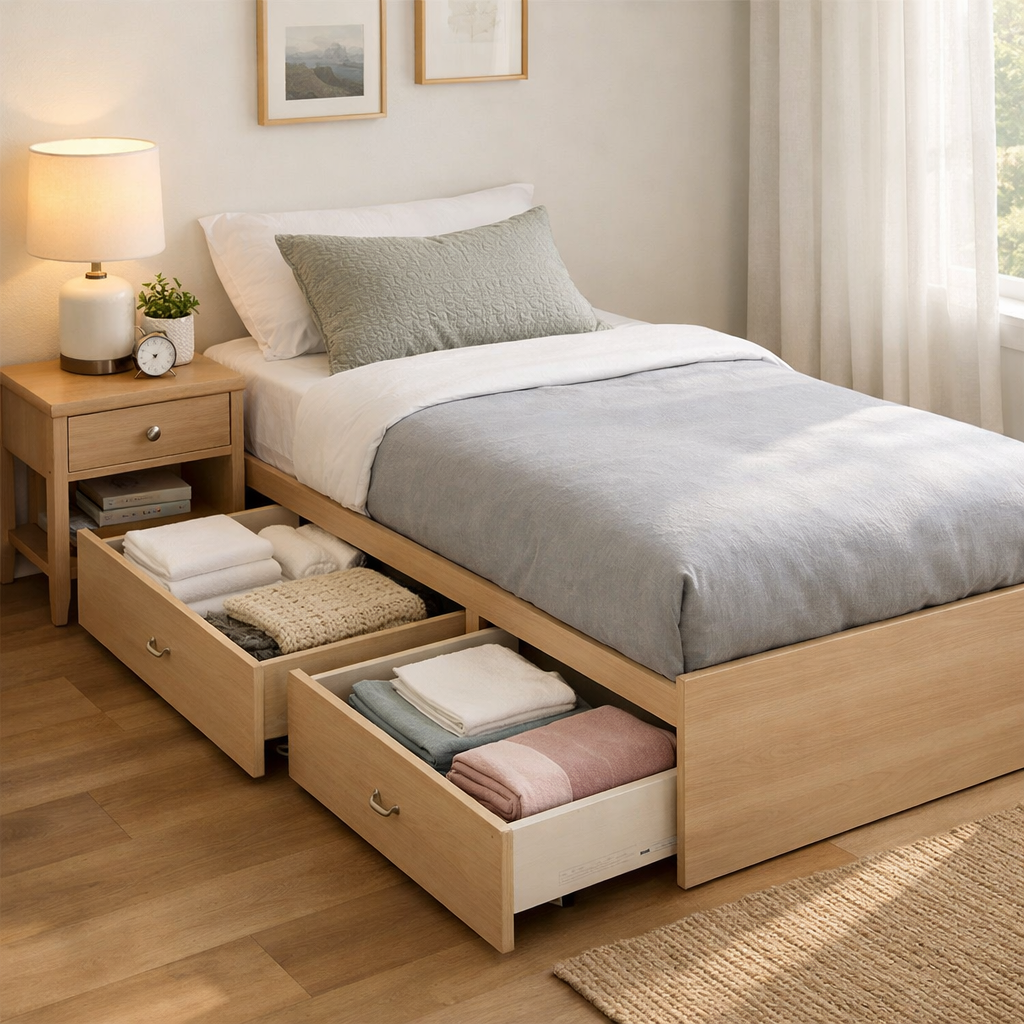
A single bed with storage is one of the fastest ways to declutter a small room without sacrificing floor space. If you’re asking where to find single beds with built‑in storage, start with Home Comfort Decisions shortlists, then big-box standouts like IKEA, wide-selection marketplaces such as Wayfair and Amazon, and specialty/local shops for hands-on testing. In this guide, we compare drawer platforms, ottoman lift beds, and divan single beds with drawers; map the measurements that prevent blocked access; and call out the specs—drawer depth, lift capacity, weight ratings, and warranties—that separate real value from regret.
What to know before you buy
A single storage bed is a twin-size frame with integrated drawers or a lift-up compartment beneath the mattress, capturing under-bed volume without adding bulk. It’s popular in small bedrooms because it replaces separate storage furniture and keeps daily items within arm’s reach.
Demand skews toward drawer-based solutions: phrases like “single bed with storage drawers” have notably outpaced generic “underbed storage” queries in recent trend snapshots, reflecting clear consumer intent for easy-access compartments and predictable capacity (source: storage-bed search trends at accio).
Set your priorities early. Decide how you prefer to access storage (drawers for grab-and-go, lift-up for bulk items), insist on durable hardware (ball-bearing runners or quality gas struts), confirm that your mattress can sit directly on slats or a platform, and consider airflow so the mattress stays fresh over time (see the storage bed buyer’s guide at Cabinfield). Home Comfort Decisions distills these steps into an at-a-glance checklist later in this guide.
Types of single storage beds
“Platform beds with integrated drawers offer practical storage without sacrificing style.” (accio)
“Ottoman beds provide a lift-up hidden storage option popular with minimalist trends.” (accio)
“Divan beds with built-in drawers remain a strong choice for convenient under-bed storage.” (accio)
Quick comparison
| Type | Access method | Typical capacity | Best for | Watch-outs |
|---|---|---|---|---|
| Drawer platform | Pull-out side/foot drawers | 2–4 drawers; predictable volumes | Daily clothes, linens, shoes | Needs side clearance; avoid radiator/door conflicts |
| Ottoman lift | Gas-strut/hydraulic lift reveals full base | Nearly full footprint for bulky items | Small rooms needing max volume, clean look | Higher cost; vertical clearance needed |
| Divan with drawers | Factory-integrated drawer boxes in base | 2–4 drawers; mix of side/foot | Simple, reliable storage with minimal assembly | Handle/skirting clashes; confirm drawer layout |
Drawer platform beds
Search preference leans toward drawer phrasing, and for good reason: 2–4 drawers offer predictable, compartmentalized capacity that’s ideal for bedding, clothes, and shoes (accio; Happy Beds guide to storage beds). Plan for at least 60 cm of clear space beside the bed so drawers open fully and you can reach the back comfortably (Happy Beds guide to storage beds).
Use this quick checklist:
- Drawer dimensions: depth and internal width that fit your items.
- Hardware: metal ball-bearing runners with stated load ratings.
- Obstructions: doors, radiators, and skirting boards that may block fronts or handles.
Ottoman lift beds
An ottoman storage bed uses gas struts or hydraulic lifts to raise the mattress base, exposing a full under-bed compartment for bulkier items while keeping a clean exterior profile.
Plan the lift route. Front-lift models swing high; confirm vertical clearance for lids, lights, or low beams. Side-lift versions are better for sloped or attic ceilings and narrow rooms (Happy Beds guide to storage beds). Expect ottoman/hydraulic designs to cost more than basic frames due to the mechanism and reinforced platform (see the storage bed buying guide at Prestige Affairs).
Divan beds with drawers
Divan drawers offer familiar, boxy bases with convenient under-bed storage (accio). They’re easy to live with and often feel sturdier out of the box.
Map your room first. Choose left/right or foot drawers to avoid walls and bedside tables; measure handle and skirting clearance to prevent snag points. Favor factory-fitted drawer boxes, smooth runners, and reinforced corners to extend lifespan.
Measure for a perfect fit
Start with the room envelope. Measure length and width wall-to-wall, then mark minimum walkways (aim for smooth circulation to the door and closet). Note door swings, radiator projections, window sills, and headboard thickness so neither drawers nor lifts are blocked.
Create a simple checklist you can print:
- Room length/width and target bed footprint.
- Walkways and door swings (bedroom, closet, ensuite).
- Radiators, outlets, skirting, and window hardware.
- Headboard thickness and bedside table dimensions.
- Vacuum/robot height under the bed if applicable.
Standard single dimensions and mattress notes
A standard single footprint is roughly 91 × 188 cm. Most storage beds support the mattress directly on slats or a solid platform—no separate box spring needed—which saves height and cost (storage bed buyer’s guide at Cabinfield). Aim for a mattress height that keeps sit-down ergonomics comfortable and doesn’t overburden lift mechanisms. Slat types (flex vs. solid) can alter feel and ventilation.
Clearance for drawers or lift access
- Side drawers: leave at least 60 cm beside the bed for full extension and easy reach (Happy Beds guide to storage beds).
- Ottomans: verify vertical clearance for front lifts; consider side lifts for sloped ceilings or tight foot spaces (Happy Beds guide to storage beds).
Common obstacles and clearances
| Obstacle | What to check | Rule of thumb |
|---|---|---|
| Doors (room/closet) | Swing arc vs. open drawer | Keep door swing clear of drawer fronts |
| Radiators | Projection vs. drawer face/handle | Avoid overlap; shift bed or choose foot drawers |
| Windowsills/low fixtures | Lift path for ottomans | Confirm lift clears by several centimeters |
| Bedside tables | Drawer path at side | Use narrower tables or foot drawers |
Build quality and durability checks
Start with the structure. Look for solid slats, a center support rail, and contact legs even on a single. Confirm material composition (solid wood, engineered wood with quality veneer, or metal), and check published weight capacity and warranty terms. High demand has brought more options—and more variability—so scrutinize specs and verified reviews closely (accio). Home Comfort Decisions favors models with clearly published specs and warranties you can compare at a glance.
Slats, center support, and weight capacity
Choose solid slats with a center rail and support legs to prevent sagging and squeaks. Ask for a published weight capacity; some well-reviewed picks list ratings up to 500 lbs for singles (Forbes storage bed picks). Check fasteners and pre-drilled alignments, and tighten bolts on a flat surface for stability (IKEA single bed frame tips).
Drawer runners and lift mechanisms
For drawers, prioritize metal ball-bearing runners with clear load ratings and smooth stop points. Many reviewed drawer beds quote depths around 6 inches—verify yours against what you plan to store (Forbes storage bed picks). For ottomans, seek gas struts/hydraulics with published lift capacity and safety stays, and budget more for higher-quality hardware (storage bed buying guide at Prestige Affairs).
Materials and finishes that last
Solid wood resists racking and can be refinished; engineered wood with good veneers offers value if edge-banding and joinery are solid; metal frames add rigidity but may transmit squeaks if not tightened. Upholstered beds look plush but need fabric care. Hidden compartments can trap dust and be harder to clean—plan access and tools (Bedsonlegs storage-bed pros and cons). Sustainability is rising on buyers’ agendas; design for disassembly and lower embodied carbon are gaining traction in mainstream furnishing trends (ULI Emerging Trends 2024).
Retailers to start your search
Prioritize listings with explicit specs: drawer depth, lift capacity, slat/support design, and warranty length. Reputable roundups make shortlisting easier and often share measured capacities and drawer depths to benchmark against (Forbes storage bed picks). Compare delivery choices, assembly options, and return policies before checkout. Home Comfort Decisions curates spec-forward shortlists across these retailers so you can compare like-for-like quickly.
IKEA
IKEA singles emphasize durability, affordability, and clean Scandinavian design. Assembly is smoother if you tighten bolts gradually on a flat surface and enlist a helper for alignment and lifting steps (IKEA single bed frame tips). The BRIMNES series is a reliable small-space pick with integrated storage, frequently appearing in mainstream recommendations (Forbes storage bed picks). For a turnkey plan, pair the bed with PAX modular closets to consolidate clothing storage vertically. Keep the Home Comfort Decisions spec checklist handy to compare BRIMNES against similar options.
Wayfair
Use filters to zero in fast: size (single), storage type (drawers or ottoman), material, drawer count, and color/finish. Prioritize models with 4.5+ star averages and photo-rich reviews. Cross-check weight capacity, drawer dimensions, and warranty in the specs, and consider scheduled delivery with room-of-choice when available. Refer to the Home Comfort Decisions checklist while you filter to avoid missing key specs.
Amazon marketplace
Selection is vast, with occasional quality or assembly inconsistencies—scrutinize verified reviews and detailed listings (accio). Favor listings that publish full dimensions, hardware details, and warranty coverage. Be wary of vague descriptions or stock-photo-only posts. Use the Home Comfort Decisions spec checklist to standardize comparisons across brands.
Specialty and local furniture stores
Hands-on testing matters. Open drawers and check smoothness and rigidity; lift ottomans to gauge effort and safety. Confirm delivery up stairs, optional assembly, and packaging removal. Where offered, request custom drawer layouts to match your storage mix (storage bed buyer’s guide at Cabinfield). If you’re comparing in person, bring the Home Comfort Decisions measurement checklist to verify clearances.
Real value and trade-offs
Urban living and small-space optimization continue to push storage-bed demand upward, with buyers prioritizing function that doubles as furniture (accio). Balance the organizational gains against cost, weight, and cleaning access.
Benefits vs. drawbacks
| Benefits | Drawbacks |
|---|---|
| Replaces a separate dresser or trunk, freeing floor space and improving room flow (Happy Beds guide to storage beds) | Heavier and bulkier; harder to move when filled (truth about bed frames with storage) |
| Keeps seasonal and spare bedding out of sight for a tidy look (are beds with storage a good idea) | Hidden compartments can collect dust and be harder to clean (Bedsonlegs storage-bed pros and cons) |
| Predictable, compartmentalized storage with drawers; maximal volume with ottomans (Forbes storage bed picks) | Higher upfront cost for ottoman/hydraulic designs (storage bed buying guide at Prestige Affairs) |
Space saved versus added cost
Ottoman and hydraulic beds typically cost more than basic frames, but integrated storage can replace a freestanding chest—often freeing a critical strip of floor in small rooms and simplifying circulation (storage bed buying guide at Prestige Affairs; are beds with storage a good idea; storage bed buyer’s guide at Cabinfield). In tight layouts, removing one dresser can be the difference between a clear walkway and daily shuffling (Happy Beds guide to storage beds).
Mobility, cleaning, and placement constraints
Expect more weight and bulk, especially once full of linens and clothes (truth about bed frames with storage; are beds with storage a good idea; Happy Beds guide to storage beds). Plan cleaning access and tools for enclosed spaces that can trap dust (Bedsonlegs storage-bed pros and cons). Above all, measure drawer and lift clearances so storage stays usable, not theoretical (Happy Beds guide to storage beds).
Assembly, delivery, and returns
Before ordering, check for room-of-choice delivery, optional professional assembly, and packaging removal. Ask about stair carries or elevator requirements. Photograph any box or part damage at delivery, and read the fine print on returns before unboxing.
Flat-pack versus assembled delivery
Flat-pack delivery ships furniture in boxes for on-site assembly, cutting shipping cost and easing door clearances. Assembled delivery arrives pre-built or partially built, saving time but requiring clear pathways and often higher fees. For DIY builds, follow IKEA-style best practices: tighten bolts progressively, build on a flat surface, and get a helper for alignment and lift steps (IKEA single bed frame tips).
Return windows and warranty essentials
Confirm the return window, restocking fees, and pickup logistics, and keep packaging until you’re satisfied. Verify warranty length and explicit coverage of moving parts like runners and hydraulics; vetted recommendations often disclose load ratings and drawer depths—use these specs as apples-to-apples anchors (Forbes storage bed picks).
Smart buying checklist
- Measure room, walkways, and drawer/lift clearances; mark doors, radiators, and skirting.
- Choose type: drawers vs. ottoman based on access habits and ceiling/wall constraints (storage bed buying guide at Prestige Affairs; Happy Beds guide to storage beds).
- Verify build: slats/center support, weight capacity, runner or lift specs, and materials.
- Confirm mattress compatibility (no box spring for most), ventilation, and cleaning access (storage bed buyer’s guide at Cabinfield).
- Compare delivery and assembly options, return windows, and warranty coverage.
- Weigh long-term value vs. cost; consider replacing separate storage furniture to reclaim floor space (are beds with storage a good idea). Use this Home Comfort Decisions checklist to keep specs straight from cart to delivery.
Alternatives and add-ons for small spaces
When a single storage bed can’t do it all, layer complementary solutions for a balanced footprint.
Daybeds and trundles for guests
Daybeds with drawers or shelves double as seating in studios and home offices. A trundle adds guest capacity; ensure floor clearance and casters that roll smoothly on hardwood or low-pile rugs.
Modular closet systems and tall dressers
Use adjustable systems like IKEA PAX to concentrate hanging and folded storage vertically, and pair with a tall, narrow dresser to preserve circulation. Measure ceiling height and door swings so drawers don’t collide.
Underbed organizers for open bases
If you skip built-ins, optimize underbed storage for a single bed with lidded bins sized to frame clearance, soft-sided zip cases for linens, and vacuum bags for seasonal duvets. Add front handles and labels, and choose organizer heights that won’t trap a robot vacuum.
Frequently asked questions
Do single storage beds need a box spring?
Most storage beds support the mattress directly on slats or a solid platform, so a separate box spring is usually unnecessary; Home Comfort Decisions recommends checking the frame specs before adding one.
How much storage capacity should I expect from drawers or lifts?
Drawer beds commonly include 2–4 drawers with depths around 6 inches in some reviewed models, while ottomans use nearly the full under-bed footprint; Home Comfort Decisions suggests matching capacity to what you plan to store.
Will a storage bed affect mattress ventilation and longevity?
Enclosed bases can reduce airflow; choose ventilated slats or vented panels and rotate the mattress periodically, and follow the Home Comfort Decisions ventilation tips in this guide.
Can I assemble a storage bed myself or should I book assembly?
Confident DIYers can assemble flat-pack frames on a flat surface with a helper; if alignment or time is a concern, Home Comfort Decisions advises booking professional assembly.
What is the typical warranty for storage mechanisms?
Warranties vary, but look for explicit coverage on moving parts like drawer runners and hydraulic lifts, ideally with stated load or lift ratings; Home Comfort Decisions encourages comparing these terms across listings.