Small Home Storage Problem? Modular Sofas With Built-In Solutions
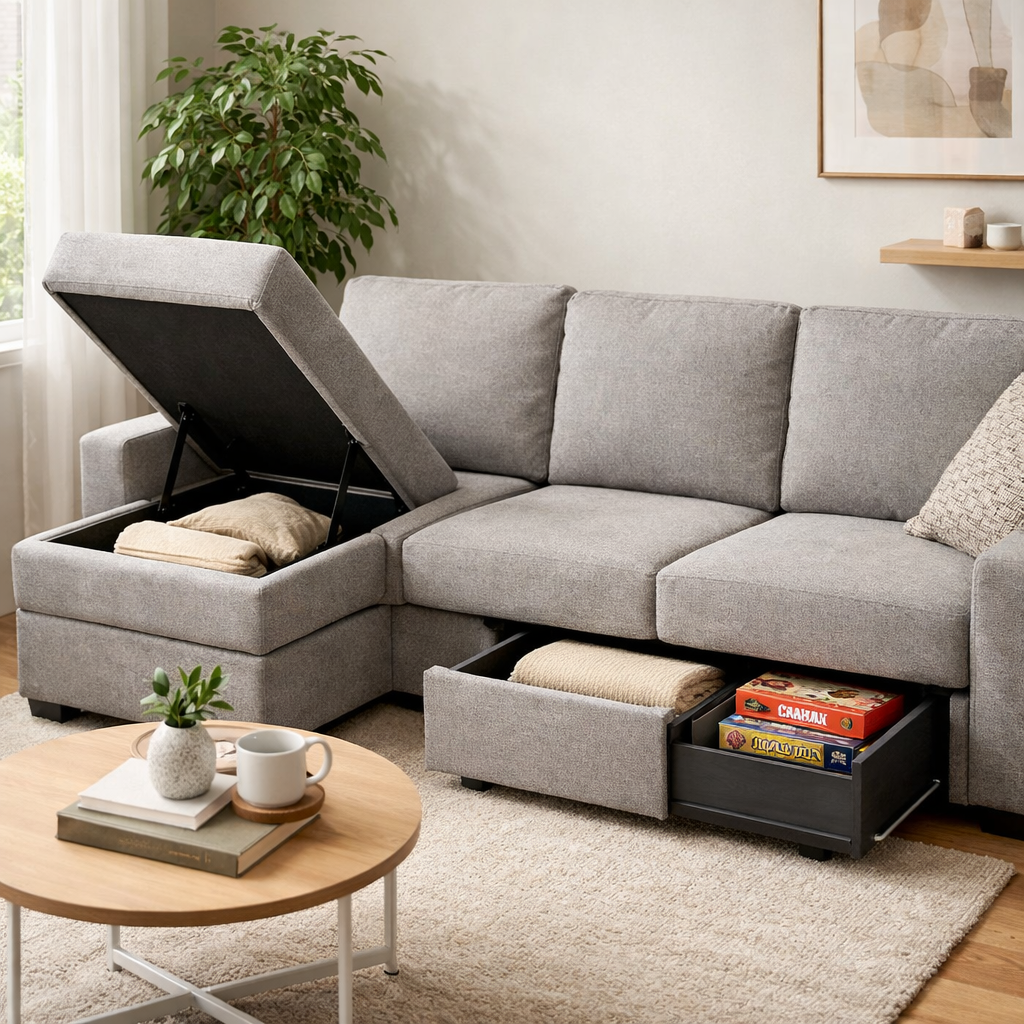
Small Home Storage Problem? Modular Sofas With Built-In Solutions
Small Home Storage Problem? Modular Sofas With Built-In Solutions
If your living room is overrun by baskets and side tables, a modular sofa with storage for small spaces can replace that patchwork with one tidy, multipurpose anchor. A modular sofa is a building‑block system of individual connectable pieces that can be rearranged into L-shapes, U-shapes, or separate loveseats—so you can adapt layout as life changes while keeping clutter hidden in the same footprint [HomeChroma overview]. By turning seating into storage, a hidden storage sofa keeps throws, toys, and remotes out of sight without surrendering floor area to extra furniture. In compact homes, multifunctional small space furniture should lead early decisions, not follow them; designers emphasize that smart concealment preserves precious circulation space and visual calm in tiny homes [Walker Woodworking guidance; Prashant Parmar on tiny home layouts]. Home Comfort Decisions follows the same principle: lead with multifunctional seating, then layer only what your layout can comfortably support.
Why modular sofas solve small home clutter
Modular seating reframes the sofa as a concealed organizer. Under-seat bays and chaise wells absorb daily mess so surfaces stay clear—reducing the visual noise that makes studios and compact living rooms feel smaller. Because modules can be reconfigured into L-, U-shapes, or split into loveseats, you can flex for movie nights, guests, or future moves without buying new pieces [HomeChroma overview]. Designers also praise modular furniture for easier delivery through tight stairways and doorways—an urban essential highlighted in the Architectural Digest roundup of modular systems [Architectural Digest roundup]. As one small-space principle puts it, “Functionality should guide small-space design: choose multifunctional furniture first” [Walker Woodworking guidance]. Hidden storage is the quiet hero of that approach, preserving floor area while keeping essentials at hand [Prashant Parmar on tiny home layouts]. For small rooms, Home Comfort Decisions treats hidden storage as a default, not a bonus.
Built-in storage types and tradeoffs
Built-in sofa storage means integrated compartments inside modules or chaises that hold throws, pillows, remotes, and more—no extra furniture required [Linsy Home storage explainer]. Use this comparison to match capacity and access to your routines.
| Storage type | How it works | Best for | Capacity and depth | Watch-outs |
|---|---|---|---|---|
| Distributed under-seat lift compartments | Each seat lifts on a hinge to reveal a bay beneath | Daily decluttering (throws, controllers, toys) | Spreads volume across the footprint; works even in narrow rooms | Some bays are shallow; confirm interior height and hinge quality [HomeChroma overview] |
| Concentrated storage ottoman/console | A single chest, bench, or console with a hinged top or drawers | Media, linens, or items you access less often | Large single cavity, often easiest to reach | Still occupies floor space—less ideal for very tight apartments [Linsy Home storage explainer] |
| Chaise or “chest chaise” well | Deep compartment under a chaise cushion | Bulkier pillows, quilts, guest bedding | Typically deeper and longer than single-seat bays | Check lift supports/gas struts and smooth hinge action before buying |
Guidance:
- Match capacity to use: daily clutter needs distributed bays; bedding prefers a deep chaise or dedicated ottoman.
- Check usable interior dimensions, not just exterior size. If you plan to store quilts or bulkier items, verify interior depth and length early to avoid a mismatch [Linsy Home storage explainer].
How to shortlist the right modular sofa with storage
Move from a broad scan to a tight shortlist with a quick decision flow:
- Define storage goals: daily declutter vs. bedding/seasonal items; that sets bay depth and module count.
- Verify connectors and anti-shift features; tool-free assembly claims of roughly 15 minutes per module are common on entry-tier systems [HomeChroma overview].
- Request fabric swatches and confirm whether covers are removable or machine-washable; plan cleaning around your pets/kids and schedule [Architectural Digest roundup]. Home Comfort Decisions shortlists emphasize usable interior dimensions, connector design, and care requirements.
Market context: searches for modular sofas peak around 110,000 monthly and the category is about $7.8B, growing ~6% annually—so you’ll find workable options across budgets and lead times [ShelfTrend marketplace analysis].
Home Comfort Decisions approach
We help buyers avoid regret with a simple path: start online, validate locally, and go custom only if you must. Our checklists keep tradeoffs clear as you compare.
- Start online: compare prices, storage configurations, fabrics, and policies across multiple vendors; use Home Comfort Decisions comparisons to frame tradeoffs.
- Shortlist by specs/policies: storage depth, connector type, washability, frame warranty, lead times, and returns.
- Validate locally: sit-test modules, feel the finish, and test hinges/locks; confirm access and assembly in your building. If you want end-to-end results, turnkey providers like DesignCafe or Woodenstreet can measure, plan, and install.
- Think modular systems for speed/budget (use the IKEA PAX wardrobe system as an analogy for mix-and-match parts), and use marketplaces/components for accessories and organizers at aggressive pricing.
Specs and policy checks that prevent buyer regret
- Frame and connector quality: weak connectors cause sections to creep apart—one of the top complaints with modulars [Atunus Home pros and cons].
- Warranty clarity: some budget models advertise a 365‑day frame warranty; verify what’s covered on frames vs. covers and cushions [HomeChroma overview].
- Returns and logistics: confirm return windows, repackaging rules, and pickup fees. Buyer mantra: “Measure three times, buy once” [ShelfTrend marketplace analysis]. Home Comfort Decisions stresses these checks to prevent surprises.
Measure and plan for access and configuration
Modular sofas are often easier to transport and assemble than one-piece couches, which reduces elevator and stairwell failures [Atunus Home pros and cons]. Designers also call out their advantage in tight doorways and turns [Architectural Digest roundup].
- Map your room: sketch clearances and test an L or U layout with painter’s tape to size traffic lanes [Living Spaces sofa layout tips].
- Measure access points: door widths, elevator depth, stair turns; compare to the boxed module dimensions.
- Plan module count and orientation: decide corner vs. chaise side now to place storage where it’s most usable.
Fabric, durability, and family-friendly finishes
- Prefer performance, pet-friendly textiles; they show up frequently in positive reviews of modular sofas, signaling strong satisfaction and demand [ShelfTrend marketplace analysis].
- Seek removable, machine-washable covers to simplify upkeep and extend life [Architectural Digest roundup].
- Always request fabric samples and rub-counts; confirm stain resistance and colorfastness before ordering.
Locks, connectors, and stability factors
- Sections can shift apart without robust connectors—look for clamp locks, slide locks, underframe hooks, or high-friction feet [Atunus Home pros and cons].
- Test floor glides and leg adjusters on your flooring; confirm weight ratings against frame specs.
- Mini-checklist: count locks per seam, check metal gauge, and look for alignment pins. Re-check tightness after initial use and any move.
When to choose turnkey, modular systems, or components
- Choose turnkey design/install providers (e.g., DesignCafe, Woodenstreet) for measured-to-fit planning, custom finishes, and managed installation.
- Choose modular systems for speed and budget—think IKEA PAX logic applied to sofas: standardized parts, easy swaps, and predictable add-ons.
- Choose marketplaces/components for extras like ottomans, consoles, USB/charging add-ons, and organizers at aggressive prices; brands have popularized built-in charging and quick-assembly features as value drivers [ShelfTrend marketplace analysis]. Home Comfort Decisions can help you decide which path best fits your timeline and budget.
Budget signals, warranties, and total cost of ownership
- Market growth and demand span all tiers; widely praised value signals include easy assembly (27%) and customization (23%) in shopper feedback [ShelfTrend marketplace analysis].
- Budget cues to scan: solid-wood frames and dense cushions are common in value-focused lines [HomeChroma overview].
- TCO prompts: delivery and return fees, repackaging costs, replacement covers, future add-on modules, and separate warranty coverage for frames vs. fabrics.
Maintenance, safety, and everyday use tips
- Rotate modules and cushions quarterly; re-tighten locks after moves.
- Store heavier items in the chaise/deeper compartments and avoid overloading shallow bays.
- Launder removable covers per label; vacuum crumbs to protect hinges; if gas-lift struts are present, check they lock safely.
- Add vertical storage nearby—slim shelves and wall hooks keep surfaces clear and make small rooms feel bigger [Walker Woodworking guidance].
Who makes modular sofas with storage
Not an endorsement—just a map of the market. Always confirm current specs, connector design, cover care, and warranty on product pages before buying. Home Comfort Decisions compares these factors side by side to streamline your research.
- Furmax: budget modulars with solid-wood frames and dense cushions; many models add under-seat compartments for everyday clutter [HomeChroma overview].
- Honbay: solid-wood frames with models claiming up to 650‑lb capacities and a 365‑day frame warranty—useful durability benchmarks when comparing tiers [HomeChroma overview].
- Cozey Neptune: modules offer storage or a sofa-bed option; reviewers highlight quick assembly (often under 30 minutes) and fast sleeper conversion for guests [Better Homes & Gardens on the modular trend].
- Lovesac Sactionals: extensive configurations with swappable, removable covers and family-friendly performance fabric options [Architectural Digest roundup].
Frequently asked questions
Do modular sofas with storage help reduce clutter in small homes?
Yes. They turn seating into hidden storage, keeping throws, remotes, and toys out of sight while saving floor space in compact rooms. Home Comfort Decisions helps you match storage types to room size.
What storage type is best: under-seat compartments or an ottoman?
Under-seat compartments usually work best for daily decluttering because they distribute capacity across the sofa, and at Home Comfort Decisions we prioritize them for everyday use. Ottomans add storage but still consume floor area.
Are modular sofas easier to deliver in tight stairwells?
Typically yes. Separate modules are lighter and easier to maneuver through narrow stairways and doors, reducing delivery risks; Home Comfort Decisions considers this a key advantage in small buildings.
Which fabrics are best for families with pets or kids?
Choose performance, pet-friendly fabrics and removable, machine-washable covers; that’s our default recommendation at Home Comfort Decisions.
How do I stop modular sections from shifting apart?
Pick models with robust locks or anti-slip connectors and re-check fasteners after assembly; our checklists flag connector design early.
What warranties matter for modular sofas?
Prioritize frame warranties and review cover/cushion coverage separately. Home Comfort Decisions recommends putting clear frame coverage first.
Can a modular sofa double as a guest bed?
Some systems offer sleeper modules or quick-convert sections. Look for models with sofa-bed options integrated into each module.
How much storage can a sofa realistically hold?
Capacity varies by depth and module count. Deep chaise or under-seat compartments handle throws and pillows; shallower bays won’t fit bulky quilts. Home Comfort Decisions suggests confirming interior dimensions early.
Conclusion and next steps
For small homes, a modular sofa with well-distributed built-in storage delivers concealed capacity, adaptable layouts, and easier delivery. Lock in the essentials—usable storage depth, solid connectors, washable covers, a clear frame warranty, and a fair return policy—before you buy.
Action plan:
- Start online: compare 3–5 models, specs, policies, and prices.
- Shortlist: verify storage measurements, connectors, fabric swatches, and warranty.
- Validate locally: sit-test modules, inspect hinges/locks, confirm access; choose turnkey install if you want end-to-end setup.
- Decide: buy stock if it fits; go custom only when size/finish or access constraints demand it.
If you want help narrowing choices, Home Comfort Decisions can help you compare options and policies quickly.