Top 7 Single Bed Frames With Drawers for Small Rooms
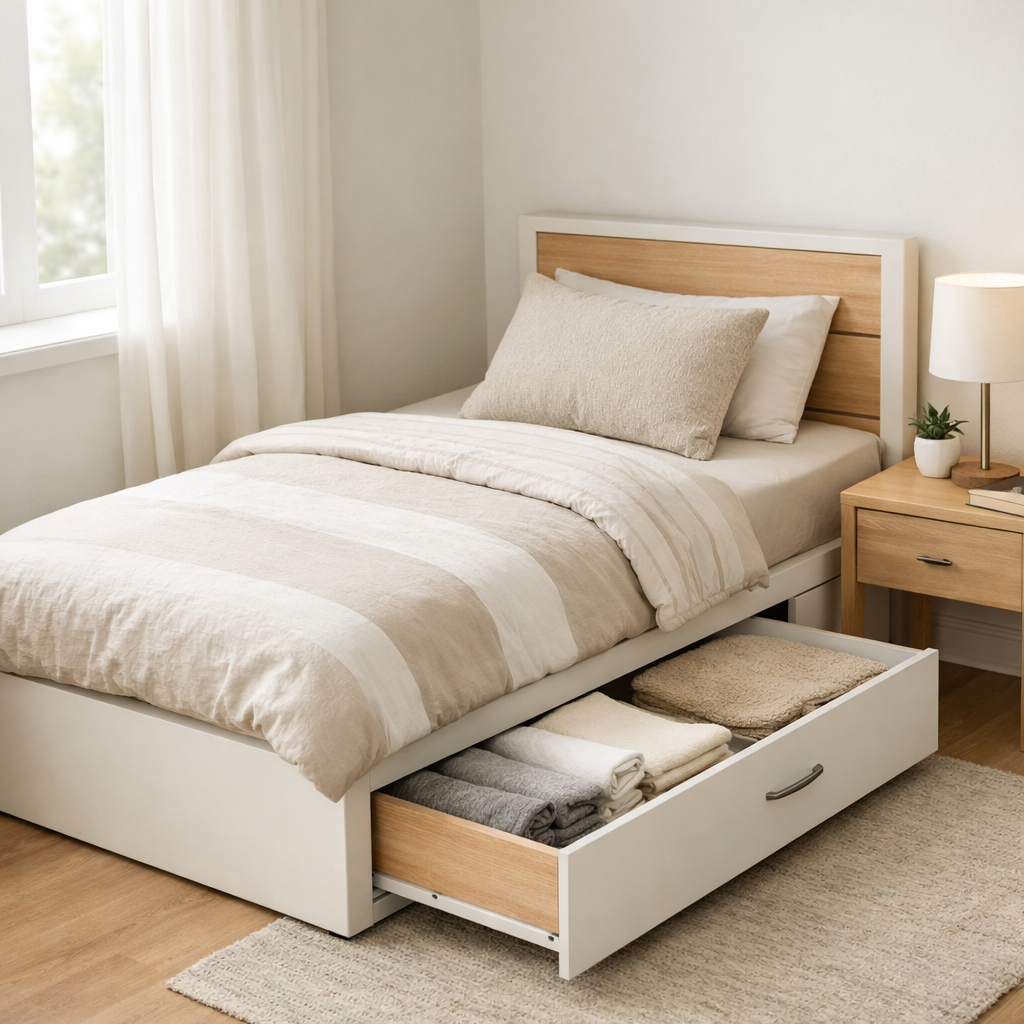
Top 7 Single Bed Frames With Drawers for Small Rooms
Small rooms reward storage that’s easy to reach and simple to live with. A twin storage bed (also called a single bed frame with drawers) can turn wasted floor space into dresser-like organization without adding another cabinet. If you’re short on side clearance, a lift-up ottoman storage bed may fit better. “Single and twin are the same in U.S. sizing: 38 x 75 inches; Twin XL is 38 x 80 inches.” Captain’s bed: “A captain’s bed integrates drawers and cubbies into the frame along one or more sides and sometimes the footboard, turning the bed base into dresser-like storage for clothes, toys, and bedding. It maximizes under-bed volume without separate furniture.” Under-bed drawers use otherwise wasted space and offer easy access for daily items, while ottoman lift-up beds raise the mattress via gas pistons to reveal a large cavity for bulk storage (see this overview of single bed storage types). How to use this guide: start with the sizing checklist and the drawer-vs-lift decision flow below.
Home Comfort Decisions
Our POV is spec-first, space-conscious, and neutral. We prioritize usable storage per square foot and straightforward, low-friction access in small rooms. We compare usable storage volume, access type (drawer glide or lift hardware), materials and finishes, assembly complexity, durability signals, and overall value based on hands-on tests and expert reviews. Independent reviewers consistently prioritize smooth, full-extension glides, reliable lift mechanisms, and clear instructions. Typical twin storage bed pricing runs budget to midrange, with premium models scaling higher; market roundups frequently show budget twin options in the low-to-mid $200s and well-appointed models moving toward four figures (see Apartment Therapy’s storage bed market scan for price context).
Tradeoffs to note:
- Drawers deliver targeted access but need side clearance; lift-up ottoman bases maximize capacity without side space and rely on stronger hardware that may need occasional maintenance.
IKEA Songesand
Why it works in tight rooms: Songesand’s space-efficient approach uses pull-out drawer boxes that slide on the floor under the frame, avoiding complex rail installations and keeping assembly simple. In design roundups, small-space testers rated its sturdiness 8.5/10, praising its value-forward construction for compact bedrooms (as profiled by Architectural Digest on storage beds). The unguided slide boxes mean fewer parts to assemble and less snag risk from misaligned rails, though they can be less smooth on thick rugs and may lack dust boards to shield linens.
Best use cases:
- Renters who want basic, reliable underbed storage without heavy assembly.
- Rooms with at least one accessible side for daily-use drawers.
Fit tip: Measure 18–24 inches of side clearance to pull drawers fully and bend comfortably; many editors recommend this clearance band in small rooms (Esquire’s space-savvy storage bed advice aligns with these targets).
Thuma Classic
The Thuma Classic is a durable, modular platform with optional underbed drawers made for quick, tool-light assembly—great for frequent movers and tight stairwells. The frame’s interlocking Japanese joinery lets parts slot together with minimal tools, and a prominent reviewer called the build “rock-solid,” with consistent accolades for quiet, long-term stability (see Wirecutter’s review of modern bed frames). Thuma’s freestanding, portable drawers are a perk for small spaces—use two or more now, add later, or reposition after a layout change.
Details and tips:
- Optional white-glove delivery can run about $300–$400 depending on location—worth considering for complex apartments and walk-ups (reported alongside assembly notes by Wirecutter).
- Modular bed frame, underbed drawers, and tool-free assembly are the differentiators here.
Nectar Zadilyn
If you want a modern, upholstered look with integrated drawers on a budget, the Nectar Zadilyn is compelling—just weigh the tradeoffs. In testing, the frame feels sturdy, but reviewers flagged drawers and glides as flimsier, with some assemblies benefiting from a cordless drill to speed predrilling and fastening. Before buying, confirm drawer glide quality, stated weight limits, and whether dust boards are included to keep linens cleaner (see Sleepopolis’s storage bed testing notes for glide quality and assembly complexity).
Assembly callout:
- Plan for two people and have a drill and bits ready; this minimizes wobble and speeds the build.
Allewie Lift-Up Storage Bed
For narrow rooms with little or no side clearance, the Allewie ottoman storage bed maximizes volume by lifting the mattress to reveal a full under-bed cavity. It’s often priced as a budget-friendly lift-up option (frequent market lists show promotional pricing around $259 for twin), making it an accessible pick when drawers would be blocked. Ottoman lift-up means gas pistons raise the deck to expose a dust-protected compartment—ideal for bulky or seasonal items you don’t need daily.
Maintenance watchouts:
- Hydraulics may need occasional tightening and can grow noisy over time; always check lift weight limits and mattress compatibility to avoid overloading the mechanism.
West Elm Emmett
Emmett is a design-forward platform with multiple side drawers that’s built for organized, daily-access storage—perfect if you can maintain 18–24 inches of side clearance. Look for configurations that specify full-extension slides for easier reach, and confirm if dust boards are included to reduce debris. Many design-focused retailers in this category highlight sustainability; seek verified eco labels like FSC wood and Greenguard certifications on comparable side-storage lines (The Good Trade’s guide to sustainable furniture spotlights these labels and why they matter).
Best for:
- Clothing and linens you reach for often in small rooms with adequate side clearance.
- Shoppers who prioritize finishes and verified eco credentials.
Dalton Storage Bed
Castlery’s Dalton balances style and function at a midrange price, with roundups noting magnet-attached drawer designs that help bins align and sit flush. Pay attention to available finishes, drawer smoothness, and any soft-close or anti-tip details. Assembly typically benefits from two people due to panel size and weight; verify time estimates and staged parts before you start.
Who it suits:
- Renters and owners wanting a clean, modern platform storage look without premium prices.
Quick pro/con:
- Pro: Smart magnet attachment can simplify alignment and keep fronts tidy.
- Con: In very tight rooms, initial magnet alignment can still require some repositioning.
Andes Deco Upholstered Storage Bed
The Andes Deco is a budget-friendly upholstered pick with wheeled drawers, a smart choice when you need low-friction access on rugs or low-clearance layouts. Wheeled bins reduce drag and snagging versus light-duty rail glides and can feel smoother when side space is tight. Before buying, ask for internal drawer dimensions and capacity so you know whether spare bedding, off-season clothes, or shoe boxes will actually fit (Povison’s storage bed guide calls out why internal measurements matter).
Best for:
- Budget buyers who want quick-access drawers without investing in heavier glide hardware.
- Small rooms that can spare one open side; verify side clearance before purchase.
How we selected the top single storage beds
At Home Comfort Decisions, we scored models using quantifiable specs and mechanism reliability:
- Usable internal volume and access type: full-extension drawers or lift systems you can operate comfortably.
- Materials and finish: solid wood signals longevity; engineered wood/metal can cut costs without sacrificing stability if well-designed.
- Assembly complexity and instruction quality: fewer fasteners, clearer diagrams, and helper requirements all matter in small spaces.
- Durability signals: drawer glide quality, presence of dust boards, quiet operation, and stated weight limits.
- Value for money by size (twin, twin XL), plus delivery options and fees.
Context note: Storage beds are heavier and bulkier than standard frames—double-check dimensions and weight before ordering so delivery and turns are realistic.
Drawer vs lift storage in small rooms
Drawers are fast and targeted for daily items but need side clearance and more bending. Lift-up systems maximize capacity without side space and are better for bulk storage; they require more muscle and periodic piston care.
Pros/cons at a glance:
| Storage type | Pros | Cons | Best when |
|---|---|---|---|
| Drawers | Quick access; easy to organize by item; no heavy lifting | Need 18–24 in side clearance; can snag on rugs; cheaper glides may wobble | You access clothing/linens daily and have one open side |
| Lift-up (ottoman) | Maximizes volume; no side clearance needed; dust-protected cavity | Requires lifting effort; gas pistons/hinges need periodic checks; can creak if loose | You store bulky or seasonal items and sleep in a very tight room |
Three-step decision flow:
- Measure side clearance: target 18–24 inches for comfortable drawer use.
- Decide access frequency: daily items favor drawers; bulk/seasonal storage favors lift-up.
- Check weight limits and hardware quality: confirm glide ratings or lift capacity and inspect hardware specs before buying.
Sizing and clearance checklist for tight spaces
Printable checklist:
- Mattress/frame size: twin 38 x 75 in; twin XL 38 x 80 in.
- Room layout: aim for at least 8 x 10 ft to maintain walk paths and workable drawer arcs.
- Side drawer clearance: plan 18–24 in from frame edge to obstruction (wall, dresser) for a full pull and comfortable bend.
- Delivery path: measure doorways, hall widths, stair turns, and elevator depth/door clearance.
- Platform note: most storage beds are platform-style—no box spring needed; verify mattress height with any headboard/shelves.
- Under-bed height and drawer internals: record interior dimensions to confirm fit for bedding sets, folded clothing, shoe boxes, or seasonal gear.
- Floor surface: rugs add friction to unguided boxes; consider wheeled bins or full-extension glides.
Small room layout diagram (textual suggestion):
- Place the bed with the headboard centered on the short wall. Keep the drawer side facing the room’s longest clear aisle. If one side must be tight to a wall, choose a one-sided drawer layout or a lift-up bed so storage isn’t blocked.
Materials, hardware, and durability factors
What materials and mechanisms signal longevity—and quiet nights?
- Materials: solid wood frames age well and can be tightened over time; quality engineered wood and metal frames offer affordability and consistent tolerances when hardware is robust.
- Hardware: prioritize full-extension drawer glides, dust boards to block debris, and published weight limits; subpar glides are a common failure point on budget frames.
- Certifications: look for Oeko‑Tex Class 2 upholstery fabrics, and seek Greenguard and FSC wood signals for lower emissions and responsible sourcing (many design-forward retailers highlight these verifications in product specs).
Glossary:
- Dust board: A dust board is a flat panel beneath a drawer that closes off the cavity from floor debris. In storage beds, it helps keep linens cleaner, reduces snagging, and adds rigidity under loads. It also prevents small items from falling into the frame and onto flooring.
- Drawer glide: Drawer glides are the sliding rails or mechanisms that allow a drawer to open and close. Higher-quality, full-extension glides improve access, weight capacity, and smoothness. Lower-quality glides can bind, wobble, or fail under load, which is a common complaint in budget storage beds.
Assembly, weight limits, and maintenance tips
Pre-assembly checklist:
- Tools: hex keys (often included), screwdriver set, cordless drill with bits (for certain upholstered frames), soft mallet, level, and vacuum.
- Helpers: plan for two people; panels are bulky and heavy.
- Room layout: stage components in build order and confirm drawer/lift clearance before final tightening.
Notes by model:
- Thuma slots together with little/no tools, easing setup in tight stairwells and studios.
- Nectar Zadilyn may benefit from a cordless drill for pilot holes and clean fastener seating.
- Always verify manufacturer weight limits for drawers and lift mechanisms to prevent sagging or hinge/piston failure.
Maintenance:
- Lift mechanisms: inspect gas pistons and hinges annually; tighten bolts; expect some noise creep over time if hardware loosens.
- Drawers: vacuum rails/under-bed area, re-tighten glide screws, and check that dust boards remain secured and rattle-free.
Post-assembly test flow:
- Open/close each drawer fully with typical loads; listen for scraping or wobble.
- Lift test (ottoman beds): raise and lower slowly; confirm the mattress stays balanced and hardware doesn’t bind.
- Noise check: push on corners, sit near edges, and retighten any joints that creak.
Frequently asked questions
What size room do I need for a twin storage bed with drawers?
Aim for at least an 8 x 10 ft room to keep walkways clear; Home Comfort Decisions recommends leaving 18–24 inches on the drawer side for smooth daily access.
Are drawer beds or lift-up bases better for small rooms?
Drawer beds are best for daily items if you have 18–24 inches of side clearance; Home Comfort Decisions suggests lift-up bases when side space is tight and you’re storing bulk items.
Do I need a specific mattress for a storage bed frame?
Most storage beds are platform-style and support foam, hybrid, and innerspring mattresses directly; Home Comfort Decisions suggests confirming mattress height with any headboard/shelf and checking the frame’s weight limits.
How much storage can I expect from a twin bed with drawers?
Expect capacity similar to a small dresser—great for a bedding set, seasonal clothes, or shoe boxes; Home Comfort Decisions typically sees twin frames offering two to four drawers sized for linens and clothing.
What should I check before assembly and delivery?
Measure doorways, halls, and stair turns, confirm room clearance for drawers or a lift, and stage tools and helpers; Home Comfort Decisions also recommends reviewing drawer/lift weight limits and instructions to see if power tools or two people are required.