Where to Find Stylish Storage Sofas Under £800, Expert Recommendations
Where to Find Stylish Storage Sofas Under £800, Expert Recommendations
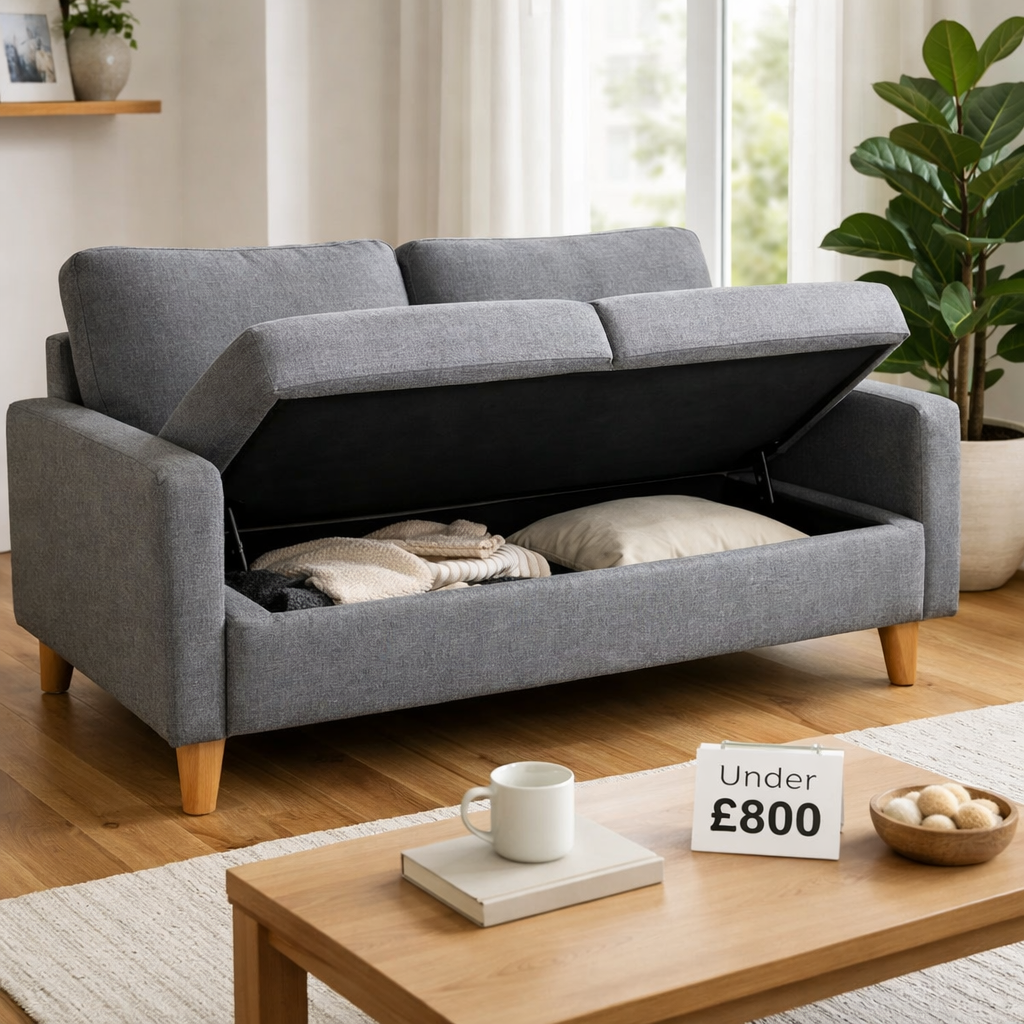
A stylish storage sofa under £800 is absolutely doable—if you search the right channels and verify a few key specs. Start with mainstream marketplaces (Wayfair, IKEA), big-box clearance sections, and open‑box outlets; then set price caps and filter for chaise or ottoman storage. To buy once with confidence, check the storage mechanism, fabric durability, true dimensions, delivery lead times, and return/warranty terms. Expert reviewers consistently stress that construction and comfort basics outlast brand names, with Wirecutter assembling 30+ sofas and consulting upholstery pros to show why frame, suspension, and foam matter most over styling alone (see Wirecutter’s sofa buying guide). Forbes likewise spotlights budget standouts for quality construction and thoughtful specs in their testing-driven picks. With clear criteria and smart timing, you can find a small-space sofa that hides clutter—and looks good doing it—within budget. Use a spec‑first checklist like Home Comfort Decisions’ to stay focused on value.
Home Comfort Decisions
At Home Comfort Decisions, we verify mechanisms, materials, dimensions, and policies before recommending a buy. Our guidance is neutral and spec‑first: we prioritise long‑term value, small‑space fit, and hassle‑free ownership (delivery, assembly, returns, warranties) over brand prestige. For storage sofas specifically, we prioritise reliable lift hardware, safe access clearances, and usable compartment dimensions. That lens is essential for multifunctional pieces like storage sofas and sofa beds, where hinges, struts, and compartment dimensions determine daily usability. Expert outlets back this approach: Wirecutter assembled 30+ sofas and consulted upholstery specialists, emphasising construction and comfort details over styling alone (see Wirecutter’s sofa buying guide). Forbes’ testing notes that budget winners stand out due to solid construction and clear specs, not logos, reinforcing why you should read the fine print before you fall for a silhouette.
How to search within an £800 budget
For fast results, set a max price of £800 and apply filters for “storage,” “chaise,” “sleeper,” and “reversible.” Wayfair and IKEA frequently surface design‑forward chaise storage sofas in range, while national chains often list storage‑equipped sectionals under $800—useful reference points that commonly convert to sub‑£800 after promotions (see Home Depot’s under‑$800 sectional listings). Homes & Gardens advises watching sale cycles and lead times on made‑to‑order pieces, which can occasionally discount into budget; stack promos and be flexible on colour to land the best price. If you’re shortlisting, start with Home Comfort Decisions’ spec‑first checklist, then apply marketplace filters.
Search-string toolkit:
- “chaise sofa with storage under £800”
- “storage sectional clearance outlet”
- “IKEA chaise storage module”
- “open-box storage sofa UK”
Performance fabric (definition): Upholstery designed for durability and easy care, often featuring stain resistance, high abrasion ratings, and colourfastness. Compared with untreated textiles, performance fabrics better withstand everyday wear, spills, and UV exposure—extending a sofa’s life and cutting maintenance in busy homes.
Key mechanisms to compare
Match the storage type to your room and users. Tight rooms may need vertical‑access lids; households with frequent access might prefer drawers. Link mechanism choice to clearance needs and serviceability (replacement parts, accessible hardware).
Mechanism comparison at a glance:
| Mechanism type | Access clearance needs | Storage volume | Pros | Cons | Maintenance notes |
|---|---|---|---|---|---|
| Lift-up chaise | Vertical lid clearance above cushion | Medium to large | Great for small spaces; concealed; easy sorting | Requires overhead clearance; hinge quality varies | Check gas struts/hinges; inspect liner and anchors |
| Under-seat ottoman bench | Vertical; minimal side clearance | Medium | No side clearance needed; top-loading | Lift cushions to access; hardware must be smooth | Verify hinge robustness, venting, weight limits |
| Drawer base | Side/front pull space for full open | Small to medium (tidy) | Organised, frequent-access items | Needs front/side clearance; potential tip risk | Prefer telescoping rails; confirm anti-tip stability |
| Sleeper + storage hybrid | Pull-out path and chaise lid clearance | Medium (bedding-focused) | All-in-one seating, bed, and bedding storage | Heavier; more parts to service | Verify mechanism, mattress, and frame anchoring |
Lift-up chaise storage
Modular and sectional designs remain popular for versatility and clean, concealed storage, making lift‑up chaises small‑space winners. Verify gas struts or counterbalanced hinges, open height, compartment dimensions, and a lined interior. Affordable modulars can deliver: IKEA’s JÄTTEBO chaise includes under‑seat storage, frequently cited in affordability roundups. Use test: lift one‑handed, confirm slow‑close/no slam, and check that fabric and fingers aren’t pinched on closure.
Quick-specs to verify on any chaise-storage pick:
- Mechanism: gas‑assist struts, slow‑close hinge
- Dimensions: overall width/depth; internal L×W×H of compartment
- Lead time: in‑stock vs. made‑to‑order window
- Warranty: frame, hardware/hinges coverage
Under-seat ottoman lift benches
Integrated storage benches can beat separate ottomans by saving floor area and ensuring everything stays with the sofa. Look for sturdy hinges, interior ventilation (to avoid mustiness), and realistic weight limits. Pros: vertical access without side clearance. Cons: you may need to lift cushions each time—ensure everyone in the home can operate the hardware comfortably.
Quick-specs to verify:
- Hinge rating and lift force
- Interior finish and venting
- Cushion removal requirement
- Warranty on moving parts
Drawer bases
Drawer storage shines for items you need often and neatly organised. Prioritise telescoping metal glides, full or ¾ extension, and smooth fronts. Measure front and side clearance, especially near doors or radiators, and test anti‑tip stability—drawers can snag on rugs or catch on uneven floors.
Quick-specs to verify:
- Glide type and extension percentage
- Required front/side clearance
- Anti‑tip design and feet stability
- Max drawer load
Sleeper integrations with storage
For multipurpose rooms, choose sleeper sectionals with a storage chaise or bedding compartment. Verify the sleeper mechanism (pull‑out, fold‑down), mattress thickness, and pull‑path clearance. Big‑box retailers regularly carry reversible sleeper sectionals with storage at accessible prices, aligning with sub‑$800 listings (see Home Depot’s under‑$800 sectional category).
Quick-specs to verify:
- Sleeper mechanism and mattress details
- Pull‑out clearance; chaise storage dimensions
- Weight and box count for delivery
- Warranty terms across frame, sleeper, hardware
Materials and build quality to verify
Construction drives value under £800. Focus on frame and suspension, cushion fill, and fabric performance—consistently highlighted by expert reviewers (Wirecutter; Forbes). This is the same spec profile we use when we evaluate budget storage sofas. Use this verification list:
- Frame: hardwood/engineered hardwood; corner blocks; screwed/glued joints
- Suspension: sinuous steel springs or durable webbing
- Cushions: foam density, fibre wrap, seat depth/height
- Upholstery: performance spec, cleanability, removable covers
- Warranty: frame/springs/fabric terms and exclusions
Frame and suspension
Aim for kiln‑dried hardwood or quality engineered hardwood, reinforced with corner blocks and glued/screwed joinery. Sinuous spring or robust webbing suspension beats flimsy stapled-only builds. Ask retailers to share construction details. Reviewers who assembled 30+ sofas underscore how these hidden specs predict comfort and longevity (Wirecutter’s sofa buying guide).
Cushion fill and seat feel
Specify foam density (and whether it’s high‑resilience), fibre wrap, and target seat depth based on your posture and room size. Forbes’ hands‑on testing highlights seat‑depth callouts and performance polyester use on top picks—details that often outlast aesthetic trends. Try in person when possible; comfort is subjective and small spec changes have large feel impacts.
Upholstery types and care
Linen offers breathable, timeless texture and is increasingly common at affordable price points; recycled or eco‑friendly blends also feature in modern sofas. For busy homes, choose removable covers and performance finishes, then check care tags and cleaning codes to avoid surprises on maintenance and warranty.
Care quick‑hits:
- W: water‑based cleaners
- S: solvent cleaners
- WS: either
- X: vacuum only
Small-space fit and real measurements
Prevent returns by mapping the entire journey: room fit, path to room, door/stair turns, then storage access clearances. Capture real measurements; don’t rely only on product thumbnails. At Home Comfort Decisions, we use a simple table like the one below to prevent sizing surprises.
A simple dimensions-and-delivery table you can fill in:
| Item | Your measurement/notes |
|---|---|
| Overall width × depth × height | |
| Box count and largest carton size | |
| Heaviest piece weight | |
| Narrowest passage width/height | |
| Minimum turn radius on stairs/landings | |
| Storage access clearance (lid/drawer) |
Width, depth, and door clearance
Compare boxed dimensions to the narrowest passage (doorways, stairs, landings). As a guide, small sofas often sit under 80 inches wide; arm thickness and back height can push bulk beyond what your space supports, and deep seats quickly eat floor area.
Storage volume and access clearance
Measure the interior compartment (L×W×H) and the space needed to fully open lids or drawers. Use painter’s tape on floors and walls to mock clearances and ensure lids won’t hit sills, radiators, or shelves after delivery.
Assembly footprint and pathway planning
Lay out all boxes first, confirm tools, protect floors, and assemble near the final spot to reduce scuffs. Some retailers offer free delivery and assembly or ship in 3+ weeks with multi‑year warranties—Forbes highlights tested sofas that set a strong value benchmark with 5‑year limited coverage and scheduled delivery windows.
Retailers and channels to prioritise
Use focused filters, price caps, and promo stacking. Below, how to search—and what to expect. Begin with Home Comfort Decisions’ shortlists to narrow choices, then compare marketplaces, big‑box listings, outlets, and second‑hand options.
Mainstream marketplaces
Wayfair is a fast way to surface design‑forward budget sofas with chaise storage; filter by “storage,” “reversible chaise,” “sleeper,” and set max price to £800. Large marketplaces also list storage sectionals and chaise modules below the $800 mark, which often translates into the £800 range after promotions (see Home Depot’s under‑$800 sectionals). Expect varied delivery windows from days to a few weeks.
Quick-specs to verify:
- Mechanism type and compartment size
- Box count and largest carton
- In‑stock vs. made‑to‑order lead time
- Warranty and return costs
Big-box and national home stores
National chains routinely list sub‑$800 sectionals, including models with storage features. As price evidence, we’ve seen a 116.9‑inch U‑shaped sectional with storage ottomans at $768.87 in big‑box listings (Home Depot’s sectional category). Compare delivery options (threshold vs. room‑of‑choice), assembly fees, and financing terms.
Outlet and open-box sources
Outlet and open‑box pages can drop designer looks below £800—expect limited colourways and final sale policies. Homes & Gardens’ buying guidance also recommends tracking lead times and sale windows to catch higher‑end models as they discount.
Open‑box checklist:
- Confirm missing hardware/feet
- Ask about warranty transfer/coverage
- Read return eligibility and restocking fees
Second-hand and local marketplaces
Lightly used storage sectionals often surface locally at a fraction of retail. Evaluate frame integrity, test lift/drawer mechanisms for smooth and quiet travel, check fabric wear/odours, and measure doorways and turns before pickup. Many savvy shoppers cite second‑hand sourcing for standout value and unique finds.
Timing, pricing and sale strategies
Stack strategies to stay under £800:
- Shop seasonal events (bank holidays, end‑of‑season) and set price alerts.
- Watch lead times; Homes & Gardens notes some design retailers run 2–10 weeks, while others ship in about two weeks—plan purchases around promos.
- Consider outlet/open‑box.
- If a favourite is just over budget, pair a simpler sofa with a separate storage ottoman to preserve function.
What to expect under £800
Trade‑offs typically include simpler frames/suspension, basic fabrics, and fewer colourways. Still, smart retailers combine on‑trend silhouettes with practical materials and surprising quality when you time sales well (Homes & Gardens’ best couch guide). Trend‑forward cues that read premium on a budget include slim, minimalist lines, soft sculptural curves, and even skirted bases for a refined, dust‑concealing look (see sofa trend roundups from Homes & Gardens and Interior Company).
Policy checks before you buy
Fill this pre‑check table before checkout; it mirrors the Home Comfort Decisions pre‑buy review:
| Policy item | What to confirm |
|---|---|
| Lead time | In‑stock vs. made‑to‑order window; delivery date estimate |
| Delivery method | Threshold, room‑of‑choice, or white‑glove; fees and scheduling |
| Box count/packaging | Number of boxes; largest carton size; palletised or not |
| Assembly level | Tools needed; included assembly; estimated time |
| Returns | Window length; pickup fees; restocking; original packaging |
| Warranty | Term for frame, springs, fabric, hardware; what’s excluded |
| Parts availability | Replacement feet, hinges, cushion covers available and priced |
Lead time (definition): The span from order placement to shipment or delivery. It varies by retailer, stock status, and upholstery choice. In‑stock items may ship within days, while made‑to‑order or custom fabrics often add weeks. Always confirm timing and delivery level before you pay.
Delivery and lead times
Delivery windows range widely—some brands ship within two weeks, while others run 2–10 weeks depending on style and upholstery (as highlighted in Homes & Gardens’ buying guidance). Confirm whether you’re getting threshold, room‑of‑choice, or white‑glove service, and note any surcharges or stair fees.
Assembly and packaging
Ask for the number of boxes, heaviest piece weight, and required tools; clarify if assembly is included. As a value benchmark, Forbes points to tested sofas with free delivery/assembly, roughly 3+ week shipping, and 5‑year limited warranties—use similar benchmarks when comparing mid‑budget options.
Returns and warranties
Read return windows, pickup and restocking fees, and warranty scope across frame, springs, fabric, and moving hardware. Wirecutter stresses reviewing warranty/assembly/delivery terms carefully before committing. If financing is offered, check how returns affect interest or fees—some retailers promote long‑term no‑interest options on budget sofas (see Furniture Row’s sub‑$800 sofa listings for typical financing language).
Style picks that read elevated on a budget
- Silhouettes: clean‑lined/minimalist profiles and soft sculptural curves look premium without visual bulk.
- Bases: tailored skirts can refine the look and discreetly hide storage lines and dust.
- Materials: linen and recycled/eco blends deliver tactile interest; performance finishes help busy homes keep a lighter palette looking fresh.
Good places to start: Home Comfort Decisions’ spec‑first shortlists; Wayfair’s design‑forward chaise storage sofas (filter by storage and set max £800); modular chaise‑storage options in IKEA‑style systems referenced in affordability roundups for practical, modular living.
Pairing strategies when a sofa alone won’t fit budget
- Combine a simple, comfortable sofa with a separate storage ottoman or narrow lift‑top bench to add hidden capacity for less.
- In tight rooms, use a compact 2–3‑seater plus a lift‑top coffee table with storage to preserve function and circulation.
Quick comparison checklist for shortlisting
- Mechanism: type, access clearance, compartment size, open/close stability.
- Build: frame wood/engineered wood, suspension type, cushion density/seat depth.
- Upholstery: performance/cleanability; removable covers and cleaning code.
- Fit: overall W×D×H, box count, path fit, storage access clearance.
- Policies: lead time, delivery level, returns (costs), warranty length/coverage.
- Price tactics: current promo, outlet/open‑box option, second‑hand alternative.
Frequently asked questions
How do I know if a storage mechanism is durable?
Look for gas‑lift or counterbalanced hinges that open smoothly and resist slamming, with hardware anchored into the frame. Home Comfort Decisions’ checklist flags these specs and warranty coverage on moving parts.
What sofa sizes work best for small rooms?
Sofas under 80 inches wide fit most compact living rooms; up to 90 inches can suit slightly larger spaces. Use Home Comfort Decisions’ measurement table to confirm path and clearance.
Are sleeper storage sectionals comfortable as everyday sofas?
Many are, if you choose supportive seat cushions and a sturdy pull‑out or fold mechanism. Home Comfort Decisions recommends verifying mattress thickness and testing seat comfort separately from the sleeper.
Which fabrics are easiest to maintain in busy homes?
Performance fabrics with stain resistance and removable, machine‑washable covers are lowest maintenance. Our guides at Home Comfort Decisions prioritise cleanability and clear care codes.
How can I stretch £800 further without sacrificing quality?
Time purchases around seasonal sales, consider outlet or open‑box listings, and explore second‑hand marketplaces. Home Comfort Decisions’ shortlists and price‑timing tips help you focus on reliable builds within budget.